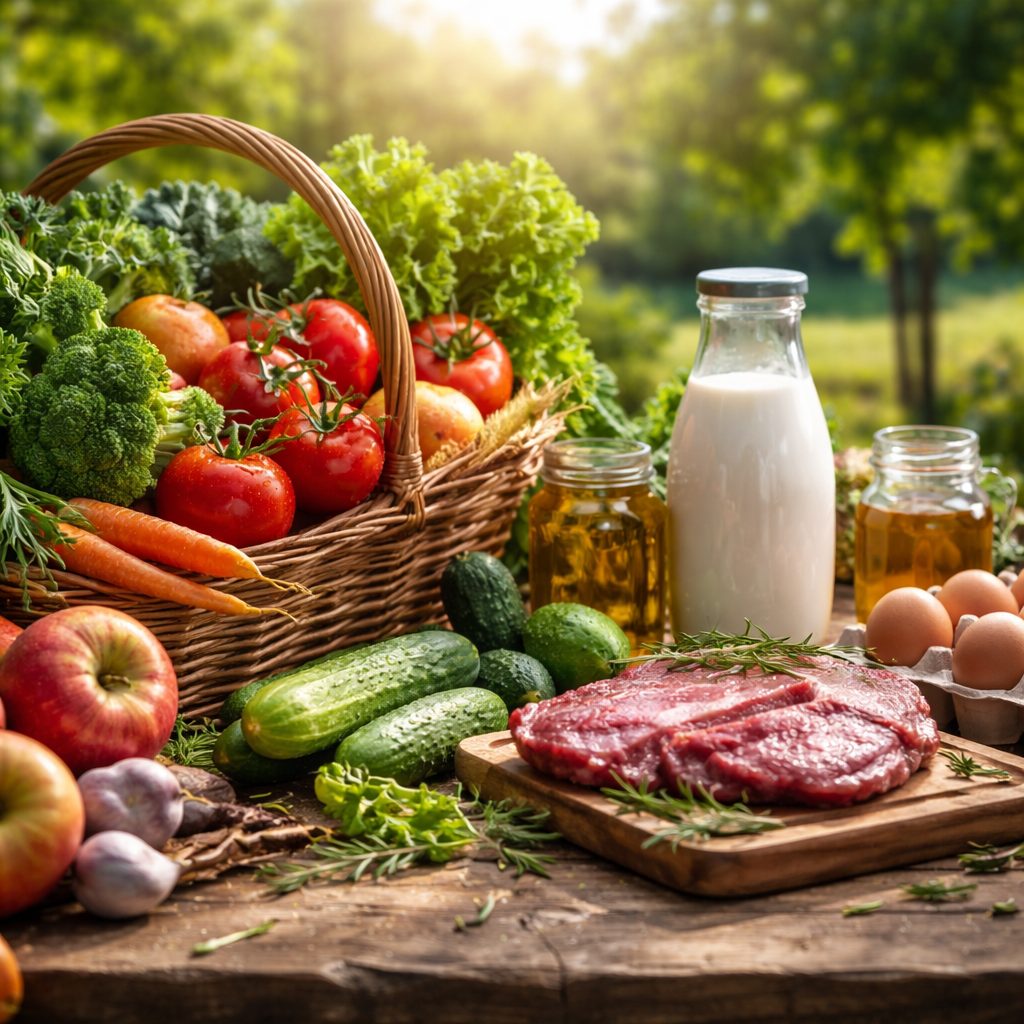
Most people assume that switching to organic food is mainly about avoiding pesticides — but the advantages of organic food go far beyond what ends up on your plate. From soil health to hormonal balance, the ripple effect of choosing organic touches nearly every layer of daily life.
What “organic” actually means on the label
Before diving into specific benefits, it helps to understand what the term covers in practice. Certified organic produce is grown without synthetic pesticides, artificial fertilizers, genetically modified organisms, or sewage sludge. Organic meat and dairy come from animals raised without routine antibiotic use or synthetic growth hormones, and the animals must have access to pasture.
This is not a marketing concept — it is a legally defined standard enforced through third-party certification in most countries. The USDA Organic seal in the United States, the EU organic logo in Europe, and similar marks worldwide require annual farm inspections and detailed record-keeping. So when a label says organic, there is a documented chain of custody behind that claim.
Nutritional differences worth knowing
Research published in the British Journal of Nutrition analyzed 343 peer-reviewed studies and found that organic crops contain significantly higher concentrations of antioxidants compared to conventionally grown counterparts. Polyphenols — the compounds linked to reduced inflammation and cardiovascular protection — were found to be 19–69% higher in organic varieties, depending on the crop.
Organic dairy and meat also show a more favorable fatty acid profile. Studies consistently report higher levels of omega-3 fatty acids in organic milk and grass-fed organic beef — a difference attributed to pasture-based diets rather than grain-heavy feeding systems.
| Nutrient | Organic (general finding) | Conventional (general finding) |
|---|---|---|
| Antioxidants / polyphenols | Up to 69% higher in some crops | Baseline reference |
| Omega-3 fatty acids (dairy/meat) | Notably higher | Lower due to grain feeding |
| Cadmium (toxic heavy metal) | Significantly lower | Higher from synthetic fertilizers |
| Pesticide residues | Minimal to none | Frequently detected |
The pesticide residue question
One of the most common reasons people shift toward organic produce is concern about pesticide exposure. Regulatory agencies argue that residue levels in conventional food fall within “safe” limits — and technically, that is true for acute toxicity in most cases. However, the debate is more nuanced when it comes to long-term, low-dose exposure, especially for children and pregnant women.
Several organophosphate pesticides — once widely used and still present in some agricultural systems — have been linked in epidemiological studies to neurodevelopmental issues in children. The American Academy of Pediatrics has issued statements recommending reduced pesticide exposure for children precisely because the developing nervous system is more vulnerable to chemical disruption.
“Organic diets have been convincingly shown to expose consumers to fewer pesticides associated with a range of adverse health outcomes.”
— American Academy of Pediatrics, policy statement on pesticides and children’s health
Choosing organic for the highest-residue items — commonly referred to as the “dirty dozen” list published annually by the Environmental Working Group — is a practical middle ground for households that cannot afford to go fully organic.
How organic farming affects the environment
The environmental case for organic agriculture is substantial and often underappreciated. Organic farming practices prioritize soil biology, which has long-term consequences for carbon sequestration, water retention, and biodiversity.
- Organic farms support significantly greater biodiversity — including insects, birds, and soil microorganisms — compared to conventional monoculture operations.
- Avoiding synthetic nitrogen fertilizers reduces nitrous oxide emissions, a greenhouse gas roughly 300 times more potent than CO₂ over a 100-year period.
- Organic soil management builds organic matter over time, improving the land’s ability to absorb and retain water — a key factor in climate resilience.
- Eliminating synthetic pesticides protects pollinator populations, particularly bees that are critical to food system stability.
None of this means organic farming is a perfect solution to environmental challenges — land use efficiency remains a valid concern. But for consumers who view food choices as part of a broader ecological responsibility, organic purchasing is one of the more direct levers available.
A practical tip for shopping smarter
Going fully organic overnight is rarely realistic for most budgets. A more sustainable approach is to prioritize organic for the foods your household eats most frequently and for items known to carry high pesticide loads — thin-skinned fruits, leafy greens, and root vegetables are generally the top candidates.
For thick-skinned produce like avocados, onions, or pineapples, the protective outer layer significantly limits pesticide penetration, making the conventional version a reasonable compromise. Buying organic from local farmers markets can also reduce costs compared to supermarket prices, and you get the added benefit of fresher produce with a shorter supply chain.
The connection to gut health and the microbiome
An area of growing scientific interest is how organic versus conventionally grown food interacts with the human gut microbiome. Synthetic pesticides — particularly fungicides and herbicides — have been shown in laboratory and animal studies to disrupt microbial diversity in the gut. Since gut microbiome health is now strongly associated with immune function, mental health, and metabolic regulation, this is not a trivial concern.
Organic fermented foods, in particular, may carry a more diverse microbial profile than their conventional counterparts, though this area is still being actively researched. What is already clear is that reducing chemical interference in the digestive environment is a reasonable strategy for supporting long-term gut health.
Where the evidence leaves us
Organic food is not a cure-all, and the science does not claim it to be. What the accumulated evidence does support is that organic choices reduce exposure to harmful residues, deliver food with a more favorable nutrient and fatty acid profile in many categories, and support farming systems that are measurably better for biodiversity and soil health.
For most people, the decision does not have to be all-or-nothing. Starting with a few high-impact swaps — the produce your family eats daily, the dairy your children drink regularly — creates a meaningful difference without requiring a complete overhaul of grocery habits or budget. The goal is informed, consistent choices rather than perfection.