Some places exist in the imagination long before you ever see them in person. The Grand Canyon is one of those places — a natural wonder so vast and so visually overwhelming that photographs consistently fail to capture it. But beyond the spectacle, the Grand Canyon holds a remarkable scientific record, a layered human history, and a few surprises that even well-travelled visitors don’t expect.
The numbers that define the canyon
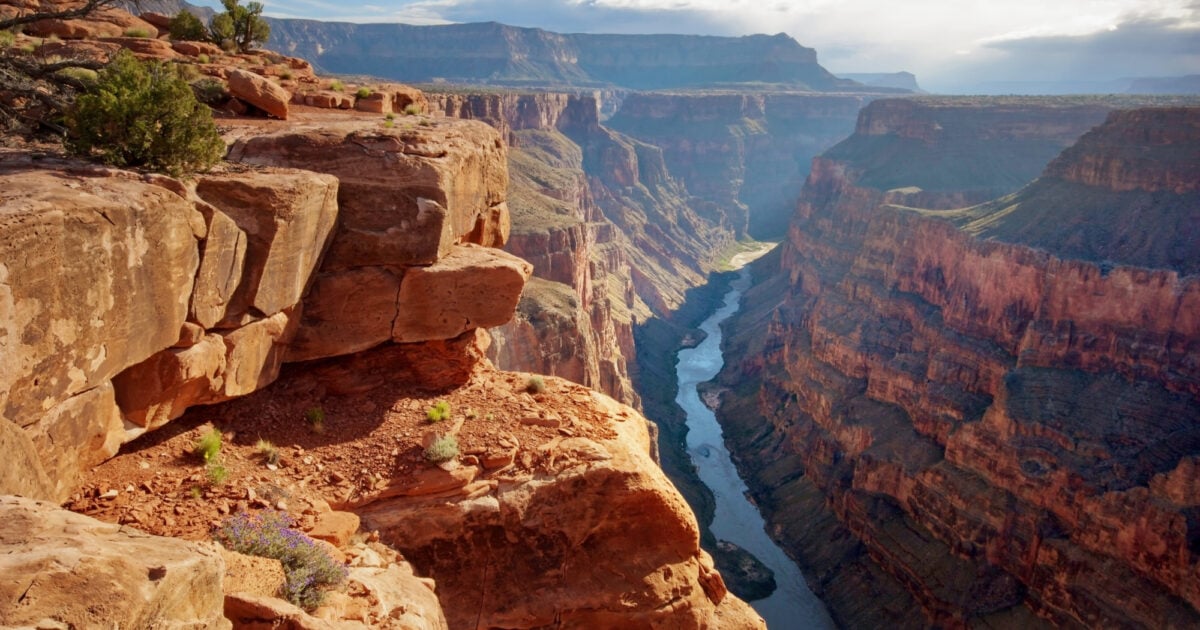
Scale is the first thing that strikes anyone who encounters the Grand Canyon for the first time. The canyon stretches approximately 446 kilometres (277 miles) in length, reaches widths of up to 29 kilometres (18 miles) at certain points, and drops to a maximum depth of around 1,857 metres (6,093 feet). The Colorado River, which carved this entire formation, flows along the canyon floor at an elevation of roughly 730 metres (2,400 feet) above sea level.
These numbers are easy to read and difficult to truly comprehend. Standing at the South Rim and looking across to the North Rim, you’re looking at a distance of roughly 16 kilometres through open air — further than most people walk in an entire day.
A geological record unlike anything else on Earth
What makes the Grand Canyon scientifically extraordinary is not just its size but what its walls contain. The exposed rock layers represent approximately 2 billion years of Earth’s geological history — nearly half the age of the planet itself. Each visible stripe of colour in the canyon walls corresponds to a different geological era and rock type.
The oldest rocks at the canyon’s base — the Vishnu Basement Rocks — date to around 1.8 billion years ago. Moving upward through the layers, you pass through formations from the Proterozoic, Paleozoic, and various subsequent eras. Geologists refer to the Grand Canyon as a “geological textbook” precisely because so many distinct periods are exposed in a single continuous cross-section.
One of the most interesting gaps in the Grand Canyon’s geological record is what scientists call the “Great Unconformity” — a boundary where roughly 1.2 billion years of rock layers are simply missing, either never deposited or eroded away. This gap puzzles researchers and remains one of geology’s fascinating open questions.
How the Colorado River carved the canyon
The canyon’s formation is the result of the Colorado River cutting downward through the Colorado Plateau over millions of years. Estimates suggest the river began this process somewhere between 5 and 6 million years ago, though recent research has proposed some sections may have origins significantly older than this.
The cutting process was driven by a combination of factors: the river’s erosive force, the uplift of the Colorado Plateau (which increased the river’s gradient and therefore its cutting power), and the softer nature of certain rock layers which eroded more quickly than others. Side canyons and tributary streams contributed significantly to the canyon’s overall width.
What’s remarkable is that the process continues today — the Colorado River is still actively eroding the canyon floor, though at a much slower rate than in previous geological periods.
Human presence: a history measured in thousands of years
The Grand Canyon has been home to human communities for at least 12,000 years, possibly longer. Archaeological evidence — including split-twig figurines found in caves within the canyon — suggests habitation dating back to around 4,000 BCE or earlier.
Several Native American tribes have deep historical and cultural connections to the canyon. The Havasupai people have lived within the canyon for centuries and continue to inhabit the Havasupai Indian Reservation at the canyon’s floor, where Havasu Creek flows into turquoise waterfalls. The Hopi, Navajo, Zuni, and Paiute peoples all have historical ties to the region as well.
| Tribe | Connection to the Grand Canyon |
|---|---|
| Havasupai | Live within the canyon; Havasu Falls is on their reservation |
| Hopi | Consider the canyon a place of spiritual emergence; maintain shrines within it |
| Navajo Nation | Eastern canyon sections fall within or near Navajo territory |
| Southern Paiute | Historical use of the North Rim and surrounding plateau areas |
Wildlife and ecosystems within the canyon
The Grand Canyon’s dramatic elevation changes — from the river at roughly 730 metres to the North Rim at over 2,600 metres — create a series of distinct ecosystems stacked on top of each other. This means the canyon contains desert scrub at its floor, transition zones in its middle elevations, and cool conifer forests at its rims.
This variety supports a remarkable range of species. The canyon is home to over 90 mammal species, more than 370 bird species, 47 reptile species, and 9 species of amphibians. The California condor, once nearly extinct, was reintroduced to the canyon region and can now be spotted soaring above the rims — a conservation success story closely tied to this landscape.
Visiting the canyon: what experienced travellers recommend
- The South Rim is open year-round and receives the vast majority of visitors; the North Rim is typically only accessible from mid-May through mid-October due to snow
- Sunrise and sunset dramatically transform the canyon’s appearance as changing light angles reveal new textures and colours in the rock faces
- Hiking below the rim is significantly more challenging than it looks — the descent is easy, but returning uphill in intense heat has resulted in many emergency rescues
- The canyon creates its own microclimate; temperatures at the floor can be 12–15°C hotter than at the rim on the same day
- Rafting the Colorado River through the canyon takes approximately two weeks for the full journey — one of the most immersive wilderness experiences in North America
If you plan to hike below the rim, rangers consistently advise against attempting to reach the Colorado River and return in a single day — the canyon’s scale and heat make this deceptively dangerous. Day hikes to intermediate destinations like Skeleton Point or Plateau Point are more manageable and still offer extraordinary views.
The Grand Canyon rewards curiosity. The more you know about its geology, its history, and its ecosystems before you arrive, the more you see when you’re actually standing there. What looks like a beautiful landscape on the surface is also a record of deep time, a living ecosystem, and a place where human communities have found meaning for thousands of years.