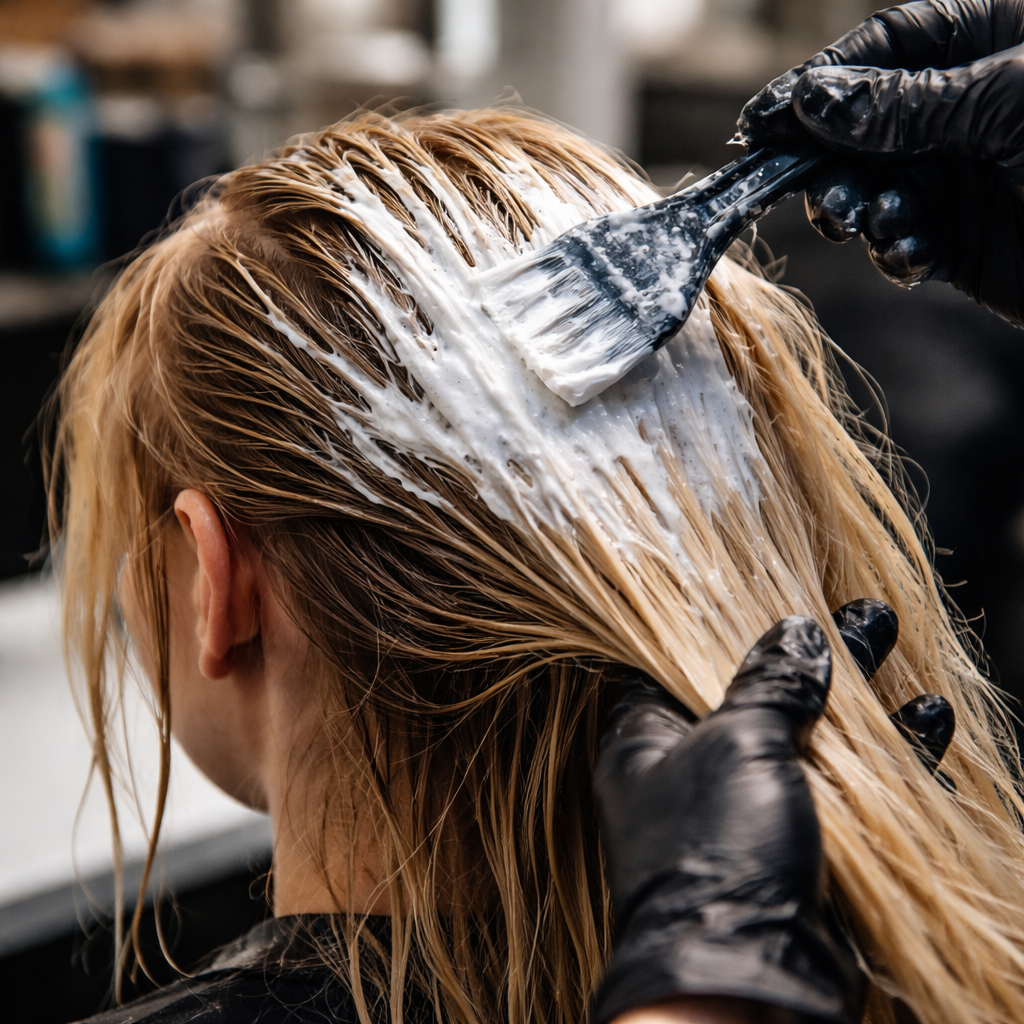
Most hairstylists will tell you the same thing without hesitation: is it safe to bleach wet hair? Not really — and the reasons behind that answer go much deeper than a simple yes or no. Bleaching is already one of the most chemically aggressive processes you can put your hair through, and adding moisture into that equation changes how the formula behaves in ways that aren’t always visible until the damage is done.
What actually happens when bleach meets wet hair
Hair is most vulnerable when it’s saturated with water. The cuticle — that protective outer layer of each strand — swells and lifts when wet, leaving the inner cortex more exposed than usual. When a bleaching agent is applied in this state, it penetrates the hair shaft faster and less predictably. The result can be uneven lightening, patchy tones, and significantly more structural damage to the hair fiber itself.
This doesn’t mean the technique is never used. There’s actually a specific method called “wet balayage” where stylists apply lightener to damp hair intentionally — but it’s done with diluted bleach, careful timing, and professional oversight. What makes it different from simply bleaching soaking wet hair at home is the level of control involved.
The chemistry behind the concern
Bleach works by oxidizing the melanin pigments inside the hair shaft. This process depends on the bleach maintaining a certain consistency and pH level as it’s applied. When hair is wet, the water dilutes the bleaching mixture and disrupts this chemistry. The developer — typically hydrogen peroxide — becomes less concentrated, which sounds like it might be safer, but it actually leads to unpredictable processing and harder-to-control results.
Hair that is wet before bleaching tends to process unevenly because moisture acts as a barrier between the lightener and the hair’s pigment, causing some areas to lift faster while others barely change.
Beyond the cosmetic issues, there’s a structural concern. Hair is made of keratin proteins, and those proteins are already in a weakened, stretched state when the hair is wet. Adding a chemical process at this point increases the risk of breakage, elasticity loss, and in more severe cases — chemical cuts, where the hair literally snaps off near the root or mid-shaft.
When damp hair bleaching is used on purpose
Professional colorists do occasionally work with slightly damp hair, and there are specific scenarios where this is an intentional technique rather than a mistake:
- Soft balayage looks with seamless, blended transitions
- Corrective color work where stronger saturation is not desired
- Very coarse or resistant hair types that need softening before chemical processing
- Certain toning applications after the initial bleach has been rinsed
In these cases, “damp” means towel-dried with no excess water — not freshly washed and dripping. The distinction matters enormously. A professional understands how much moisture is appropriate for a given technique and adjusts the formula accordingly.
Signs your hair isn’t ready for bleaching — wet or dry
Before even considering the wet versus dry debate, it’s worth assessing the overall health of your hair. Applying bleach to already compromised hair — regardless of moisture level — is a recipe for serious damage.
| Hair condition | Safe to bleach? |
|---|---|
| Healthy, virgin hair | Yes, with care |
| Previously bleached, strong elasticity | Proceed with caution |
| Dry, brittle, or breaking | Not recommended |
| Chemically relaxed or permed | High risk — consult a professional |
| Recently bleached (under 4 weeks) | Avoid unless necessary |
A simple elasticity test can help: take a single wet strand and gently stretch it. Healthy hair will stretch slightly and then return to its original length. If it stretches excessively and doesn’t spring back — or snaps immediately — the hair is too weak for chemical processing.
Practical advice before your next bleaching session
Whether you’re planning a DIY session or heading to a salon, a few straightforward steps can make a significant difference in how your hair handles the process.
Always start with dry or nearly dry hair unless a professional has specifically recommended otherwise for your hair type and the technique being used.
- Wash your hair 24–48 hours before bleaching — not right before. Natural scalp oils offer a mild protective barrier.
- Avoid heat styling in the days leading up to your session to reduce existing damage.
- Do a strand test, especially if you’re working with a new bleach brand or developer strength.
- Use a bond-protecting treatment like Olaplex or a similar protein additive mixed into the bleach if your hair has any prior damage.
- Never leave bleach on longer than the recommended time, and check progress every 10 minutes.
These aren’t just precautionary tips — they directly affect the quality of your result and the long-term health of your hair.
What to do if you’ve already bleached wet hair
If it’s already happened and you’re now dealing with the aftermath — whether that’s patchiness, extreme dryness, or breakage — there are ways to begin recovery. The priority is rebuilding the hair’s moisture and protein balance.
- Switch to a sulfate-free, hydrating shampoo immediately.
- Incorporate a deep conditioning mask into your weekly routine — look for ingredients like keratin, shea butter, or hydrolyzed proteins.
- Avoid all heat tools for at least two to four weeks while the hair stabilizes.
- Consider a professional bond-repair treatment at a salon if the damage is significant.
- Trim split ends as soon as possible — they will continue to travel up the shaft if left untreated.
Recovery takes time and consistency. There’s no single product that undoes chemical damage overnight, but with the right care routine, most hair can regain a reasonable level of health over the course of several weeks to months.
The bottom line your hair actually needs you to hear
Bleaching is a commitment — to a look, yes, but also to a maintenance routine and an understanding of what your hair can handle. Wet hair and bleach are a combination that requires expert judgment, precise technique, and the right product ratios. For the vast majority of people bleaching at home, starting with dry hair and following a strand test protocol is the single most effective way to protect both the result and the integrity of their hair. If you’re ever unsure, that’s exactly what professional colorists are there for — not just to do the work, but to assess whether your hair is ready for it in the first place.