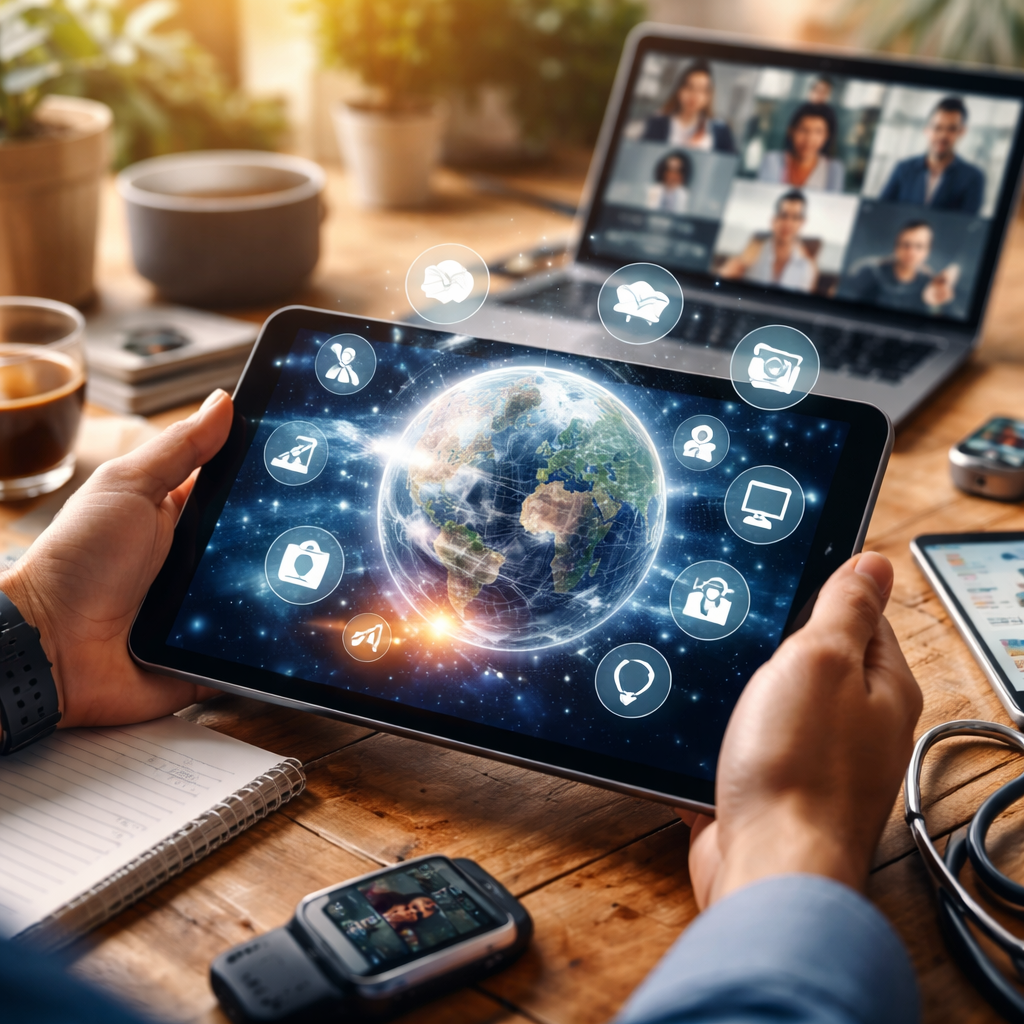
Most people interact with dozens of technologies every single day without stopping to think about what life would actually look like without them. The advantages of technology go far beyond convenience — they reshape how we learn, work, stay healthy, and connect with one another on a fundamental level. And yet, the full picture is rarely discussed in one place.
Why technology keeps changing the rules
Technology does not simply add new tools to existing systems — it rewrites the logic behind those systems entirely. Think about how navigation worked before digital maps: people relied on printed guides, local knowledge, or asking strangers for directions. Now, real-time route optimization accounts for traffic, road closures, and even fuel efficiency. That shift is not just practical — it fundamentally changes how people plan movement through their environment.
This pattern repeats across virtually every domain of human activity. The underlying mechanics of a field get replaced, not just upgraded. That is what makes the benefits of modern technology so wide-reaching — they do not sit on top of old systems, they rebuild them from the inside.
Practical benefits that affect everyday life directly
When people search for information about technological progress, they often want to understand what it means for their own routines — not abstract theories. Here is where things get genuinely useful:
- Remote work tools allow professionals to collaborate across time zones without the cost or exhaustion of constant travel.
- Telemedicine gives patients in rural or underserved areas access to specialist consultations that would otherwise require long journeys.
- Smart home devices reduce energy consumption automatically, lowering bills and carbon footprints simultaneously.
- Digital banking has made financial management accessible to people who previously had no reliable access to physical bank branches.
- Online learning platforms let anyone acquire new skills at their own pace, without rigid schedules or geographic limitations.
Each of these examples shares something in common: technology removed a barrier that once made a task harder, more expensive, or simply out of reach for many people. That pattern of democratization — making previously limited resources widely available — is one of the most consistent and underappreciated effects of digital innovation.
Technology and healthcare: a relationship worth understanding
Few areas demonstrate the impact of technological advancement more clearly than medicine. Diagnostic imaging, electronic health records, wearable health monitors, and AI-assisted analysis have collectively shifted medicine from a reactive discipline toward a preventive one.
Wearable devices that monitor heart rhythm, blood oxygen levels, and sleep patterns have already helped thousands of people detect serious conditions before symptoms became critical — not in hospitals, but at home, during ordinary daily life.
Surgical robotics allows for procedures with smaller incisions, reduced recovery time, and greater precision than traditional methods. Genomic research, powered by computational tools, is advancing the understanding of hereditary diseases at a speed that was unthinkable just a generation ago. These are not speculative futures — they are current realities available in hospitals and clinics around the world.
Communication and human connection in the digital age
One of the more nuanced advantages of digital technology is what it has done to human relationships across distance. Video calls, messaging applications, and social platforms allow people to maintain meaningful contact with family members, friends, and colleagues regardless of geography. For immigrants, long-distance couples, or remote workers, this is not a luxury — it is a core part of how they sustain relationships.
Beyond personal connections, technology has also transformed how communities organize around shared interests and causes. Grassroots movements, mutual aid networks, and educational communities now form and function online in ways that would have required enormous logistical effort in a pre-digital context.
| Area of life | What technology changed | Practical outcome |
|---|---|---|
| Education | Access to global knowledge bases and tutors | Self-directed learning at any age |
| Healthcare | Remote diagnostics and monitoring | Earlier detection, fewer hospital visits |
| Work | Distributed collaboration tools | Flexibility, wider talent pools |
| Finance | Mobile banking and digital payments | Financial inclusion for underserved groups |
| Communication | Instant messaging and video calls | Maintained relationships across distances |
Productivity, automation, and what actually gets better
Automation often gets framed as a threat, but in many contexts it is straightforwardly useful. Repetitive, low-skill tasks that once consumed hours of human attention — data entry, inventory tracking, appointment scheduling — can now be handled by software. This frees up cognitive energy for work that genuinely requires human judgment, creativity, and empathy.
Small businesses in particular have benefited from this shift. Tools that once required dedicated IT departments are now available as affordable subscription services. A sole trader can now run email marketing campaigns, manage customer relationships, process payments, and analyze sales data using software that requires no technical expertise to operate.
Education transformed: learning without walls
The impact of technology on education deserves its own focus because it is one of the areas where the benefits are most evenly distributed. A student in a small town with limited local resources can now access university-level courses, expert tutors, and research libraries through a standard internet connection. Language learning applications use spaced repetition algorithms to teach vocabulary far more efficiently than traditional memorization methods. Interactive simulations make abstract scientific concepts tangible in ways that static textbooks never could.
For adult learners returning to education after years in the workforce, the flexibility of digital learning tools removes one of the biggest practical obstacles: time. Asynchronous course formats mean studying can fit around work schedules and family responsibilities rather than competing with them.
The bigger picture — and why balance matters
Acknowledging the genuine advantages of technology does not mean ignoring its complications. Overconsumption of screen-based media, data privacy concerns, and the uneven distribution of digital access are real issues that deserve serious attention. The most informed perspective treats technology as a powerful set of tools — neither inherently good nor bad, but shaped entirely by how thoughtfully it is used.
For most people, the practical question is not whether technology is beneficial in the abstract — the evidence on that is clear. The more useful question is how to engage with it intentionally: choosing tools that serve specific goals, maintaining habits that protect attention and wellbeing, and staying curious about what new developments might genuinely improve daily life. That kind of informed engagement is exactly what separates people who benefit from technology from those who feel overwhelmed by it.