Every hour, the sun delivers more energy to Earth’s surface than the entire human civilization consumes in a full year. That single fact reshapes how we think about power generation — and it’s precisely why understanding the advantages of solar energy matters more than ever for homeowners, businesses, and anyone paying an electricity bill.
What actually makes solar power different from other energy sources
Most energy sources require something to be burned, extracted, or continuously purchased. Solar works on a fundamentally different logic: once the panels are installed, the fuel is free. Sunlight doesn’t come with a subscription fee, and it doesn’t fluctuate with geopolitical tensions or commodity markets. This structural difference is what separates solar from natural gas, coal, or even nuclear power in terms of long-term financial predictability.
That said, solar energy isn’t just about economics. It touches everything from grid resilience to property value, from air quality to energy independence. Let’s go through what matters most — practically and concretely.
Financial benefits that compound over time
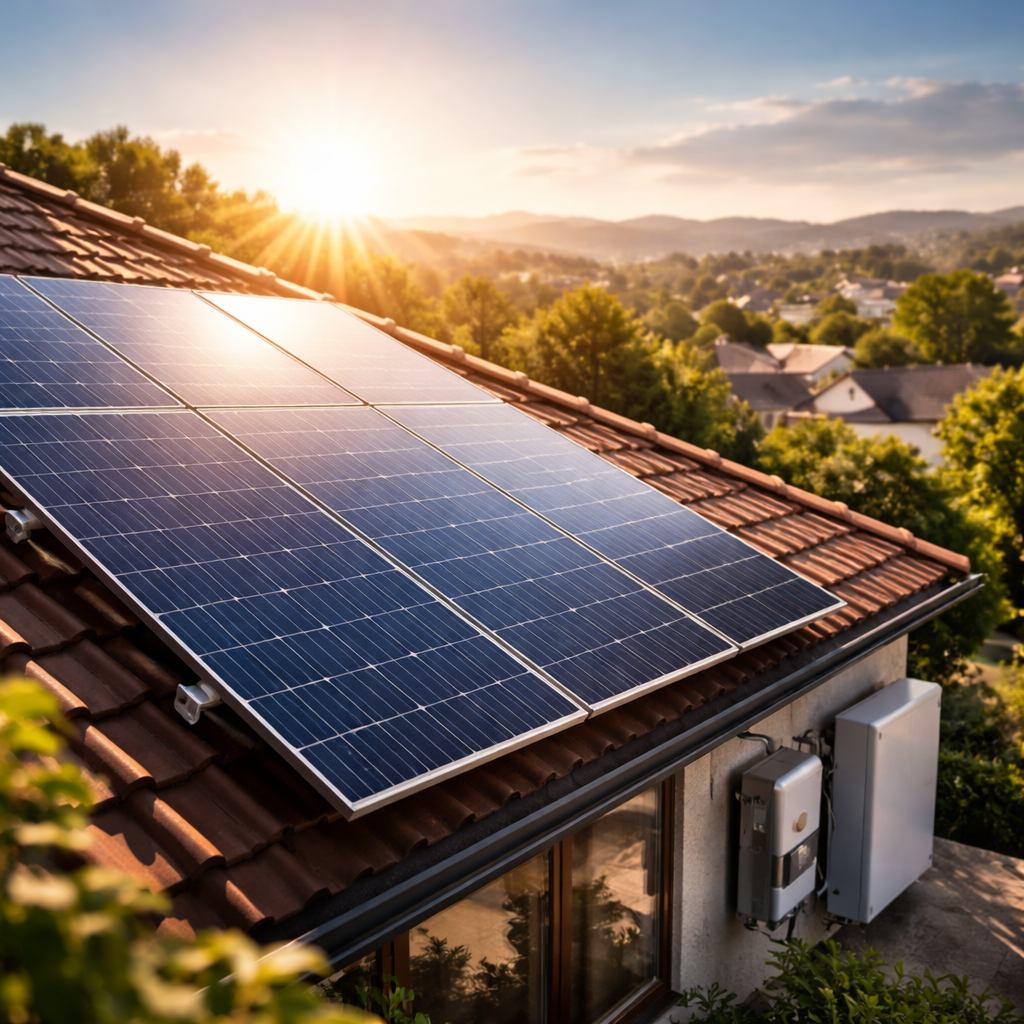
The upfront cost of a solar installation often gets more attention than it deserves, while the long-term savings tend to be underestimated. A residential solar system typically has a payback period ranging from 6 to 12 years depending on location, system size, and local electricity rates — after which the electricity it generates is effectively free.
| Factor | Impact on savings |
|---|---|
| Local electricity prices | Higher rates = faster payback |
| Available sunlight hours | More sun = more generation |
| Net metering policies | Sell excess energy back to the grid |
| Government incentives | Reduce installation cost significantly |
| System size and efficiency | Larger, newer panels generate more |
Net metering deserves special attention here. In regions where it’s available, solar panel owners can feed surplus electricity back to the grid and receive credits on their utility bills. During peak summer months, some households generate more than they consume — effectively running their electricity meter backward.
Environmental impact — and why it’s more nuanced than “zero emissions”
Solar panels do have a carbon footprint — primarily from manufacturing and transportation. But that footprint is recovered within 1 to 4 years of operation, depending on the panel type and regional energy mix used during production. After that, every kilowatt-hour generated is genuinely clean.
According to the U.S. Department of Energy, solar photovoltaic systems produce between 14 and 73 grams of CO₂ equivalent per kilowatt-hour over their lifetime — compared to around 820 grams for coal-fired electricity.
Beyond carbon, solar power reduces local air pollution. Unlike fossil fuel plants, solar panels produce no particulate matter, sulfur dioxide, or nitrogen oxides during operation. For urban areas already struggling with air quality, widespread solar adoption has measurable public health implications — fewer respiratory illnesses, lower healthcare costs.
Energy independence at every scale
One of the less-discussed advantages of distributed solar generation is what it does to the relationship between consumers and energy suppliers. When a household or business generates its own electricity, it becomes partially or fully insulated from utility price increases, supply disruptions, and peak-hour rate spikes.
Add battery storage to the equation, and the picture changes even more dramatically. Solar-plus-storage systems allow users to store energy generated during the day and use it at night or during outages — a capability that proved its value during major grid disruptions caused by extreme weather events.
Property value and market perception
Research from Lawrence Berkeley National Laboratory found that homes with solar panel systems sold for a premium compared to similar homes without them. The premium varied by market, but the direction was consistent: buyers are willing to pay more for a home that comes with lower energy bills built in.
This matters because solar panels are increasingly being viewed not just as an environmental statement but as a practical home improvement — similar to a renovated kitchen or an upgraded HVAC system. For property owners thinking about resale value, solar is no longer a niche consideration.
Reliability and low maintenance requirements
Solar panels have no moving parts. This makes them exceptionally durable and low-maintenance compared to almost any other energy-generating technology. Most reputable manufacturers offer performance warranties of 25 years or more, during which panels are guaranteed to produce at least 80% of their original rated capacity.
- No fuel to purchase or store
- No mechanical components to service
- Occasional cleaning is typically the only required maintenance
- Inverters may need replacement once during the system’s life (usually after 10–15 years)
- Monitoring systems allow real-time performance tracking
In remote or off-grid locations, this reliability becomes critical. Solar installations power everything from weather monitoring stations in the Arctic to telecommunications towers in desert regions — places where maintenance visits are expensive and fuel delivery is logistically difficult.
Solar energy’s role in the broader grid
Utility-scale solar farms contribute to grid diversification, which strengthens overall energy security. A grid that draws from multiple sources — solar, wind, hydro, natural gas — is far more resilient than one that relies heavily on a single fuel type. When one source experiences a shortage, others can compensate.
Solar generation also tends to peak during hours of high electricity demand — midday, when air conditioning loads are heaviest. This alignment between generation and demand reduces strain on the grid precisely when it’s most needed, helping to prevent brownouts and reduce the need for expensive peaker plants.
The honest picture: what solar doesn’t solve on its own
Solar energy works best as part of a thoughtful energy strategy, not as a standalone solution to every challenge. Intermittency — the fact that panels don’t generate at night and produce less on cloudy days — requires either grid connection, battery storage, or a hybrid approach. The right configuration depends heavily on geography, usage patterns, and budget.
Not every roof is suitable for solar installation. Shading from trees or neighboring buildings, roof orientation, and structural condition all affect feasibility. A professional solar assessment before committing to installation is not optional — it’s essential for accurate expectations and financial projections.
Why the shift toward solar feels less like a trend and more like a direction
The cost of solar photovoltaic technology has dropped by more than 90% over the past fifteen years. Manufacturing has scaled, efficiency has improved, and installation has become more standardized. These aren’t temporary conditions — they reflect structural changes in the global energy industry that are unlikely to reverse.
For individuals and businesses evaluating their energy options, the question has shifted. It’s no longer whether solar makes sense in principle. The real questions are about timing, sizing, financing, and how solar fits into a specific situation. Those are solvable questions — and the answers, for most people in sun-accessible regions, tend to point in one direction.