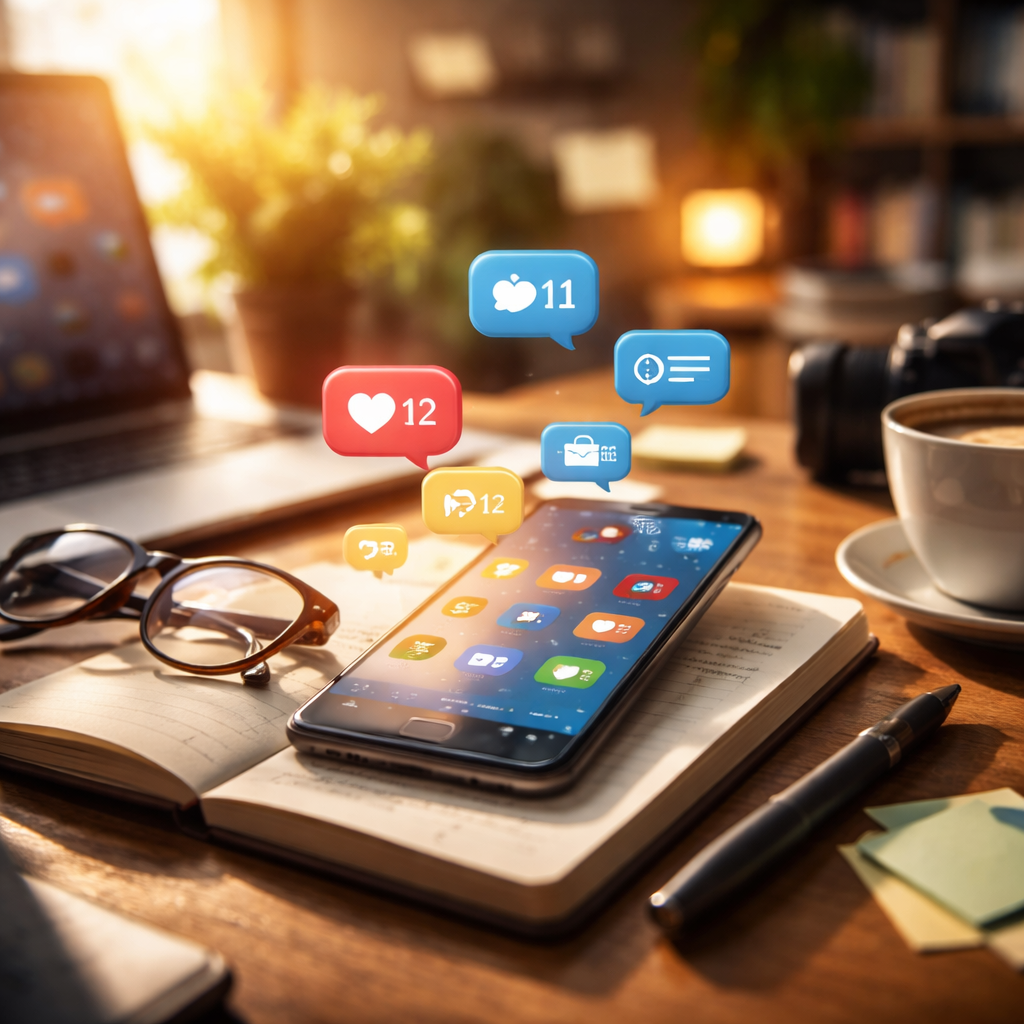
Most people scroll through their feeds without stopping to think about what social media actually does for them — but the advantages of social media go far beyond entertainment or staying in touch with friends. From career opportunities to mental health support communities, these platforms have quietly become part of how modern life gets things done.
Connection that actually means something
Before the rise of social platforms, maintaining relationships across distances required real effort — phone calls, letters, scheduled visits. Today, keeping in touch with a colleague who moved abroad, a childhood friend in another city, or a family member in a different time zone takes seconds. But the value here isn’t just convenience.
Social media allows people to maintain weak ties — those acquaintances and distant connections that research in sociology consistently links to unexpected job opportunities, new perspectives, and access to information outside your usual circle. These aren’t superficial relationships; they’re a genuine network that can open doors in ways close friendships often can’t.
A surprisingly powerful tool for learning
Platforms like YouTube, LinkedIn, and even Instagram have evolved into serious educational spaces. Professionals share industry knowledge, creators break down complex topics into digestible content, and communities form around niche skills — from data analysis to hand-lettering to home repairs.
“The best teachers today are not always in classrooms. Some of the clearest explanations of complex topics exist in short videos created by people who simply love what they do.”
This kind of peer-to-peer knowledge sharing is one of the more underrated benefits of social media. It democratizes access to information — someone without access to expensive courses or elite institutions can still learn from world-class practitioners, often for free.
What social platforms genuinely do well
It helps to look at the concrete benefits rather than speak in generalities. Here’s where social media consistently delivers real value:
- Building personal and professional brand visibility without large budgets
- Accessing real-time news and breaking information directly from primary sources
- Discovering local events, communities, and opportunities nearby
- Finding niche communities around health conditions, hobbies, or life situations
- Supporting small businesses through organic reach and customer reviews
- Crowdsourcing opinions before making purchases or decisions
Each of these might seem ordinary on its own, but together they represent a shift in how people interact with the world around them — a shift that wasn’t possible even two decades ago.
Social media and mental health: a more nuanced picture
The conversation around social media and wellbeing tends to default to warnings. But the relationship is more complicated — and more interesting — than that framing suggests.
For people dealing with chronic illness, grief, rare conditions, or social anxiety, online communities often provide something that’s genuinely difficult to find offline: a group of people who understand exactly what they’re going through. Support groups on Facebook, Reddit threads for specific conditions, and mental health communities on platforms like Discord have helped people feel less isolated during genuinely hard times.
| Use case | Potential benefit |
|---|---|
| Chronic illness communities | Peer support, shared coping strategies, treatment information |
| Grief groups | Reduced isolation, emotional validation, practical advice |
| Mental health forums | Access to resources, connection with others who understand |
| Parenting communities | Advice exchange, reduced anxiety, sense of solidarity |
The key variable isn’t the platform itself — it’s how it’s used. Passive scrolling and comparison tend to be draining. Active participation, genuine exchange, and intentional use tend to be energizing.
For businesses and creators, the playing field has shifted
A local bakery, a freelance photographer, an independent author — all of them now have access to distribution channels that were once reserved for companies with serious marketing budgets. Social media made it possible for small operations to reach large audiences through content rather than ad spend alone.
This matters beyond economics. It changes who gets to be heard. Artists, activists, educators, and entrepreneurs from places and backgrounds that traditional media overlooked now have a direct line to audiences. Online visibility has become a form of social mobility in its own right.
Civic life, awareness, and things that actually change
Social platforms have played a documented role in amplifying social movements, organizing community responses to local issues, and spreading awareness about causes that mainstream media might ignore. Fundraisers go viral. Petitions reach decision-makers. Stories that would once have disappeared into silence find an audience and sometimes, real consequences.
This isn’t idealism — it’s a pattern that has repeated across different contexts, countries, and causes. The mechanism is simple: social media lowers the barrier to participation in public life. You don’t need a platform or a press pass to raise awareness about something that matters to you or your community.
Making it work for you, not against you
The difference between people who find social media genuinely useful and those who find it draining usually comes down to a few habits. It’s worth thinking about these concretely:
- Follow accounts that teach, inspire, or connect — not just ones that entertain
- Mute or unfollow content that consistently leaves you feeling worse
- Set intentions before opening an app — what are you actually here for?
- Engage actively rather than consuming passively
- Take breaks when the noise outweighs the signal
Social media is a tool. Like any tool, its value depends almost entirely on how it’s used. The platforms themselves are neither good nor bad — they’re shaped by the choices people make on them, and those choices are more within your control than the algorithm might want you to believe.
When used with even a small degree of intention, the benefits are real, measurable, and worth taking seriously — not because it’s the fashionable thing to say, but because the evidence, and the lived experience of millions of people, supports it.