Most home cooks wonder at some point: is it safe to use aluminum foil in air fryer, and does the answer actually change depending on what you’re cooking? The short version is — yes, you can use it, but there are specific conditions that determine whether it helps your meal or quietly causes a problem.
Why people reach for foil in the first place
Air fryers have become a staple in modern kitchens largely because they make cleanup easier and cooking faster. Aluminum foil seems like a natural companion — it catches drips, protects delicate foods, and helps with portion separation. The logic is sound. But an air fryer isn’t an oven, and that distinction matters more than most people realize.
Unlike a conventional oven where heat radiates from a fixed element, an air fryer circulates hot air at high speed through a compact chamber. That airflow is the whole mechanism — it’s what creates the crispy texture people love. Anything that disrupts this circulation affects the cooking result, sometimes significantly.
When foil is actually fine to use
There’s no blanket prohibition on aluminum foil in air fryers. Used correctly, it’s a perfectly practical tool. Here’s what works well:
- Lining the basket partially — leaving gaps around the edges so air can still circulate freely
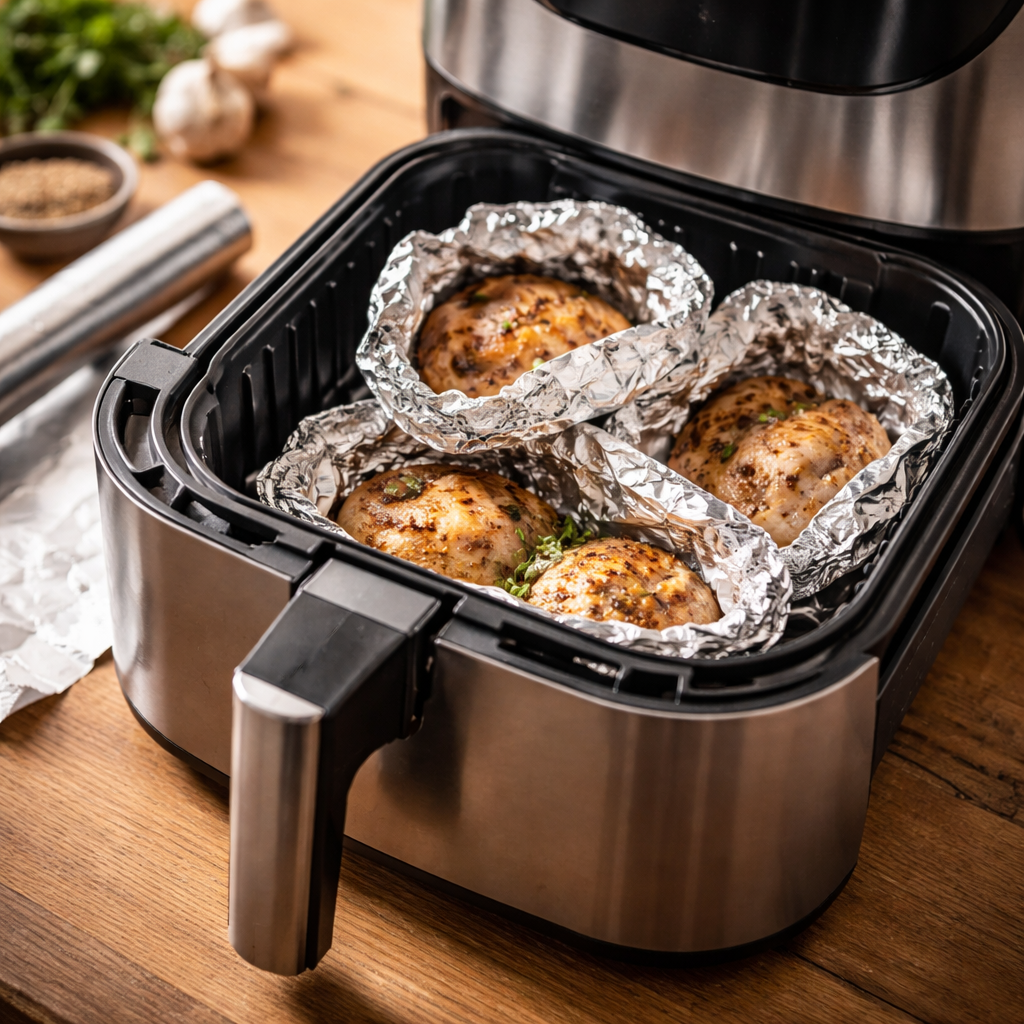
- Wrapping marinated proteins like chicken thighs or salmon to keep moisture in during the first phase of cooking
- Separating multiple items in the basket to prevent flavor transfer
- Catching drips from fatty cuts to reduce smoke and simplify cleanup
The operative word here is “partially.” A sheet of foil that completely covers the basket floor blocks the hot air from reaching food from below — the same airflow that crisps the bottom of whatever you’re cooking.
Think of the foil as a tool with a specific job, not a general lining. Used with intent, it works. Used out of habit, it often works against you.
The real risks — and they’re more specific than you’d think
The danger with foil in air fryers isn’t usually dramatic. You won’t get an explosion or a fire from simply placing foil in the basket. But a few scenarios genuinely warrant caution.
Acidic foods accelerate foil breakdown
Tomatoes, citrus marinades, vinegar-based sauces — these react with aluminum at high heat. The result is that tiny amounts of aluminum can leach into food. Research on dietary aluminum intake is ongoing, and while the quantities from occasional cooking are generally considered low-risk, it’s a good reason to avoid wrapping acidic ingredients directly in foil inside the air fryer.
Foil placed under the basket is a real hazard
Some people place foil beneath the basket — in the drawer itself — thinking it makes cleaning easier. This can actually block the bottom vents on certain models, causing the appliance to overheat. A number of air fryer manufacturers explicitly warn against this in their manuals. Always check your specific model’s guidelines before experimenting.
Lightweight foil can move during cooking
The fan inside an air fryer is powerful. A loose piece of foil — especially if not held down by food weight — can shift and make contact with the heating element. This is the scenario most likely to cause a problem. Always ensure foil is anchored by food placed on top of it before starting the appliance.
| Situation | Foil: Safe or Not? | Notes |
|---|---|---|
| Lining basket with food on top | Generally safe | Leave edges open for airflow |
| Wrapping fatty proteins | Safe | Works well for moisture retention |
| Acidic foods (tomato, citrus) | Not recommended | Risk of aluminum leaching |
| Empty foil in basket (no food) | Unsafe | Can shift into heating element |
| Foil beneath the basket/drawer | Potentially unsafe | May block vents and cause overheating |
Practical alternatives worth knowing about
If you’re using foil primarily for cleanup convenience, there are options that work better with the air fryer’s design. Perforated parchment paper liners — made specifically for air fryers — allow hot air to circulate while still protecting the basket. They’ve become widely available and fit most standard basket sizes.
Silicone liners are another option for those who cook frequently and want something reusable. They’re heat-resistant, flexible, and don’t interfere with airflow the way solid foil sheets can.
Perforated parchment liners designed for air fryers are arguably the cleaner solution — they do what foil does for cleanup, without the airflow trade-off.
A few rules that make all the difference
If you’d rather stick with foil — and there are valid reasons to — these practical guidelines help you use it without issues:
- Never preheat with foil inside and no food on it
- Keep foil away from the sides and top of the basket — contact with walls can restrict airflow or transfer heat unevenly
- Use heavier-gauge foil when possible; it’s less likely to shift
- Avoid using foil when cooking breaded or battered items — the steam gets trapped and the coating stays soft instead of crisping
- Always read the manual for your specific air fryer model, since internal designs vary considerably between brands
What the cooking result tells you
One underappreciated point: even when foil use is safe, it often changes the cooking outcome in ways people don’t expect. Foods cooked on foil tend to steam on the bottom rather than crisp. For something like reheated pizza or frozen fries, this is the opposite of what you want. But for delicate fish or juicy chicken pieces that tend to dry out, a partial foil wrap genuinely improves texture and moisture retention.
The best approach is to match the tool to the goal. Foil isn’t universally good or bad in an air fryer — it’s a context-dependent decision. Once you understand what it actually does to airflow and heat distribution, using it (or skipping it) becomes an informed choice rather than a guess.