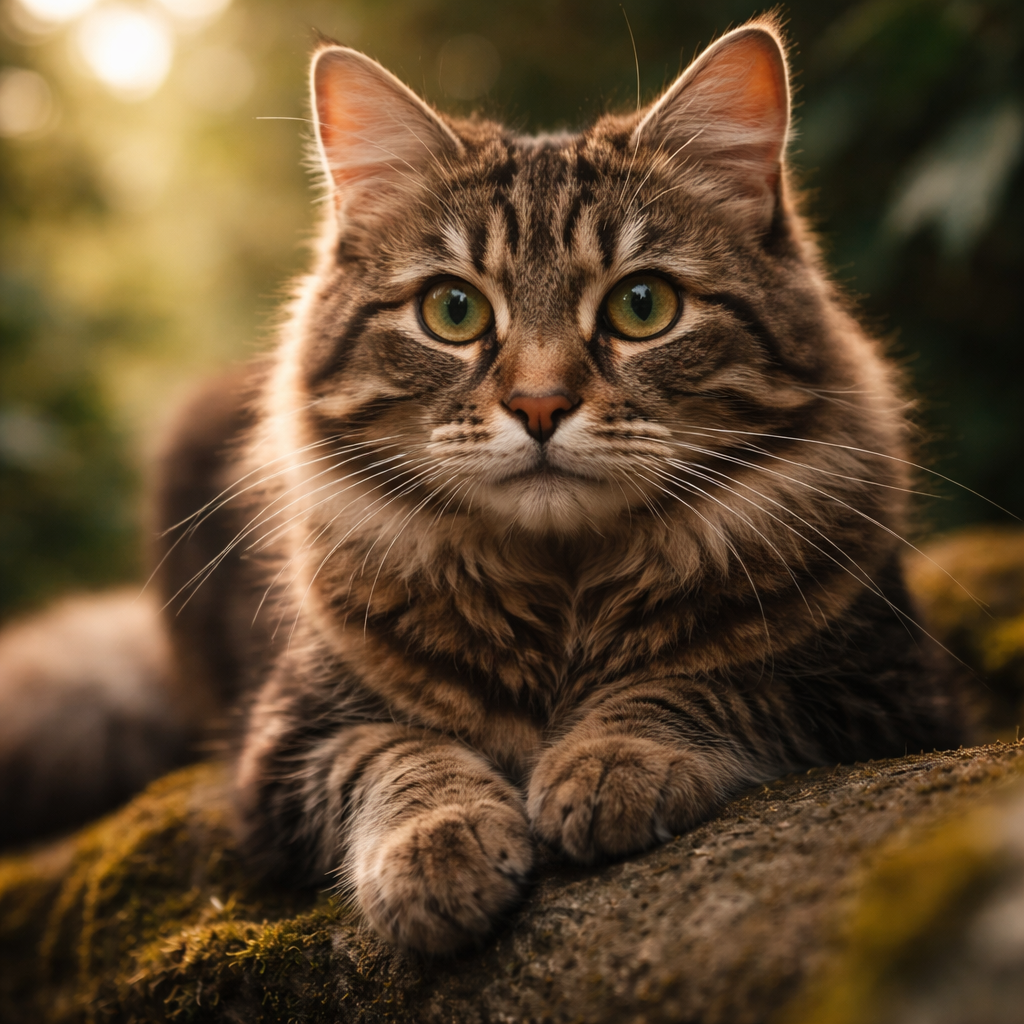
Most people think they know cats pretty well — but the facts about cats that science has uncovered over the past few decades would surprise even the most devoted cat owners. These animals are far more complex, physically remarkable, and emotionally nuanced than their reputation as aloof, low-maintenance pets suggests.
Their bodies do things that seem almost impossible
A cat’s skeletal structure is genuinely extraordinary. Cats have around 230 bones — more than humans, who have 206 — and their spine is so flexible it allows them to rotate nearly 180 degrees. This flexibility is a core reason they can land on their feet after a fall, a reflex known as the righting reflex that kicks in within milliseconds of leaving a surface.
Their hearing is equally impressive. Cats can rotate each ear independently up to 180 degrees, and they detect frequencies ranging from 48 Hz to 85 kHz. For comparison, humans hear up to roughly 20 kHz. That upper range allows cats to hear ultrasonic sounds produced by small rodents — sounds completely inaudible to us.
| Sense | Cat capability | Human capability |
|---|---|---|
| Hearing range | 48 Hz – 85 kHz | 20 Hz – 20 kHz |
| Night vision | 6–8x better than humans | Baseline |
| Smell receptors | ~200 million | ~5 million |
| Whisker function | Detect air currents and spatial gaps | Not applicable |
The tapetum lucidum — a reflective layer behind the retina — is what causes that eerie eye glow in photos. More importantly, it amplifies available light, giving cats dramatically better low-light vision than humans. They don’t see in complete darkness, but in dim conditions, they operate almost as efficiently as in daylight.
The purr is more than a mood signal
Purring is one of the most studied and least fully understood behaviors in domestic cats. The sound is produced by rapid movement of the laryngeal muscles — essentially, the vocal cords flutter during both inhalation and exhalation, which is why purring is continuous rather than just on the exhale.
Research published in veterinary and bioacoustics journals has found that cat purrs typically fall between 25 and 150 Hz — a frequency range associated with promoting bone density and accelerating tissue healing in mammals.
Cats don’t only purr when content. They purr when stressed, injured, or giving birth. Many researchers interpret purring as a self-soothing mechanism, not just a social signal. There’s also a specific type of purr — sometimes called the “solicitation purr” — that embeds a higher-frequency cry within the normal purring sound. Humans respond to this instinctively, even without knowing why, because the embedded frequency resembles an infant’s cry.
Cat communication is mostly aimed at humans, not other cats
Adult cats in the wild essentially stop meowing once they mature. The extended meowing behavior seen in domestic cats appears to be something they developed specifically in response to living with humans — a kind of adapted communication system built over thousands of years of cohabitation.
Studies on cat-human communication suggest that cats adjust the tone, pitch, and urgency of their vocalizations depending on context and the specific person they’re communicating with. Individual cats develop distinct “dialects” shaped by their environment and the humans around them. Two cats from different households often sound noticeably different even when expressing the same need.
- Slow blinking is widely recognized as a sign of relaxed trust — a behavior cats also respond to when humans initiate it
- Tail position communicates emotional state with fairly consistent meaning across most domestic cats
- Head bunting (rubbing the head against a person or object) is both a marking behavior and a social bonding gesture
- Chirping or chattering at birds is thought to be related to a predatory motor reflex, not frustration as is often assumed
Their relationship with sleep and activity patterns is tied to hunting biology
Cats sleep between 12 and 16 hours a day on average, with some individuals sleeping even more. This isn’t laziness — it’s energy conservation inherited from a predatory lifestyle where short, intense hunting bursts require significant recovery time. Cats are crepuscular by nature, meaning their peak activity windows are around dawn and dusk, though domestic cats often shift their rhythms to align with their owners’ schedules.
The way a cat sleeps also communicates something. A cat sleeping in a tight curl is conserving warmth and protecting vital organs — a posture rooted in survival instinct. A cat that sleeps fully stretched out or exposes its belly is displaying a high level of environmental comfort and trust.
Domestication happened differently than with dogs
Genetic and archaeological evidence points to the domestication of cats beginning roughly 10,000 years ago in the Fertile Crescent, around the same time humans began developing agricultural settlements. Unlike dogs, which were actively bred by humans for specific working roles, cats largely domesticated themselves — they moved toward human settlements because grain stores attracted rodents, and rodents attracted cats.
This origin story explains a lot about cat behavior today. Dogs were selectively bred over generations to follow human direction and read human social cues. Cats were never under that same pressure, which is why their independence and selective responsiveness to commands aren’t personality flaws — they reflect a genuinely different evolutionary path.
A few things most people get wrong
It’s worth addressing some persistent myths, because they affect how people interact with and care for cats.
- Cats are not truly solitary — feral cats form complex social colonies with established hierarchies and cooperative behaviors
- Milk is actually problematic for most adult cats, who are lactose intolerant after kittenhood
- Cats don’t always land on their feet — the righting reflex requires a minimum fall height to activate, and very short drops can actually result in injury
- Indoor cats still need significant mental and physical stimulation; low enrichment environments are a documented cause of stress-related behavioral and health issues
What living with a cat actually does to you
There’s solid research behind the idea that cat ownership has measurable health benefits. Studies have linked cat ownership to reduced cardiovascular risk, lower blood pressure responses to stress, and improved outcomes for people managing anxiety and depression. The effect isn’t universal and depends on the relationship quality between owner and animal, but the data is consistent enough to be taken seriously.
Beyond the physical metrics, there’s something genuinely compelling about a species that chose to live alongside humans on its own terms, adapted its communication specifically to connect with us, and still manages to remain fundamentally itself. That combination — familiarity and mystery in the same animal — is probably why people have found cats worth writing about for thousands of years, and why that’s unlikely to change.