Most people catch several respiratory infections per year, yet few know which approaches actually shorten the duration — and which are little more than habit. If you’re trying to figure out how to get rid of a cold as quickly as possible, the answer isn’t one magic remedy but a combination of well-timed, evidence-backed actions that work with your immune system rather than against it.
Why the first 48 hours matter most
The common cold is caused primarily by rhinoviruses, though coronaviruses, adenoviruses, and a handful of others can produce nearly identical symptoms. By the time you feel that familiar scratch at the back of your throat, the virus has already been replicating for one to three days. This means your window for the most impactful interventions is narrow — acting early makes a measurable difference in how long symptoms last and how intense they become.
Sleep is one of the most underestimated tools during those first hours. Research consistently shows that people who sleep fewer than six hours a night are significantly more susceptible to viral infections and experience longer recovery times. Prioritizing seven to nine hours isn’t passive — it’s an active part of fighting the infection.
Hydration and rest: the foundation that everything else builds on
No supplement or herbal remedy works well on a dehydrated, exhausted body. Fluids help thin mucus secretions, support lymphatic circulation, and maintain the mucous membranes that act as a physical barrier against further irritation. Plain water, warm broths, and herbal teas with honey and lemon are all excellent choices — not because they contain miracle compounds, but because they keep your body’s natural processes running smoothly.
“Chicken soup has been studied in clinical settings and shown to have mild anti-inflammatory properties, partly due to cysteine released during cooking — one of the few folk remedies with genuine scientific backing.”
Avoid alcohol and caffeine in large amounts during active illness. Both have diuretic effects and can disrupt sleep architecture, which is counterproductive when your immune system is doing its hardest work during deep sleep stages.
What actually helps — and what doesn’t
The market for cold remedies is enormous, and not all products live up to their claims. Here’s a straightforward breakdown based on current evidence:
| Remedy | Evidence Level | Notes |
|---|---|---|
| Zinc lozenges (within 24h of onset) | Moderate | May reduce duration by 1–2 days when started early |
| Vitamin C (ongoing supplementation) | Low to moderate | Helps prevention more than treatment; high-dose during illness has minimal effect |
| Honey (for cough relief) | Moderate | Shown to be as effective as some OTC cough suppressants |
| Nasal saline rinse | Good | Clears mucus, reduces congestion, safe for all ages |
| Echinacea | Mixed | Some studies show modest benefit; inconsistent results overall |
| Antibiotics | Not applicable | Colds are viral — antibiotics have no effect and carry risks |
Over-the-counter decongestants and antihistamines don’t cure anything, but they can make symptoms more manageable so you can sleep and function. Use them strategically rather than around the clock.
Practical steps to ease symptoms at home
Beyond the basics of rest and fluids, there are several targeted things you can do to make the experience significantly more bearable:
- Use a humidifier in your bedroom — dry air irritates inflamed nasal passages and makes congestion worse overnight
- Elevate your head slightly while sleeping to reduce postnasal drip and nighttime coughing
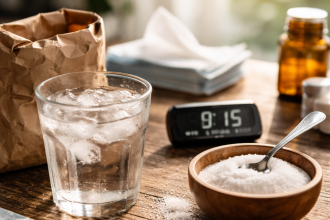
- Gargle with warm salt water to temporarily relieve a sore throat — about half a teaspoon of salt per cup of warm water works well
- Apply a mentholated chest rub before bed to ease breathing and improve perceived congestion
- Keep the environment cool and well-ventilated — overheating doesn’t help the body fight a cold
One thing worth mentioning: steam inhalation is widely recommended, but the evidence is surprisingly limited. It may offer temporary relief but doesn’t speed up recovery. If it makes you feel better, there’s no harm — just be cautious with very hot water to avoid burns.
When to stop managing it yourself
The vast majority of colds resolve on their own within seven to ten days. However, certain symptoms signal that something more serious may be developing and warrant medical attention:
- Fever above 39°C (102.2°F) that persists for more than two to three days
- Symptoms that improve and then suddenly get significantly worse
- Severe facial pain or pressure, which may indicate a sinus infection
- Difficulty breathing, chest pain, or persistent wheezing
- A cough that produces colored mucus and lasts beyond ten days
These aren’t reasons to panic — they’re simply signs that your body may need more than rest and fluids. A doctor can rule out conditions like strep throat, influenza, or bacterial sinusitis that do respond to specific treatments.
Building resilience so the next cold hits less hard
Recovery is also a good moment to think about what made you vulnerable in the first place. Chronic sleep deprivation, high stress levels, a diet low in vegetables and fruits, and a sedentary lifestyle are all factors that suppress immune function and make upper respiratory infections more frequent and more severe.
Regular moderate exercise — walking, cycling, swimming — has been shown in multiple studies to reduce the frequency of colds. The key word is moderate: intense overtraining can actually have the opposite effect and temporarily suppress immunity. Consistent handwashing and avoiding touching your face in public spaces remain two of the most effective preventive measures ever documented.
Getting through a cold isn’t just about the right remedies in the right order. It’s about understanding what your body actually needs during an active infection — and giving it the conditions to do what it already knows how to do.