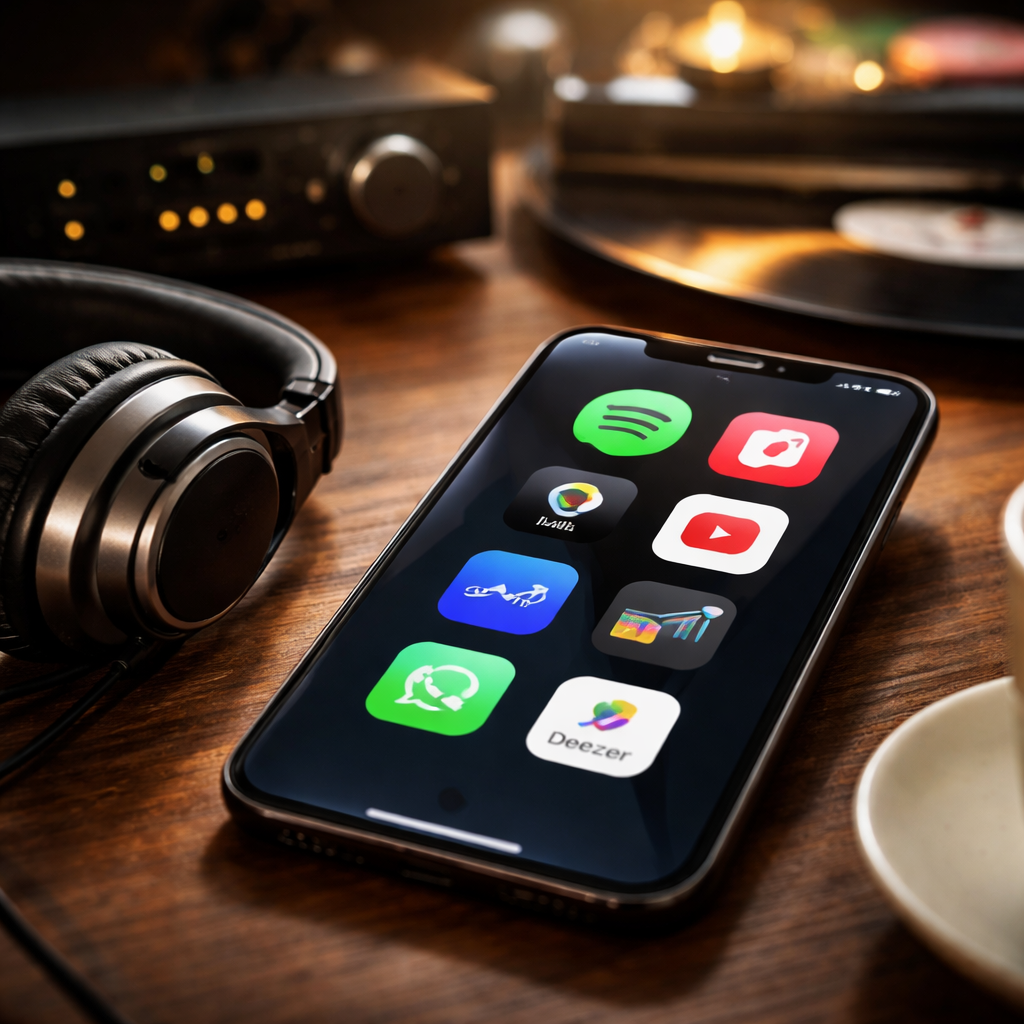
Most people stick with Spotify simply out of habit — not because it’s the best option for them. If you’ve ever felt frustrated by its algorithm, annoyed by the free-tier limitations, or just curious whether something better exists, you’re not alone. Searching for a real alternative to Spotify is more common than you’d think, and the good news is: the market has genuinely strong contenders worth your attention.
Why people actually leave Spotify
Before diving into options, it’s worth understanding what drives people away. For some, it’s the audio quality — Spotify’s standard streaming bitrate simply doesn’t satisfy audiophiles. For others, it’s the music catalog: certain regional artists, classical recordings, or niche genres are either missing or poorly organized. And then there’s the podcast-music mix that many users find cluttered and distracting.
Price also plays a role. Depending on your country, Spotify Premium can feel steep — especially when competitors offer similar or better features at a lower cost or even for free with fewer restrictions.
The strongest music streaming alternatives compared
Each platform below has a distinct personality. Choosing one isn’t just about price — it’s about how you listen, what you listen to, and what kind of experience you want.
| Platform | Free Tier | Audio Quality | Best For |
|---|---|---|---|
| Apple Music | No | Up to 24-bit/192kHz lossless | Apple ecosystem users |
| Tidal | Limited | HiFi / MQA / Dolby Atmos | Audiophiles |
| YouTube Music | Yes (ads) | Up to 256kbps AAC | Variety seekers, video fans |
| Amazon Music | Limited | Up to HD / Ultra HD | Prime subscribers |
| Deezer | Yes (limited) | Up to FLAC quality | Global catalog lovers |
| Qobuz | No | Up to 32-bit/192kHz | Serious audiophiles |
Apple Music: seamless but tied to an ecosystem
If you use an iPhone, iPad, or Mac, Apple Music integrates so naturally into your daily routine that switching feels effortless. The catalog size is comparable to Spotify, and the lossless audio option — available at no extra cost with a subscription — is a significant advantage for anyone who cares about sound fidelity.
The recommendation algorithm works differently from Spotify’s. It leans more on editorial curation, with human-made playlists that feel less formulaic. The downside? There’s no meaningful free tier, and Android users often report a less polished experience compared to iOS.
Tidal and Qobuz: for those who hear the difference
These two platforms exist almost exclusively for listeners who take audio quality seriously. Tidal offers HiFi streaming, spatial audio through Dolby Atmos, and has historically been associated with artist-friendly royalty models. Qobuz goes even further — it’s the go-to platform for classical music fans and jazz enthusiasts who want studio-master recordings.
“If you’ve invested in good headphones or a proper speaker setup, streaming at 128kbps is like watching a 4K film through frosted glass.”
Neither platform offers a generous free tier, so they require commitment. But for the right listener, the difference in sound is immediately noticeable — especially on well-recorded acoustic music.
YouTube Music and Deezer: flexibility first
YouTube Music has one remarkable advantage no competitor can match: access to user-uploaded content, live recordings, rare versions, and official music videos — all within a single app. If you’ve ever searched for an obscure live concert or a deep-cut B-side, YouTube Music often has it when other platforms don’t.
Deezer sits in a comfortable middle ground. It has a solid free tier, broad international catalog coverage, and a feature called Flow — a personalized endless stream that adapts as you listen. It’s not as well-known as the big names, but it consistently earns respect from users who discover it.
What about offline listening and podcast support?
Offline playback is a standard feature across all major paid streaming services. The differences lie in the details: how many devices you can download to simultaneously, whether downloads expire, and how smoothly the app handles large libraries.
Podcast support varies significantly. Spotify has pushed hard into podcasting and now hosts exclusive content. Most alternatives treat podcasts as a secondary feature or skip them entirely. If podcasts are a core part of your listening routine, you may want to keep a dedicated podcast app — like Pocket Casts or Overcast — regardless of which music platform you choose.
Niche but worth knowing: Bandcamp and SoundCloud
These two platforms operate on a completely different logic. Bandcamp is a direct-support model where you purchase music from independent artists — no subscription needed, no algorithm deciding what you hear next. It’s become a cultural institution for indie music, and many artists earn meaningful income there.
SoundCloud, on the other hand, is where emerging artists upload tracks before they’re signed or discovered. If staying ahead of trends or finding underground music matters to you, SoundCloud’s free tier gives access to an enormous library of original content that simply doesn’t exist anywhere else.
- Bandcamp: best for supporting artists directly and owning your music
- SoundCloud: best for discovering new and underground artists early
- Apple Music: best for iPhone users who want premium sound
- Tidal: best for audiophiles and spatial audio enthusiasts
- YouTube Music: best for variety, rare recordings, and live content
- Deezer: best for a balanced experience with global catalog access
- Qobuz: best for classical music and hi-res audio downloads
The choice that actually fits your listening life
There’s no single winner here — and that’s actually the point. Spotify built its reputation on convenience and discovery, but convenience isn’t the same as quality, and discovery algorithms aren’t the same as genuine music exploration. The platforms listed above each do something Spotify doesn’t do as well, whether that’s audio fidelity, artist support, catalog depth, or sheer flexibility.
The most practical approach: identify what frustrates you most about your current setup, match that frustration to the platform that solves it, and give it a real trial run. Switching costs are low — your playlists can transfer, your habits will adapt, and you might find that a different platform fits the way you actually listen to music far better than the one you’ve been using by default.