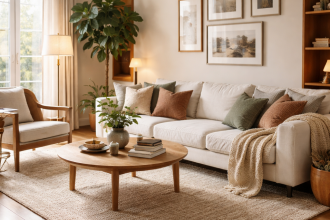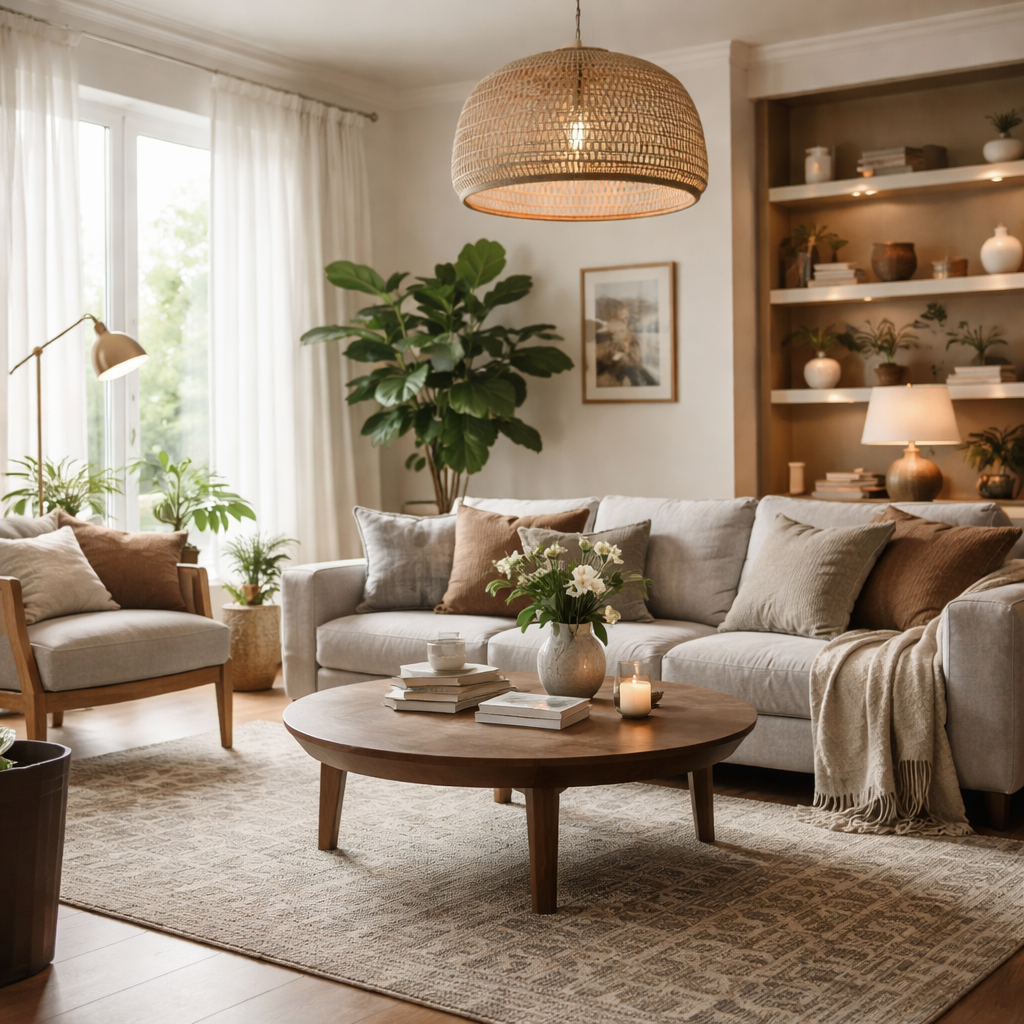
Most people searching for ideas for interior design end up overwhelmed by Pinterest boards, conflicting advice, and trends that feel either too expensive or too temporary. The truth is, transforming a space rarely requires a complete overhaul — it requires knowing which changes actually make a difference.
Start with what the room does, not what it looks like
Before choosing colors or furniture, think about how the space is actually used throughout the day. A living room that doubles as a home office needs very different solutions than one that’s purely for relaxation. Defining the function of each zone helps you avoid the most common mistake in home decorating: buying things that look great in photos but don’t work in real life.
Once you’re clear on purpose, everything else — from lighting choices to furniture layout — becomes much easier to decide.
Lighting changes more than you think
Lighting is one of the most underrated elements in home interior design. Most rooms rely on a single ceiling light, which flattens the entire space and makes it feel either clinical or dim. Layering light sources — overhead, task, and ambient — creates depth and allows you to shift the mood depending on the time of day.
- Use floor lamps in corners to eliminate harsh shadows
- Install dimmer switches to control intensity without replacing fixtures
- Add under-shelf or strip lighting in kitchens and bookcases for a warm accent
- Choose warm white bulbs (2700–3000K) for living spaces; cooler tones work better in workspaces
Natural light matters just as much. Sheer curtains instead of heavy drapes can completely change how spacious a room feels during the day.
Color strategy that actually works in small and large spaces
Color theory for interiors isn’t about following rules — it’s about understanding contrast and proportion. A common misconception is that small rooms need light colors. In reality, a deep, rich tone on all four walls can make a compact space feel more intentional and cozy rather than cramped.
The 60-30-10 rule remains one of the most reliable guidelines in interior color planning: 60% dominant color (walls, large furniture), 30% secondary color (upholstery, rugs), and 10% accent (cushions, art, accessories).
This ratio works across styles — from minimalist Scandinavian interiors to maximalist eclectic spaces. The proportions keep visual balance even when the individual colors are bold.
Furniture arrangement: the layout decisions people get wrong
Pushing all furniture against the walls is one of the most widespread layout mistakes in living room design. It actually makes a room feel less comfortable and more like a waiting area. Floating furniture — pulling pieces slightly away from walls — creates natural conversation zones and gives the room a more curated, intentional feel.
| Common mistake | Better approach |
|---|---|
| All sofas against the wall | Float seating to create a defined zone |
| One large rug under nothing | Anchor furniture legs on the rug |
| Matching furniture sets | Mix pieces of similar scale but different styles |
| Ignoring traffic flow | Leave at least 90 cm between major pieces |
Texture and layering: where rooms gain personality
A room decorated entirely in smooth, flat surfaces — even with a beautiful color palette — tends to feel cold and unfinished. Texture adds tactile richness: a linen throw over a leather sofa, a jute rug on hardwood floors, matte ceramic vases next to glossy tiles.
The goal isn’t to add more stuff, but to vary the surface quality of what’s already there. Even something as simple as replacing a flat cushion cover with a boucle or velvet one shifts how a space reads visually.
Plants, art, and the details that pull a room together
Houseplants aren’t just a trend in modern interior decoration — they genuinely improve air quality and introduce an organic element that softens rigid lines in contemporary spaces. Large-leaf plants like monstera or fiddle-leaf fig work particularly well in corners that feel empty or awkward.
When it comes to wall art, scale is everything. A small print on a large wall looks like an afterthought. A single oversized piece — or a well-composed gallery wall that spans at least 120 cm wide — becomes an anchor. Hang art so the center sits at roughly eye level, around 145–150 cm from the floor.
Small decorative objects work best in odd-numbered groupings. Three or five items of varying heights on a shelf create more visual interest than two identical vases placed symmetrically.
Where to begin if you feel stuck
The most practical starting point is often the one piece you already love — a sofa, a rug, a piece of art — and building outward from there. Use it as your reference point for scale, color, and mood rather than trying to design the whole room from scratch.
If you’re working with a tight budget, prioritize changes that affect the largest surface areas first: walls, flooring, and window treatments. These have more visual impact than accessories and are harder to change later, so getting them right early saves both money and frustration down the line.
Good interior design isn’t about having a perfect space — it’s about creating one that genuinely fits the way you live. That’s what makes the difference between a room that photographs well and one that actually feels like home.