Most weighted blankets survive machine washing just fine — but only when you follow the right steps. Skip a few details, and you risk clumping filling, damaged fabric, or a blanket that loses its therapeutic weight distribution entirely. Here’s what actually matters before you toss it in the wash.
What the Care Label Is Really Telling You
Before anything else, check the care label sewn into your blanket. This isn’t just a formality — it’s the manufacturer’s direct guidance based on the specific materials used. Weighted blankets vary widely in construction: some use glass beads, others rely on plastic poly pellets, steel shot beads, or even natural fillers like sand or organic cotton batting. Each material responds differently to water, heat, and agitation.
A blanket filled with glass micro-beads, for example, generally handles machine washing better than one stuffed with organic fillers, which can absorb water, clump, or develop mildew if not dried thoroughly. Cotton outer covers tend to be more forgiving than minky or fleece fabrics, which can pill or stretch under aggressive wash cycles.
Machine Washing: When It Works and When It Doesn’t
The good news is that many weighted blankets — particularly those with glass bead filling and cotton or polyester covers — are machine washable. The key variables are blanket weight and your washing machine’s capacity.
| Blanket Weight | Recommended Washer Capacity | Cycle Setting |
|---|---|---|
| Up to 12 lbs (5.5 kg) | Standard home washer (top or front load) | Gentle/delicate, cold water |
| 12–20 lbs (5.5–9 kg) | Large-capacity home washer or laundromat | Gentle cycle, cold or warm water |
| Over 20 lbs (9 kg) | Commercial laundromat machine only | As per care label |
Overloading your home washer with a heavy blanket doesn’t just risk poor cleaning results — it can strain the drum motor and suspension over time. A commercial front-loading machine at a laundromat handles the weight and agitation more safely for heavier blankets.
If your washer has a central agitator (the tall spindle in the middle of a top-load machine), consider skipping it entirely for weighted blankets. Agitators can tangle the internal fill pockets and cause uneven wear on the stitching.
Detergent, Temperature, and Spin Speed — the Details That Make a Difference
Use a mild, fragrance-free liquid detergent rather than powder. Powder detergents can leave residue in the weighted fill pockets, especially in blankets with densely sewn internal compartments. Avoid fabric softener altogether — it coats synthetic fibers, reduces the breathability of the fabric, and doesn’t actually benefit weighted blanket materials.
Water temperature is worth paying attention to. Cold water is generally the safest option across most blanket types — it prevents shrinkage in cotton covers and avoids breaking down heat-sensitive synthetic fabrics. Warm water is acceptable for poly pellet blankets if the care label permits, but hot water is almost never recommended.
Keep the spin speed low or medium. High-speed spinning puts significant mechanical stress on the internal fill compartments and outer seams, and repeated high-speed cycles will eventually cause the stitching to loosen — meaning the fill can migrate or escape the pockets over time.
Drying a Weighted Blanket Without Ruining It
Drying is where many people unknowingly cause damage. A weighted blanket that’s been washed correctly can still end up ruined if it’s dried improperly.
- Use a low heat setting in the dryer — high heat can melt plastic pellets, warp synthetic fabrics, and shrink cotton covers significantly.
- Run multiple shorter drying cycles rather than one long, high-heat session. Stop periodically to redistribute the fill manually by shaking and fluffing the blanket.
- Make sure the blanket is completely dry before storing or using it. Even slightly damp fill pockets can develop mold or an unpleasant odor within a day or two.
- Air drying is a safe alternative, but it takes considerably longer — sometimes 24 hours or more depending on blanket weight and ambient humidity. Lay it flat rather than hanging it, which can cause the fill to shift and create uneven weight distribution.
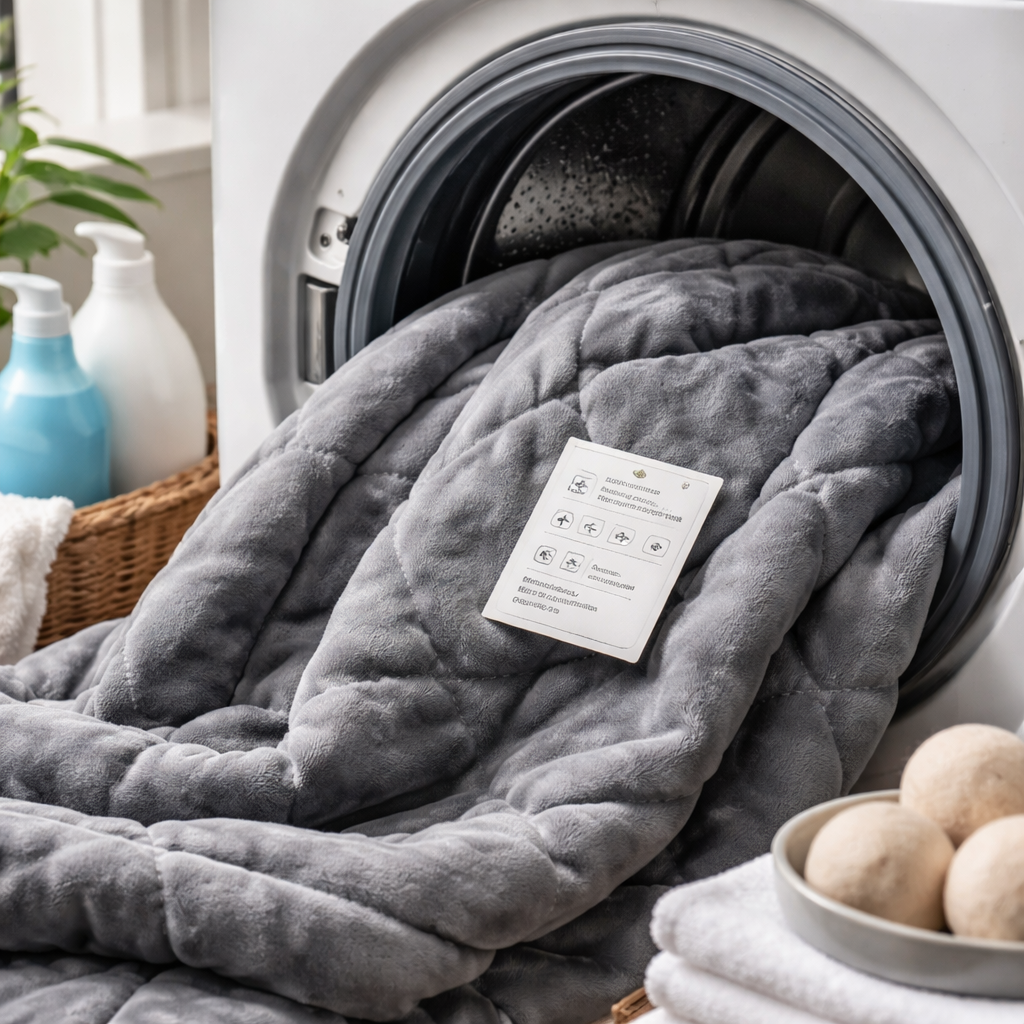
A helpful trick: toss two or three clean tennis balls or wool dryer balls into the dryer alongside the blanket. They help break up any clumping in the fill pockets as the blanket tumbles, resulting in more even distribution once dry.
Spot Cleaning and When to Wash Less Frequently
Full washing every week isn’t necessary — and actually, washing too frequently accelerates wear on both the fabric and the internal stitching. For most regular users, washing once a month or every few weeks is sufficient. Between full washes, spot cleaning handles most day-to-day spills and odors effectively.
For spot treatment, dampen a clean cloth with cold water and a small amount of mild detergent. Blot the affected area gently — don’t scrub, which can push the stain deeper into the fabric or damage the fiber surface. Rinse by blotting with a clean damp cloth, then allow the area to air dry fully before using the blanket again.
Using a removable duvet cover over your weighted blanket is one of the most practical approaches to keeping it clean longer. The cover absorbs most of the daily contact — skin oils, dust, light spills — and can be washed as frequently as needed without touching the blanket itself.
Blankets That Should Not Go in the Washer
Not every weighted blanket is machine-safe, and it’s worth knowing the exceptions clearly before assuming yours qualifies.
- Blankets filled with natural materials such as sand, rice, or organic grains should never be machine washed — these fillers absorb water, become extremely heavy, and may decompose or develop bacterial growth.
- Some luxury weighted blankets use layered foam or memory foam inserts instead of loose beads — these require dry cleaning or careful hand washing only.
- Weighted blankets with electronic components (heating elements, vibration motors) are obviously not safe for any form of washing without first removing those components if possible.
- If the care label explicitly states “dry clean only,” follow that instruction regardless of the filling type.
The Part Most People Skip — and Shouldn’t
After every wash and full dry cycle, take a few minutes to run your hands across the entire surface of the blanket and feel whether the fill is evenly distributed across all compartments. Uneven weight distribution isn’t just uncomfortable — it means certain pockets are taking more stress than others, which accelerates wear in those areas and gradually degrades the therapeutic quality of the blanket.
If you notice persistent clumping in specific sections even after proper drying, it may indicate that some internal stitching has loosened. In that case, inspect the seams and, if needed, have them repaired before the next wash — washing a blanket with compromised fill pockets will only worsen the problem.
Washing a weighted blanket safely comes down to knowing your specific blanket’s materials, matching the washing method to those materials, and not rushing the drying process. Do those three things consistently, and a quality weighted blanket will hold up well through regular laundering for years.