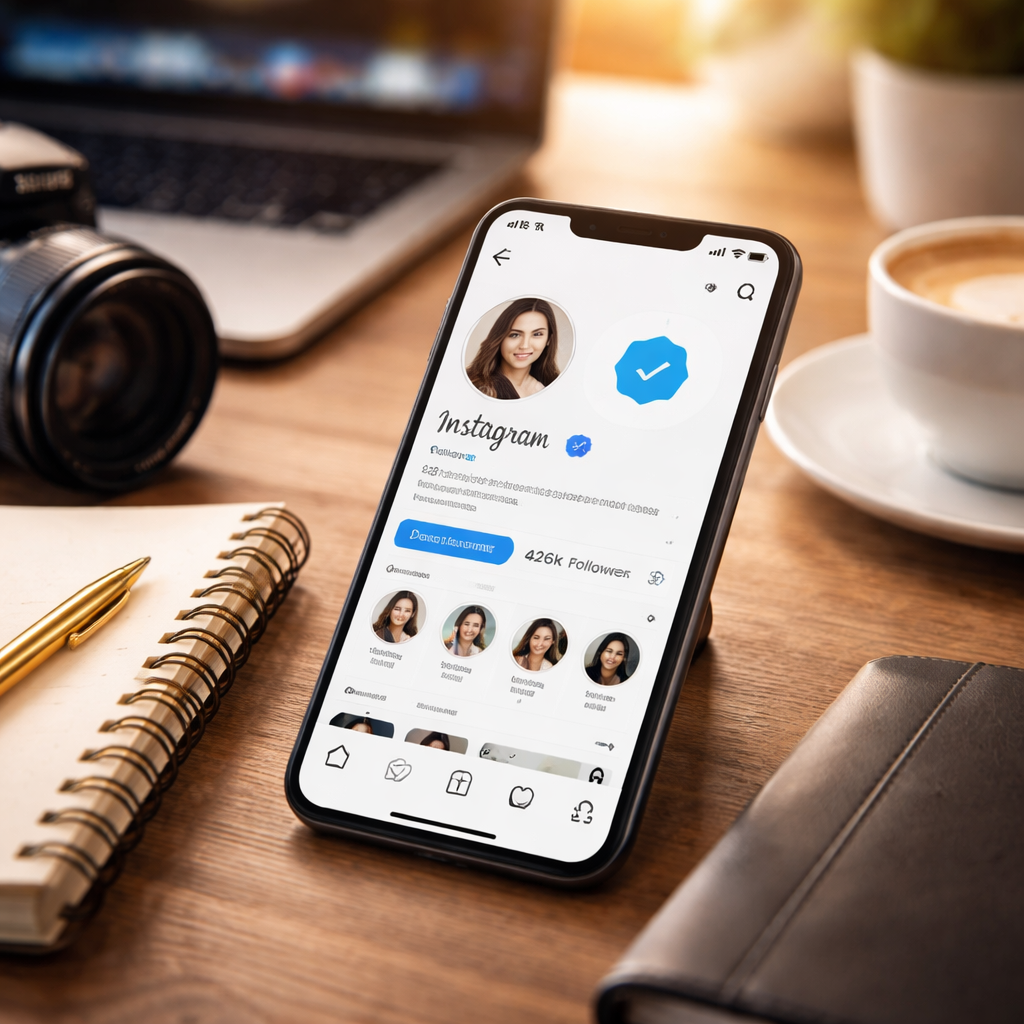
Most creators assume that getting a blue badge is reserved for celebrities or massive brands — but that assumption has kept a lot of genuinely notable people from even trying. If you’ve been wondering how to get verified on instagram, the honest answer is: it’s more accessible than it looks, but only if you approach it the right way.
What the blue checkmark actually means
Instagram’s verification badge isn’t a reward for popularity. It’s a signal of authenticity — a confirmation that an account truly belongs to the person or brand it claims to represent. This distinction matters, because Instagram isn’t looking for the biggest account. It’s looking for accounts that are at real risk of being impersonated or confused with others.
There are currently two ways to get verified on the platform: through a paid Meta Verified subscription, or through the traditional editorial review process where Instagram manually evaluates your account. Both paths have different requirements and suit different types of users.
Two different routes, two different goals
Understanding which path fits your situation will save you a lot of frustration. Here’s a clear breakdown of both options:
| Feature | Meta Verified (paid) | Traditional verification (free) |
|---|---|---|
| Who it’s for | Individual creators and small businesses | Public figures, celebrities, brands with notable presence |
| Cost | Monthly subscription fee | Free |
| Requirements | Government ID, real name on profile | Notability, authenticity, completeness, uniqueness |
| Badge appearance | Blue checkmark | Blue checkmark |
| Additional perks | Account protection, support access | Credibility signal, no extra perks |
If you’re a solo creator just starting to build a public presence, Meta Verified is probably your most realistic option right now. If you’re a journalist, musician, athlete, or established brand with media coverage behind you — the traditional route is worth pursuing.
The four criteria Instagram uses to evaluate verification requests
For those applying through the free editorial process, Instagram evaluates accounts against four core criteria. Meeting all of them doesn’t guarantee approval, but failing even one practically guarantees rejection.
- Authenticity — your account must represent a real person, business, or entity
- Uniqueness — only one account per person or business can be verified (with exceptions for language-specific accounts)
- Completeness — your profile must be public, have a bio, a profile photo, and at least one post
- Notability — you must be well-known and highly searched for, typically backed by coverage in credible news sources
The notability requirement is where most applications fall apart. Instagram specifically states that paid or promotional content doesn’t count as press coverage. What matters is organic media attention — articles, features, or mentions in recognized publications that aren’t sponsored.
Instagram’s own guidelines state: “We don’t accept notability based on general interest content.” Your account needs to represent something or someone that the public is actively searching for.
How to submit a verification request step by step
The process itself is straightforward. Here’s exactly how it works from within the app:
- Open Instagram and go to your profile
- Tap the three horizontal lines in the top right corner
- Go to Settings, then Account
- Select “Request verification”
- Fill in your full name, the category that best describes you, and upload a government-issued ID
- Submit and wait — Instagram typically responds within 30 days
If your request is denied, Instagram allows you to reapply after 30 days. Repeated denials usually point to one of two issues: either the notability criteria isn’t met, or the account itself needs more work before it’s ready.
What actually builds a stronger application
The badge itself isn’t built on the day you apply — it’s built over time through consistent, visible activity. Here are the elements that genuinely strengthen your position:
- Multiple news articles or interviews from outlets with editorial standards
- A Wikipedia page, if applicable to your field
- Active profiles on other major platforms that are also well-maintained
- A clear, professional bio that immediately communicates who you are
- Consistent posting history that shows the account is active and genuine
It’s also worth noting that follower count is not officially listed as a requirement. Accounts with tens of thousands of followers have been denied, while accounts with smaller but more newsworthy audiences have been approved. The platform is genuinely more interested in whether you’re notable than whether you’re popular.
Common mistakes that quietly kill your chances
Some errors are obvious — a private account, missing profile photo, or incomplete bio. But others are less visible and still hurt your application significantly.
One of the most common mistakes is applying too early. If your only media coverage is a press release you paid for, or a blog post on a low-authority site, Instagram’s reviewers will likely see through it. Another frequent issue is linking verification with growth goals — verification doesn’t automatically increase your reach or follower count, so treating it as a marketing strategy misunderstands what the badge is for.
There’s also the temptation to use third-party services promising guaranteed verification. These are universally scams. Instagram does not work with any external service to grant badges, and using such services puts your account at risk of being flagged or permanently banned.
The badge is a byproduct, not the goal
This might sound counterintuitive, but the creators and public figures who tend to get verified aren’t obsessively chasing the badge — they’re building something real, and verification follows naturally. Consistent content, genuine media presence, a clear public identity, and a professional account profile are the actual building blocks. When those elements are in place, the application becomes a formality rather than a gamble.
Whether you choose to go through Meta Verified for immediate results or build toward the editorial review over time, the underlying principle is the same: your Instagram account should reflect a presence that exists and matters beyond the platform itself.