Most people don’t realize how to fix posture until they start waking up with a stiff neck or catching their reflection hunched over a screen. The shift from awareness to action is smaller than it seems — but it requires understanding what’s actually going wrong in your body, not just standing up straighter for five minutes.
Why your posture probably isn’t your fault
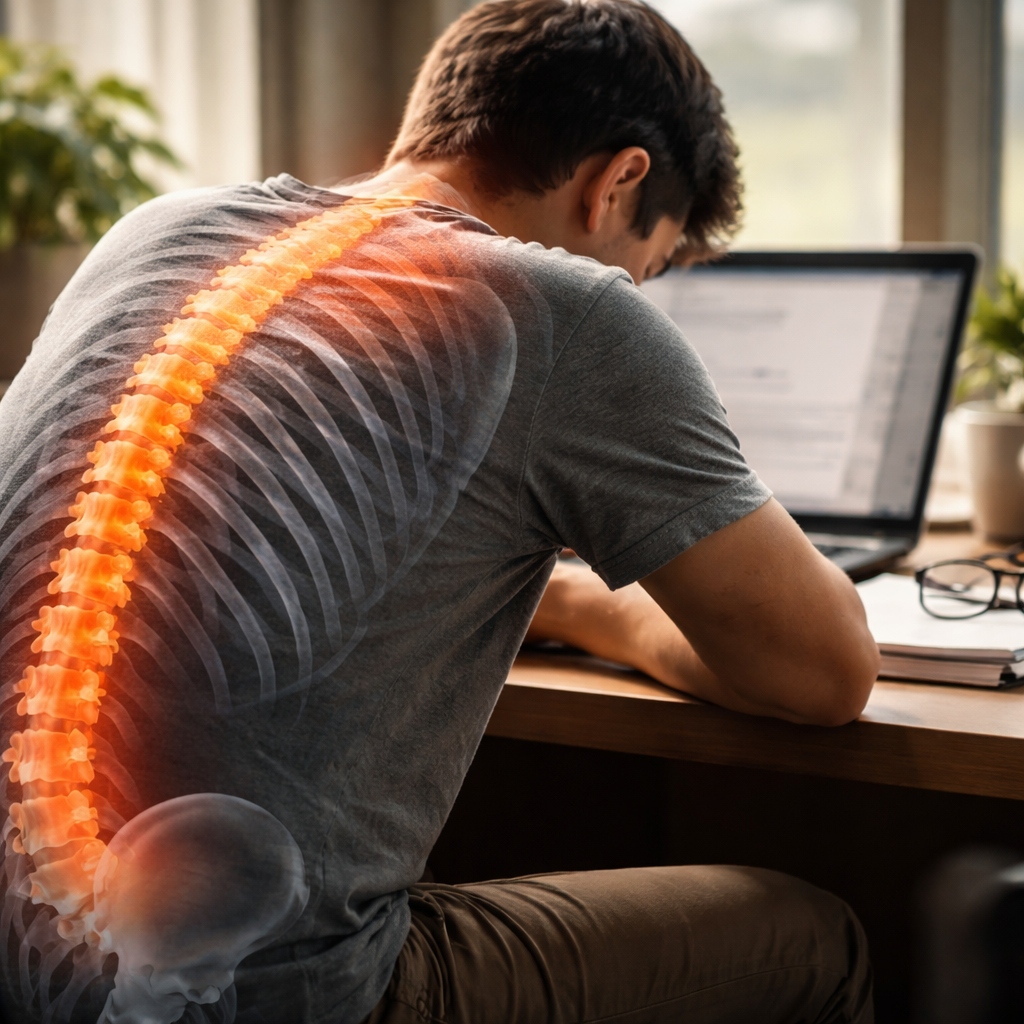
Sedentary habits, desk-based work, and hours of scrolling on phones have reshaped how most adults carry themselves. The spine naturally craves movement and variety — not the static, forward-leaning position most people hold for six to ten hours a day. When certain muscles stay shortened for too long, they pull the skeleton out of alignment. Other muscles, left unused, simply stop firing correctly.
This is called muscular imbalance, and it’s at the root of most posture-related problems. It means the solution isn’t willpower — it’s targeted movement that resets how your muscles work together.
The areas that drive most posture problems
Before jumping into exercises, it helps to understand which parts of the body are most commonly affected. Poor posture rarely comes from a single spot — it’s a chain reaction.
- Tight hip flexors pull the pelvis forward, creating an exaggerated lower back curve
- Weak glutes fail to stabilize the pelvis, letting it tilt further
- A rounded upper back (thoracic kyphosis) shifts the head and shoulders forward
- Weak deep neck flexors allow the chin to jut out, straining the cervical spine
- Tight chest muscles pull the shoulders inward, compressing the front of the torso
Understanding this chain matters because targeting only one area — say, doing core exercises without addressing tight hips — often delivers frustrating, short-lived results.
Movement practices that actually create change
Physical therapists and movement specialists consistently point to the same principles: lengthen what’s tight, strengthen what’s weak, and build body awareness so corrections become automatic over time.
Here are the categories of work that make the most consistent difference:
| Focus Area | What to Do | Why It Helps |
|---|---|---|
| Hip flexor flexibility | Kneeling lunge stretch, 90/90 hip stretch | Releases anterior pelvic tilt |
| Thoracic mobility | Foam roller extensions, thread-the-needle stretch | Opens upper back, reduces shoulder rounding |
| Posterior chain strength | Glute bridges, Romanian deadlifts | Stabilizes the pelvis and lower back |
| Scapular control | Band pull-aparts, face pulls | Retrains shoulder blade position |
| Deep neck flexors | Chin tucks (supine and standing) | Corrects forward head posture |
Consistency with a smaller set of well-chosen exercises outperforms sporadic sessions with a long routine. Even fifteen to twenty minutes daily, done regularly, produces visible and felt changes within weeks.
How your environment shapes the way you hold yourself
Exercise alone won’t fix much if you return to the same ergonomic setup that caused the problem. The environment you spend the most time in — especially your workspace — sends constant postural signals to your body.
The best posture is your next posture. No single position is perfect when held for hours — variety and movement are what the body actually needs.
A few practical adjustments that make a disproportionate difference:
- Position your monitor so the top of the screen is at eye level, reducing the tendency to look down
- Keep your feet flat on the floor or on a footrest — avoid crossing your legs for extended periods
- Set your chair so your hips are at roughly ninety degrees, with your lower back lightly supported
- Move every thirty to forty-five minutes — a brief walk or a set of stretches resets accumulated tension
- If you use a phone often, bring the screen up toward eye level rather than dropping your head toward it
Standing desks can help, but only if you actually alternate between sitting and standing — standing in a poor position for hours creates its own set of imbalances.
The role of body awareness in lasting improvement
One of the most underrated aspects of improving alignment is proprioception — your body’s internal sense of where it is in space. Many people genuinely cannot feel when they’re slouching because the position has become their baseline. The nervous system stops flagging it as unusual.
Practices like yoga, Pilates, and the Alexander Technique are valued specifically because they train this internal awareness, not just muscle strength. Regularly checking in — noticing where your shoulders are, whether your jaw is clenched, how your weight is distributed through your feet — gradually recalibrates that internal map.
Posture improvement is less about forcing a new shape and more about building the sensitivity to notice the old one.
A simple starting point if you don’t know where to begin
It’s easy to feel overwhelmed by the volume of information on this topic. If you’re looking for a practical entry point, start here:
- Pick two stretches (hip flexor and thoracic) and one strengthening exercise (glute bridge) — do them daily for two weeks
- Set a recurring reminder to check your sitting position every hour
- Notice how you feel in your neck and upper back after making these changes — that feedback loop is valuable
If you experience persistent pain, numbness, or limited range of motion, working with a physiotherapist or sports medicine professional is genuinely worth it. They can identify specific imbalances that general guidance might miss.
Small habits that compound quietly over time
Posture improvement isn’t a dramatic transformation — it’s a gradual recalibration that happens through repetition. The people who see the most change are those who build it into their routine rather than treating it as a separate project. Walk taller on your way to the kitchen. Do a shoulder roll before a long call. Stretch while watching something in the evening.
The body is adaptive by nature. Given the right inputs consistently, it responds. What feels effortful now — that tall, open stance — eventually becomes the position your body settles into without any conscious effort at all.