Most flea treatments fail not because they’re weak — but because people treat only one part of the problem. If you truly want to know how to get rid of fleas for good, the answer starts not with a spray bottle, but with understanding where these insects actually live, breed, and hide.
Why fleas are harder to eliminate than most people expect
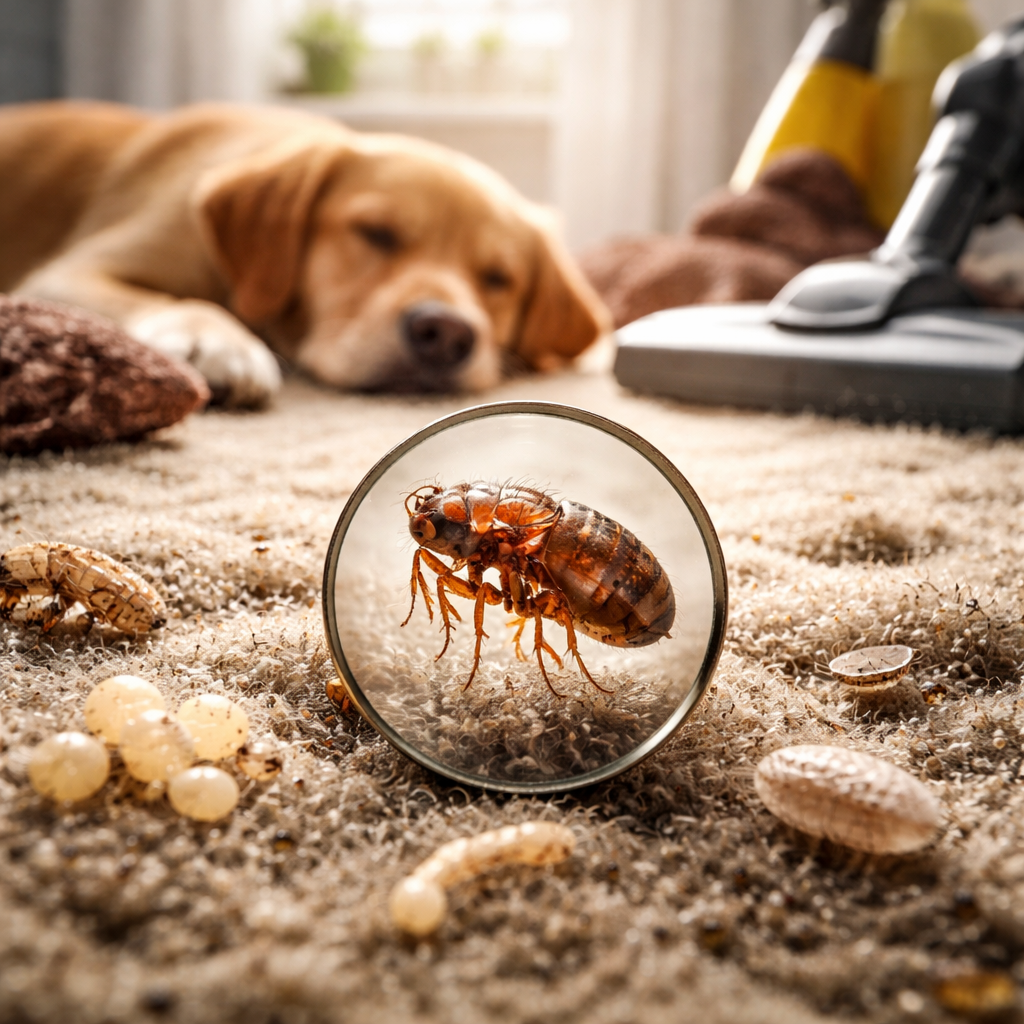
Fleas are remarkably resilient. A single female can lay up to 50 eggs per day, and those eggs don’t stay on your pet — they fall off into carpets, bedding, floorboard cracks, and upholstered furniture. By the time you notice your dog or cat scratching, you’re likely already dealing with a full infestation cycle happening right under your feet.
What makes flea control genuinely difficult is their life cycle. The four stages — egg, larva, pupa, and adult — respond differently to treatments. Adult fleas make up only about 5% of the total flea population in an infested home. The other 95% are hiding in the environment in various developmental stages, many of which are resistant to common insecticides.
Treating your pet: the non-negotiable first step
No home treatment will work long-term if your pet continues to reintroduce fleas. Before anything else, address the animal directly. There are several proven options, and the best choice often depends on the severity of the infestation and your pet’s health status.
- Veterinarian-prescribed spot-on treatments (such as those containing fipronil or imidacloprid) are among the most effective and longest-lasting options.
- Oral flea preventatives prescribed by a vet work from the inside out, killing fleas before they can lay eggs.
- Flea combs can help physically remove adult fleas — useful as a supplementary tool, especially for cats sensitive to chemical treatments.
- Flea shampoos offer immediate relief but provide little residual protection on their own.
Consulting a veterinarian before choosing a product matters more than many pet owners realize. Some treatments safe for dogs are toxic to cats, and over-the-counter options vary widely in effectiveness.
Tackling the home environment: where most efforts fall short
Treating your pet without addressing the home environment is like bailing water from a leaking boat. The majority of the flea population lives in your living space, not on your animal. Here’s a realistic approach to breaking the cycle inside your home.
Vacuuming as a strategic tool
Thorough, frequent vacuuming is one of the most underestimated flea control methods. It physically removes eggs, larvae, and pupae from carpets and floors. Research has shown that vacuuming also kills a significant percentage of adult fleas at all life stages. Focus on areas where your pet rests, along baseboards, under furniture, and in carpet corners. After each session, seal and dispose of the vacuum bag immediately.
Washing fabrics and bedding
All washable items your pet contacts — their bed, blankets, your own bedding if the pet sleeps with you — should be washed in hot water and dried on a high heat setting. Heat is lethal to fleas at all life stages. Do this repeatedly during the treatment period, not just once.
Using insect growth regulators (IGRs)
This is the step most people skip, and it’s often why infestations seem to come back. Insect growth regulators are chemicals that prevent flea larvae from developing into adults. Products containing methoprene or pyriproxyfen are widely available as home sprays and are considered safe when used as directed. They don’t kill adult fleas but break the reproductive cycle effectively.
IGRs can remain active in carpets and fabrics for several months, making them one of the most cost-effective long-term flea prevention tools available for indoor use.
Outdoor flea control: the step often overlooked entirely
If your pet spends time outdoors, the yard can be a constant source of reinfestation. Fleas prefer shaded, humid areas with organic debris — think leaf piles, under decks, in tall grass, or along fence lines.
| Area | Why it’s a risk zone | What to do |
|---|---|---|
| Shaded garden beds | Moist soil, protected from sunlight | Remove debris, apply yard flea spray |
| Under decks and porches | Dark, humid, rarely disturbed | Treat with granular insecticide or IGR spray |
| Tall grass patches | Wildlife passes through, dropping fleas | Mow regularly and treat perimeter |
| Sandy play areas | Warm, loose substrate ideal for larvae | Consider diatomaceous earth application |
Nematodes — microscopic, naturally occurring worms — are a popular organic option for yard treatment. Certain species, particularly Steinernema carpocapsae, parasitize flea larvae in soil without harming pets, humans, or garden plants. They need to be applied to moist soil and kept out of direct sunlight to remain effective.
Natural and low-chemical approaches worth knowing about
For households that prefer to minimize chemical use — especially those with young children or sensitive pets — several evidence-based natural options can play a supporting role in flea management.
- Diatomaceous earth (food-grade) can be applied to carpets and left for 12–48 hours before vacuuming. It works mechanically, damaging the flea’s exoskeleton and causing dehydration.
- Boric acid powder has similar mechanical action and can be worked into carpet fibers, though it should be kept away from children and pets during application.
- Salt, finely ground, absorbs moisture and can dehydrate flea eggs when applied to dry carpets — though results are slower than chemical options.
It’s worth being clear: natural methods work best as part of a broader strategy. Used alone during a heavy infestation, they rarely deliver complete control. Think of them as tools in a layered approach, not standalone solutions.
How long does it actually take to clear a flea infestation?
Realistic expectations matter here. Even with consistent, correct treatment across all fronts — pet, home, and yard — it typically takes three to eight weeks to fully resolve a flea problem. This timeline reflects the flea life cycle: pupae can remain dormant for weeks before hatching, and no single treatment reaches all life stages simultaneously.
Seeing new adult fleas for a few weeks after treatment begins doesn’t mean the process is failing. It often means dormant pupae are hatching and encountering the treated environment. Consistency is the key variable — not intensity of a single treatment.
The most common reason flea treatments fail is stopping too early. Staying consistent for at least six weeks — even when things seem to improve — dramatically reduces the chance of reinfestation.
Building a routine that keeps fleas from coming back
Once you’ve cleared an infestation, prevention becomes far simpler than treatment. The habits that stop fleas from establishing in the first place are straightforward and don’t require ongoing chemical use.
- Keep your pet on a vet-recommended year-round flea prevention program. Even indoor-only cats can be exposed through open windows or contact with other animals.
- Vacuum regularly — at least twice a week in high-traffic and pet-frequented areas.
- Check your pet for flea dirt (tiny dark specks that dissolve red on a damp white cloth) after time outdoors or contact with other animals.
- Maintain your yard: mow grass, clear debris, and limit wildlife access where possible.
- When moving into a new home, treat carpets proactively — previous residents or their pets may have left dormant flea pupae behind.
Fleas are not an indication of a dirty home or negligent pet ownership. They are opportunistic insects that exploit warmth, humidity, and the presence of hosts. Understanding that makes the process of controlling them feel considerably less overwhelming — and considerably more manageable with the right approach.