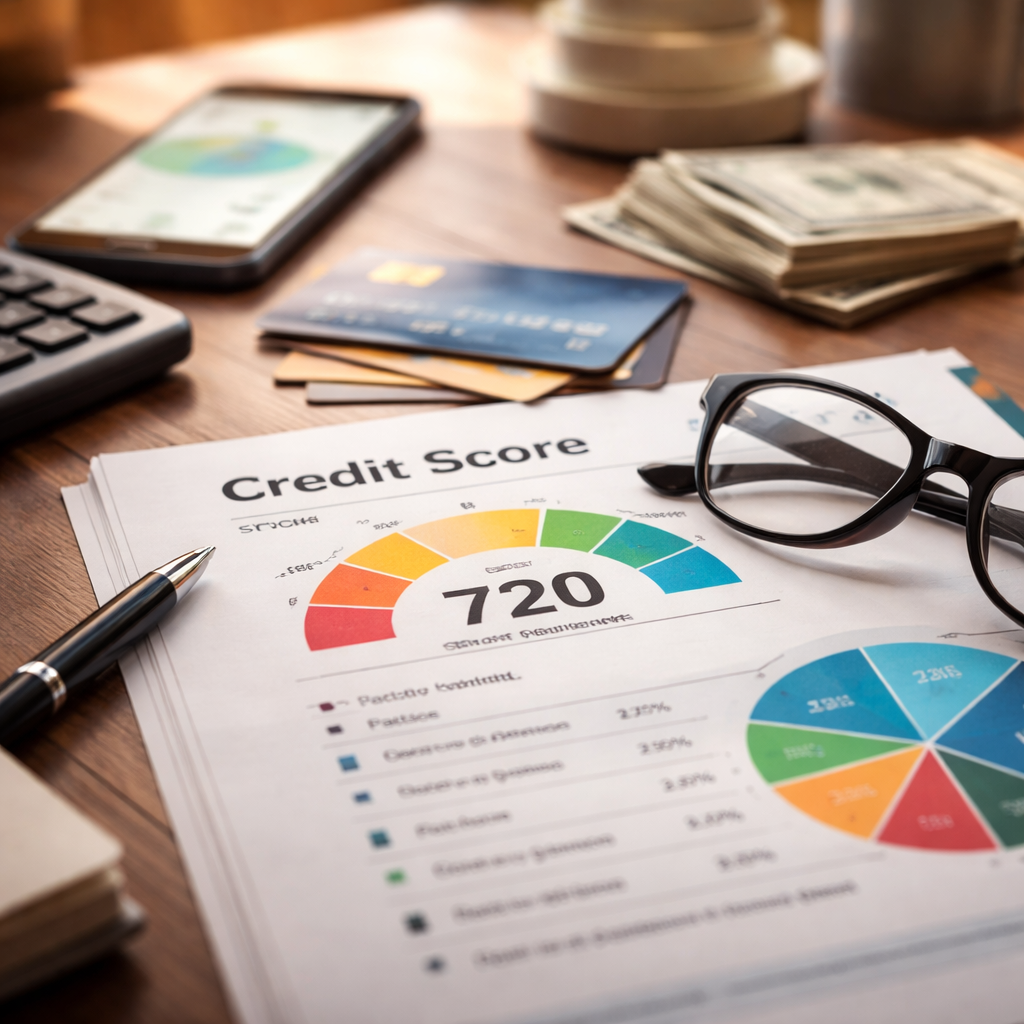
Most people don’t realize their credit score can drop quietly in the background — no alerts, no warnings — until they apply for a loan and hit a wall. If you’ve been wondering how to improve credit score without spending months confused by financial jargon, this guide cuts straight to what actually works, based on how credit scoring models genuinely operate.
What your credit score is actually measuring
Before you can fix something, it helps to understand what’s broken. Credit scores — whether FICO or VantageScore — aren’t random numbers. They reflect specific behaviors over time, and each factor carries a different weight in the final calculation.
| Factor | Approximate weight (FICO) |
|---|---|
| Payment history | 35% |
| Credit utilization | 30% |
| Length of credit history | 15% |
| Credit mix | 10% |
| New credit inquiries | 10% |
Knowing these weights tells you exactly where to focus your energy first. Payment history and utilization together account for nearly two-thirds of your score — so that’s where most of the leverage is.
The payment history trap most people fall into
A single missed payment can stay on your credit report for up to seven years. That’s not a scare tactic — it’s how the reporting system works. But here’s the part that often surprises people: it’s not just about paying on time. It’s about consistency across all accounts, including utilities reported to bureaus, medical bills in collections, and even some subscription services.
Setting up autopay for at least the minimum payment on every account is one of the simplest and most underused strategies for protecting your payment history.
If you do have a late payment on record, the damage isn’t permanent. Scoring models place more weight on recent behavior. A late payment from three years ago matters significantly less than one from three months ago. Staying consistently on time going forward genuinely moves the needle.
Credit utilization: the lever you can pull quickly
Credit utilization is the ratio of your current balances to your total available credit limits. Keeping this ratio low — ideally under 30%, and even better under 10% — signals to lenders that you’re not financially stretched.
What makes utilization particularly useful is that it resets monthly when your statement closes. Unlike payment history, which builds slowly, you can see score improvements within a single billing cycle by paying down balances before the statement date — not just by the due date.
What opening or closing accounts actually does to your score
There’s a lot of conflicting advice online about whether to close old credit cards. The straightforward answer: closing an account reduces your total available credit, which raises your utilization ratio — and that can hurt your score even if the card had no balance.
On the flip side, opening a new account does two things at once: it adds a hard inquiry (a small, temporary dip) but also increases your total credit limit, which can lower your utilization. The net effect depends on your overall credit profile.
- Keep old accounts open when possible, especially your oldest card
- Avoid applying for multiple new accounts within a short period
- If you must close an account, pay down other balances first to cushion the utilization impact
- Hard inquiries from rate shopping for a mortgage or auto loan within a short window are typically grouped as one inquiry by scoring models
Building credit when you’re starting from scratch
Having no credit history is a different problem from having a damaged one — but it’s equally frustrating when you need financing. The most reliable paths for building credit from the ground up include secured credit cards, credit-builder loans offered by many credit unions, and becoming an authorized user on someone else’s account.
Secured cards require a deposit that typically becomes your credit limit. They work exactly like regular credit cards in terms of reporting to bureaus. Use one for a small recurring expense, pay the balance in full each month, and within six to twelve months you’ll have enough history for scoring models to generate a meaningful score.
Credit-builder loans are specifically designed so that the money you borrow is held in a savings account until you’ve repaid the loan — the repayment history is what builds your credit, not access to the funds.
Checking your credit report isn’t optional
Errors on credit reports are more common than most people expect. Incorrect account statuses, payments marked late when they weren’t, and even accounts that don’t belong to you can all drag your score down — and they won’t fix themselves.
In the United States, you’re entitled to free credit reports from all three major bureaus — Equifax, Experian, and TransUnion — through AnnualCreditReport.com. Reviewing each report carefully and disputing inaccuracies directly with the bureau is one of the few ways to improve your score without changing any financial behavior at all.
- Accounts you don’t recognize
- Incorrect personal information that could indicate identity mix-ups
- Payments reported as late that you can verify were made on time
- Duplicate accounts appearing more than once
- Balances that haven’t been updated after payoff
How long real improvement actually takes
There’s no honest answer that promises a dramatic score jump in two weeks. The timeline depends entirely on where your score starts and what’s pulling it down. Someone dealing primarily with high utilization can see meaningful improvement in one to two billing cycles. Someone recovering from a collection account or bankruptcy is looking at a longer runway — typically one to three years of consistent, positive behavior before scores fully reflect the change.
What you can control is the direction of movement. Every on-time payment, every reduction in your balance-to-limit ratio, and every error removed from your report pushes things in the right direction. Credit improvement isn’t a single action — it’s a pattern that compounds over time, much like any other financial habit worth building.