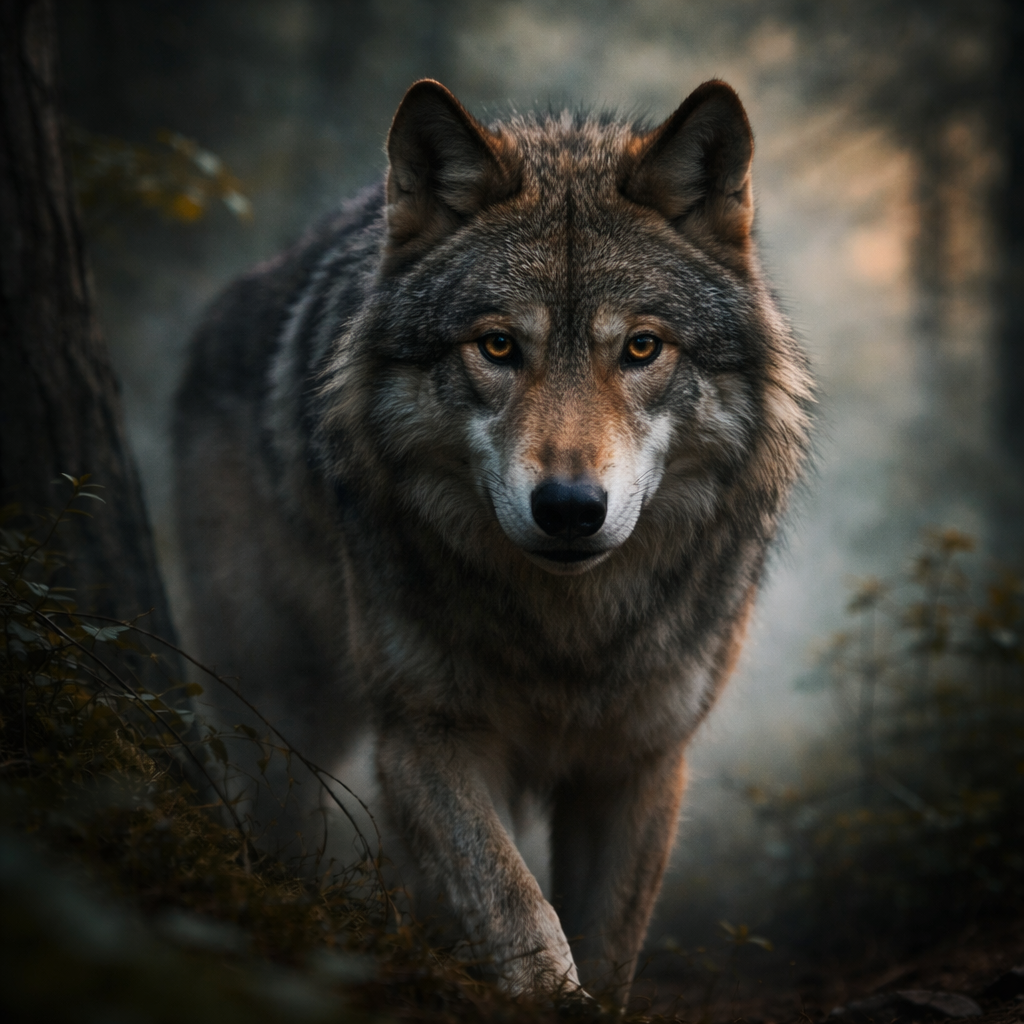
Waking up after a dream featuring wolves can leave you with a lingering feeling — something between unease and fascination. If you’ve been wondering what dream about wolves mean, you’re not alone: wolf dreams are among the most commonly reported animal dreams, and they carry a surprisingly wide range of psychological and symbolic interpretations depending on the context, your emotions during the dream, and even the wolf’s behavior.
Why wolves appear in dreams at all
Wolves occupy a unique place in the human psyche. For thousands of years, they’ve been symbols of both danger and loyalty, solitude and community. In many Indigenous traditions, the wolf is a guide and protector. In European folklore, it’s a creature to fear. This cultural duality means your brain has a rich symbolic vocabulary to draw from when a wolf steps into your dream landscape.
From a psychological perspective, Carl Jung associated wolves with the shadow self — the parts of our personality we tend to suppress or deny. That doesn’t make wolf dreams negative by default. It simply means they often point toward something worth paying attention to.
What the wolf’s behavior reveals
The most important detail in any wolf dream isn’t the wolf itself — it’s what the wolf is doing. Dream interpretation research and psychological analysis both suggest that the animal’s actions carry the core of the message.
| Wolf behavior in dream | Common interpretation |
|---|---|
| Chasing you | Avoidance of a problem or fear you haven’t faced yet |
| Standing still and watching | Intuition trying to get your attention; a warning signal |
| Howling | A need for expression, connection, or being heard |
| Attacking | Conflict — either internal or with someone in your waking life |
| Friendly or calm | Strength, guidance, trust in your own instincts |
| Running with a pack | Desire for belonging, teamwork, or community ties |
Notice that many of these interpretations are relational — they connect to how you interact with others or with yourself. That’s rarely a coincidence.
The emotional tone matters more than the image
Two people can dream about being chased by a wolf and wake up with completely different feelings. One person feels terrified; another feels strangely exhilarated. Dream researchers consistently point out that the emotional residue of a dream — what you felt during and immediately after — is often more telling than the visual content itself.
“Dreams are not random noise. They often reflect what the waking mind hasn’t yet processed.” — a widely shared perspective in contemporary sleep psychology
If you felt fear, it may point to anxiety about something in your daily life — a situation you’re avoiding or a relationship that feels threatening. If the wolf felt like a companion or guide, your subconscious may be nudging you toward trusting your instincts in a situation where you’ve been second-guessing yourself.
Recurring wolf dreams and what they signal
A wolf dream that happens once might fade quickly from memory. But when the same wolf — or the same wolf scenario — keeps returning, that’s worth taking seriously. Recurring dreams in general are thought to reflect unresolved emotional tension or a persistent theme your mind is trying to work through.
Common recurring wolf dream patterns and their possible meanings:
- Being chased repeatedly — chronic avoidance of a specific stressor, possibly work-related or tied to a personal relationship
- A lone wolf watching from a distance — feelings of isolation or a sense that you’re observing your life rather than living it
- Leading a wolf pack — a recurring theme around leadership, responsibility, or unacknowledged authority in your waking life
- A wounded wolf — suppressed vulnerability or guilt about neglecting your own needs
If any of these feel familiar, it might be worth reflecting on what area of your life the dream could be pointing toward — not to over-interpret, but simply to notice.
Cultural and spiritual perspectives on wolf dreams
It’s worth acknowledging that meaning isn’t one-size-fits-all. Different traditions interpret wolf dream symbolism quite differently:
- In many Native American traditions, dreaming of a wolf is considered a sign of guidance and protection — the wolf as a spiritual teacher.
- In Norse mythology, wolves like Fenrir represent raw, untamed forces — dreams of such wolves might symbolize confronting something powerful and uncontrollable.
- In Christian European tradition, the wolf historically symbolized danger and deception, which influenced how many people in Western cultures emotionally process wolf imagery.
- In some East Asian traditions, wolves in dreams can represent loyalty and strong family bonds, particularly within the context of the pack.
Your own cultural background and personal associations with wolves will inevitably color how your mind uses this symbol. Someone who grew up loving wildlife documentaries about wolves will likely experience very different wolf dreams than someone raised on fairy tales where the wolf is the villain.
A practical approach to understanding your wolf dream
You don’t need to be a psychologist to work with your dreams productively. The goal isn’t to decode a hidden message with perfect accuracy — it’s to use the dream as a gentle prompt for self-reflection. Ask yourself:
- Is there something I’ve been avoiding or putting off?
- Do I feel like I belong somewhere right now, or isolated?
- Am I trusting my own instincts in a current situation, or overriding them?
- Is there a conflict in my life — internal or external — that I haven’t fully addressed?
These questions aren’t about the wolf. They’re about you. The wolf is just the messenger.
When a wolf dream is just a wolf dream
It’s also completely valid to acknowledge that sometimes a wolf dream doesn’t carry deep meaning. If you watched a nature documentary, read about wolves, or had a conversation about them before bed, your brain might simply be processing recent input — a phenomenon sleep researchers call memory consolidation. Not every image in a dream is a symbol waiting to be decoded.
The key is paying attention to repetition, intensity, and emotional weight. A vivid, emotionally charged wolf dream that stays with you for days is worth reflecting on. A fleeting wolf appearance in an otherwise forgettable dream probably isn’t cause for deep analysis.
Either way, curiosity is a better response than anxiety. Wolf dreams — whatever they mean for you personally — tend to be one of the more vivid and memorable experiences the sleeping mind produces. That alone makes them worth a moment’s thought.