Most people redesign their living room at least once every few years — and the process almost always starts with the same question: where do I even begin? If you’re searching for ideas for living room updates that actually work in real spaces (not just on mood boards), you’re in the right place. This guide skips the generic advice and gets into what genuinely transforms how a room looks and feels.
Start with the layout, not the décor
Before buying anything new, look at how furniture is currently arranged. A sofa pushed against every wall is one of the most common layout mistakes — it actually makes a room feel smaller, not larger. Pulling pieces slightly away from walls and creating a defined seating zone immediately gives the space more visual depth and makes conversation feel natural.
Think about traffic flow too. There should be a clear path through the room without having to navigate around chair legs or coffee tables. If moving around feels awkward, the layout is working against you — no amount of new cushions will fix that.
Lighting as a design tool, not an afterthought
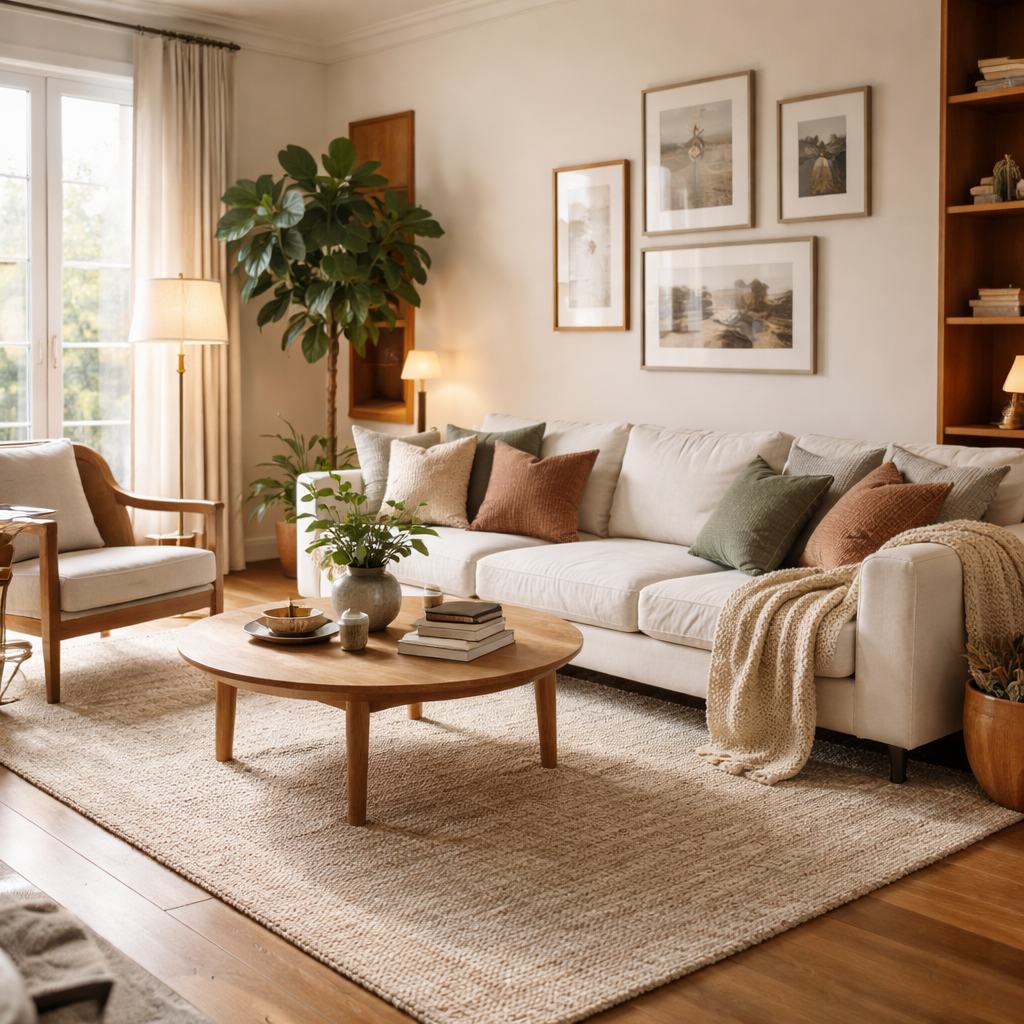
Overhead lighting alone flattens a room. Layered lighting — combining ambient, task, and accent sources — is what gives a living room that warm, intentional atmosphere you notice in well-designed interiors. A floor lamp behind the sofa, a small table lamp on a side table, and perhaps a spotlight aimed at a piece of art create depth that a single ceiling fixture simply cannot.
Interior designers consistently point out that lighting is the most overlooked element in home styling — and also the cheapest one to get right compared to furniture or flooring.
Warm bulbs (around 2700–3000K) work best in living areas. They make skin tones look better, make textures in fabrics and wood more visible, and simply feel more comfortable in the evening.
Color and texture: what actually changes the mood
You don’t need to repaint an entire room to shift how it feels. Introducing texture through cushions, throws, rugs, and curtains changes the visual weight of a space considerably. A linen sofa with a chunky knit blanket and a jute rug reads completely differently than the same sofa with no accessories — even if the wall color hasn’t changed.
When thinking about color, consider the concept of a dominant, secondary, and accent palette. Three colors (or tones) used consistently are easier to manage than five colors used inconsistently. For example:
- Dominant: a neutral base like warm white, soft grey, or earthy beige on walls and large furniture
- Secondary: a mid-tone on rugs, curtains, or an armchair — dusty sage, terracotta, navy
- Accent: smaller pops of a bolder color through cushions, art, or ceramics
This structure prevents a room from feeling too chaotic or, on the other end, too sterile.
Small living room ideas that don’t sacrifice style
Compact living rooms come with real constraints, but they also have an advantage: they’re easier to make feel cozy and curated. The key is being selective rather than minimal — you want fewer pieces, but each one should earn its place.
| Challenge | Practical solution |
|---|---|
| Limited floor space | Use a sofa with raised legs to create visual breathing room underneath |
| Low ceilings | Hang curtains close to the ceiling, not just above the window frame |
| No storage | Choose a coffee table with drawers or a storage ottoman |
| Room feels dark | Use mirrors opposite windows to reflect natural light |
Vertical space is often completely underused in smaller rooms. Tall shelving draws the eye upward, creates storage, and acts as a display surface for books, plants, and objects — all at once.
Plants, art, and objects: the lived-in layer
A living room that looks like a showroom feels uncomfortable to actually live in. The details that make a space feel personal — books left out, a plant that’s clearly been there for years, a piece of art that means something — are what make guests feel at ease and what make you actually want to spend time there.
When it comes to houseplants, consider scale. A single large plant (a fiddle-leaf fig, a monstera, a tall snake plant) makes more impact than a cluster of small ones scattered around. It also takes up less visual space while doing more work.
For wall art, grouping is generally more effective than hanging pieces individually across a wall. A gallery wall with a clear anchor piece and complementary smaller frames creates a cohesive focal point rather than a scattered effect.
A practical note on budgeting renovations
Not every improvement requires a big investment. Some of the highest-impact changes in interior design cost very little:
- Rearranging furniture costs nothing and often reveals a better layout
- New cushion covers refresh a sofa without replacing it
- A large rug defines a seating area and adds warmth for relatively low cost
- Replacing dated light switch covers and door handles updates a room subtly but noticeably
- Decluttering surfaces makes any room look more intentional immediately
Where it’s worth spending more: a quality sofa (since it defines the room and gets daily use), a rug that’s large enough (undersized rugs are a very common mistake), and good curtains that reach the floor.
What good living room design actually comes down to
The rooms that feel best to be in rarely follow a single style perfectly. They mix old and new, personal and polished, soft and structured. What they share is intentionality — every element has a reason to be there, whether that’s function, comfort, or meaning. That’s worth keeping in mind whether you’re doing a full refresh or just moving a lamp to a different corner.
The best changes are usually the ones that make you stop noticing the room and start actually enjoying it.