That strange split-second sensation of having lived through a moment before — the meaning of deja vu goes far deeper than most people realize. It’s not a glitch, not a sign of something supernatural, and definitely not just “one of those weird feelings.” Neuroscientists, psychologists, and memory researchers have been studying it for decades, and what they’ve uncovered is genuinely fascinating.
Why your brain occasionally lies to you
The term itself comes from French and literally translates as “already seen.” But the experience is far more nuanced than seeing something twice. When deja vu occurs, you’re not actually remembering a real past event — your brain is misfiring in a very specific way.
The most widely supported scientific explanation involves a brief desynchronization between two memory systems in the brain: familiarity and recollection. Normally, these two processes work in sync. You see something familiar, and your brain either retrieves a clear memory or flags it as unfamiliar. In deja vu, the familiarity signal fires strongly without any corresponding memory — leaving you with that uncanny sense of “I’ve been here before,” even when you haven’t.
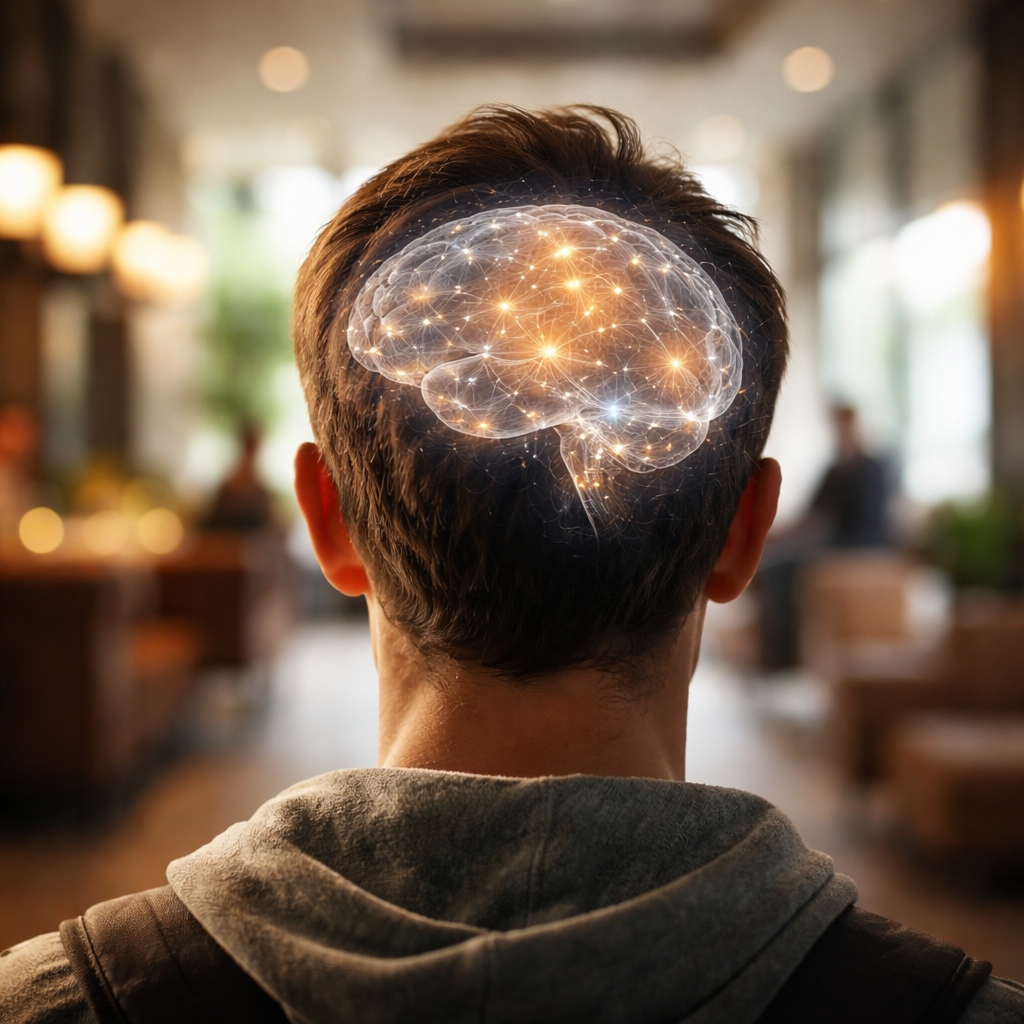
Research points to the rhinal cortex — a region involved in detecting familiarity — as a key player. When this area activates independently of the hippocampus (which handles actual memory retrieval), the result is that characteristic eerie feeling.
Who experiences it more — and when
Deja vu is remarkably common. Studies suggest that roughly two-thirds of the general population experiences it at some point. But there are clear patterns in who reports it most frequently.
- Young adults between 15 and 25 tend to experience deja vu more often than older individuals.
- People who travel frequently report higher rates — likely because they encounter more varied environments that can trigger partial memory matches.
- Those who watch a lot of films or read widely may also experience it more, since their brains have a larger database of scenes and scenarios to accidentally “match.”
- Fatigue and stress can increase the frequency of episodes.
- Individuals with certain neurological conditions, particularly temporal lobe epilepsy, experience intense and prolonged deja vu as part of their seizure activity.
Interestingly, the frequency of deja vu tends to decrease with age — which researchers interpret as a sign that it’s linked to an active, well-functioning memory system rather than a deteriorating one.
The memory overlap theory: how similar scenes fool the brain
One of the most compelling explanations comes from psychologist Anne Cleary’s research at Colorado State University. Her lab demonstrated that deja vu can be triggered when a new scene shares a spatial layout with a previously seen one — even if the content looks completely different.
Imagine walking into a hotel lobby you’ve never visited, but its layout closely mirrors a childhood classroom. Your brain detects the structural similarity but can’t consciously identify what’s familiar — and that gap between recognition and recall produces the sensation.
“Deja vu may be a sign that the memory system is working correctly — detecting a discrepancy and flagging it, rather than silently accepting a false memory as real.”
— Anne Cleary, cognitive psychologist
This perspective actually reframes deja vu in a surprisingly positive light: it may be your brain’s quality-control mechanism doing its job well.
Deja vu vs. other similar phenomena
It’s worth distinguishing deja vu from a cluster of related experiences that are often confused with it.
| Phenomenon | Description |
|---|---|
| Deja vu | Feeling that a current experience has happened before, without a traceable memory |
| Jamais vu | Familiar things suddenly feel completely unfamiliar or strange |
| Presque vu | The “tip of the tongue” feeling — sensing something is just beyond reach of recall |
| Deja vecu | A stronger version of deja vu — feeling you’ve not just seen but fully lived through something before |
All of these involve some form of mismatch between perception and memory processing, but they feel quite different in practice. Jamais vu, for instance, can be deliberately triggered — try writing the same word repeatedly for a few minutes and notice how it starts to look alien and meaningless.
What deja vu is not
A huge amount of cultural mythology surrounds this experience, and most of it isn’t supported by evidence. Let’s clear a few things up.
- It’s not a sign of past lives or reincarnation — no peer-reviewed research supports this interpretation.
- It’s not a prophetic signal — the feeling of “I knew this would happen” is a cognitive illusion generated after the fact.
- It’s not necessarily linked to mental illness — healthy people with no neurological conditions experience it regularly.
- It’s not proof that reality is a simulation — while that idea makes for great sci-fi, there’s no scientific basis for it.
That said, chronic and intense deja vu — especially when it lasts for extended periods or feels overwhelming — can occasionally be associated with anxiety disorders, dissociation, or neurological issues. In those cases, speaking to a healthcare professional is genuinely worth doing.
The moment it happens — what’s actually going on in real time
The typical episode lasts only a few seconds, though it can feel much longer. During that window, your brain is essentially running two conflicting signals simultaneously: one saying “this is new” and another saying “this is familiar.” The tension between those signals is what creates the distinctive, slightly disorienting quality of the experience.
Some researchers have used virtual reality environments to study deja vu in controlled settings — one of the few ways to reliably induce it in a lab. Participants navigate scenes designed to share hidden structural similarities with earlier scenes, and the results consistently show that spatial overlap is one of the most reliable triggers.
The fact that deja vu tends to fade quickly and leave no lasting confusion is another sign that it’s a normal byproduct of a complex, high-functioning memory system — not a malfunction.
A strange sensation that actually tells you something real
Rather than dismissing deja vu as a curiosity or inflating it into something mystical, it’s worth appreciating what it actually reveals: the brain constantly compares incoming experience against a vast, imperfect archive of past events. Most of the time that process is invisible. When it briefly surfaces as deja vu, you’re catching a rare glimpse of memory doing its work in real time.
That’s not unsettling — it’s remarkable. Your mind is actively checking whether what you’re experiencing is genuinely new or partially recognized, and flagging the ambiguity rather than silently resolving it. If anything, the experience is a reminder of how much cognitive processing happens completely outside conscious awareness, every single moment of the day.