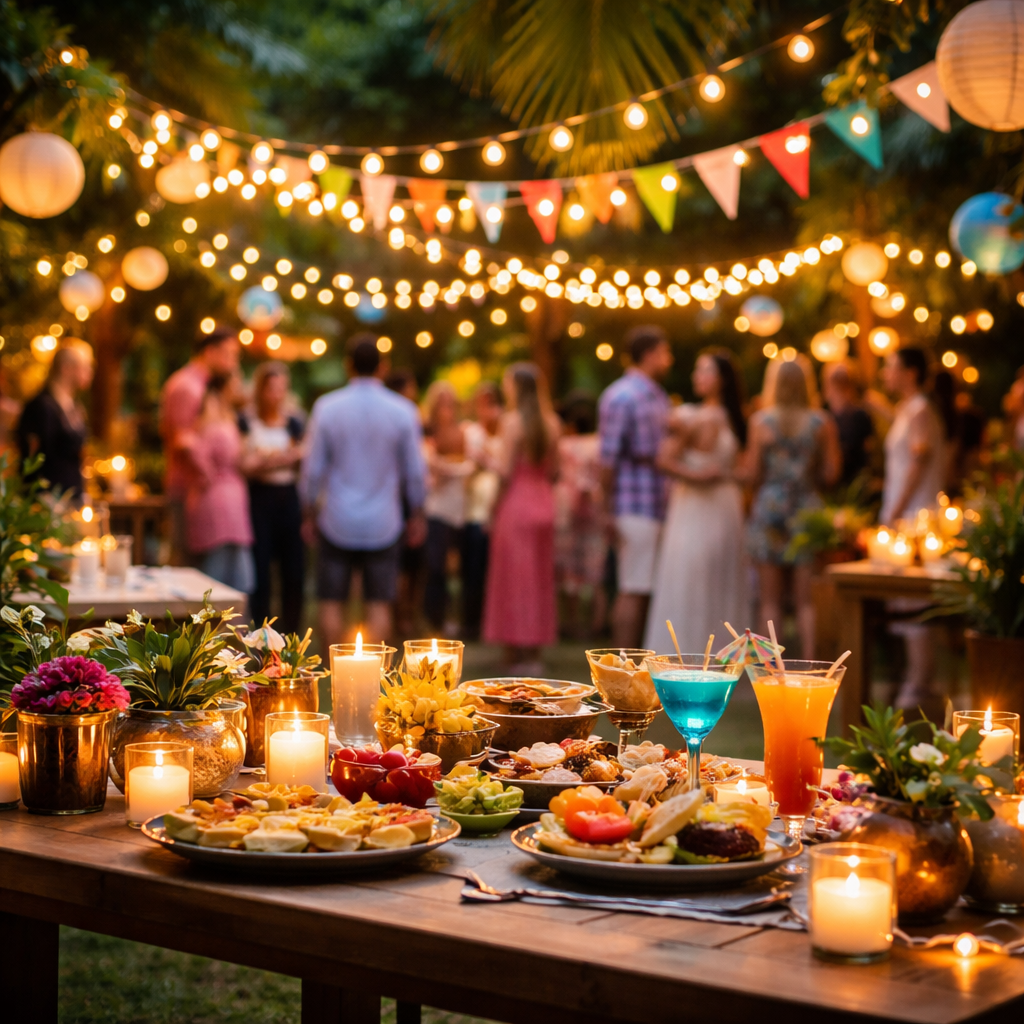
Planning a celebration without a clear concept often leads to a forgettable evening — but the right ideas for party themes can turn even a simple gathering into something guests talk about for months. The theme sets the tone, guides decoration choices, shapes the menu, and gives people a reason to dress up and actually commit to the experience.
Why the theme matters more than the budget
It’s a common misconception that a spectacular party requires significant spending. In reality, a well-chosen concept does more heavy lifting than an expensive catering order. When guests understand the theme in advance, they arrive mentally prepared to participate — and that shared sense of play changes the entire atmosphere. A backyard gathering with a consistent visual identity and dress code will almost always outperform a lavish but directionless event.
What makes a theme effective is coherence. Every element — lighting, music playlist, drink names, invitation wording — should feel like it belongs to the same world. You don’t need to cover every detail obsessively, but the more touchpoints reinforce the concept, the more immersive the experience becomes.
Themes that work across different occasions
Some concepts are flexible enough to fit birthdays, housewarmings, seasonal celebrations, or casual get-togethers without much adjustment. Here’s a practical overview of themes that have proven popular across different age groups and party formats:
| Theme | Best for | Key elements |
|---|---|---|
| Decades party (70s, 80s, 90s) | Milestone birthdays, reunions | Era-specific music, dress code, vintage props |
| Garden cocktail party | Summer gatherings, adult birthdays | Floral decor, botanical drinks, outdoor setting |
| Murder mystery night | Small groups of 6–16 people | Character cards, scripted plot, costumes |
| Around the world dinner | Food lovers, mixed-age groups | Dishes from multiple cuisines, passport invitations |
| Black and white formal | New Year’s Eve, adult celebrations | Monochrome dress code, elegant table setting |
| Neon glow party | Younger adults, dance-focused events | UV lights, neon accessories, glow-in-the-dark paint |
The decades party format deserves special mention because it naturally generates conversation — people who lived through a particular era love sharing memories, while younger guests enjoy the novelty of it. The 80s specifically tends to produce the most enthusiastic costume participation, possibly because the aesthetics are both recognizable and comically exaggerated.
How to choose a theme that fits your crowd
Choosing a concept without knowing your audience leads to a theme that only the host enjoys. Before committing, consider a few practical questions:
- What’s the age range of the majority of guests?
- Are people willing to dress up, or would a dress code create discomfort?
- Is the venue indoor or outdoor, and does it naturally suit certain aesthetics?
- What’s the energy level — relaxed conversation, dancing, interactive activities?
- Are there dietary restrictions that might limit a food-centered theme?
A murder mystery evening, for instance, is exceptional for a tight-knit group that enjoys roleplay and storytelling — but it can feel awkward when attendees don’t know each other well enough to commit to a character. On the other hand, a cocktail-and-music theme works smoothly for mixed groups where people may be meeting for the first time.
The best party theme is the one your specific guests will embrace — not the one that looks best on a mood board.
Underrated theme ideas worth considering
Beyond the well-known formats, there’s a whole range of creative party concepts that tend to surprise guests in the best way. These ideas work especially well when you want something memorable without leaning on the most obvious choices:
- Blind wine or food tasting — guests rank samples without seeing the label or price, which almost always leads to unexpected results and animated debate.
- Outdoor cinema night — a projector, blankets, and a curated film picks up a relaxed but distinctive atmosphere that works across all ages.
- Trivia championship — divide guests into teams and run themed rounds covering pop culture, history, geography, or a specific niche the group shares.
- Pottery or painting workshop party — renting a mobile workshop session means guests leave with something handmade, which doubles as a favor.
- Destination dinner — each course is served at a different location or room, with decor and music shifting to match a new “country” with each move.
The blind tasting format is particularly effective because it removes social hierarchy from the table — no one knows who chose the expensive bottle, and the person who consistently picks the cheapest option as their favorite ends up being the most talked-about guest of the evening.
Practical tips before you finalize anything
Once the concept is selected, execution becomes the real work. A few principles help keep the planning process manageable rather than overwhelming:
Send invitations early and make the theme explicit. Guests need enough lead time to prepare a costume or bring a dish, and vague wording leads to people either over- or under-committing. A clear invitation sets expectations and signals that the host is organized and serious about the experience.
Identify two or three anchor elements that will define the visual experience — a well-decorated entrance, a statement centerpiece, or a signature drink — and invest most of your effort there. Spreading attention equally across every detail usually results in nothing standing out. Guests remember strong, specific impressions, not comprehensive perfection.
Music is consistently underestimated. A precisely curated playlist that fits the theme does more to maintain atmosphere than almost any physical decoration. People feel theme-appropriate music subconsciously even when they don’t consciously notice it.
The details that turn a good party into a great one
There’s a specific quality that separates a party guests genuinely remember from one they simply attended. It’s rarely the most expensive food or the largest venue — it’s the feeling that someone thought carefully about their experience from arrival to departure. A handwritten note on the table, a unexpected activity mid-evening, or a small take-home item tied to the theme can create that feeling without requiring significant additional budget.
Interactive elements tend to generate the strongest memories. Whether it’s a photo corner with theme-appropriate props, a collaborative playlist guests can add to before the event, or a simple game woven into the evening, any moment that requires guests to do something rather than just observe shifts the experience significantly. People remember events where they participated, not ones where they watched.
Whatever concept you choose, the most important variable remains the host’s enthusiasm. Guests take their cues from the person who organized the evening — a host who’s genuinely engaged in the theme and enjoying themselves gives everyone permission to do the same.