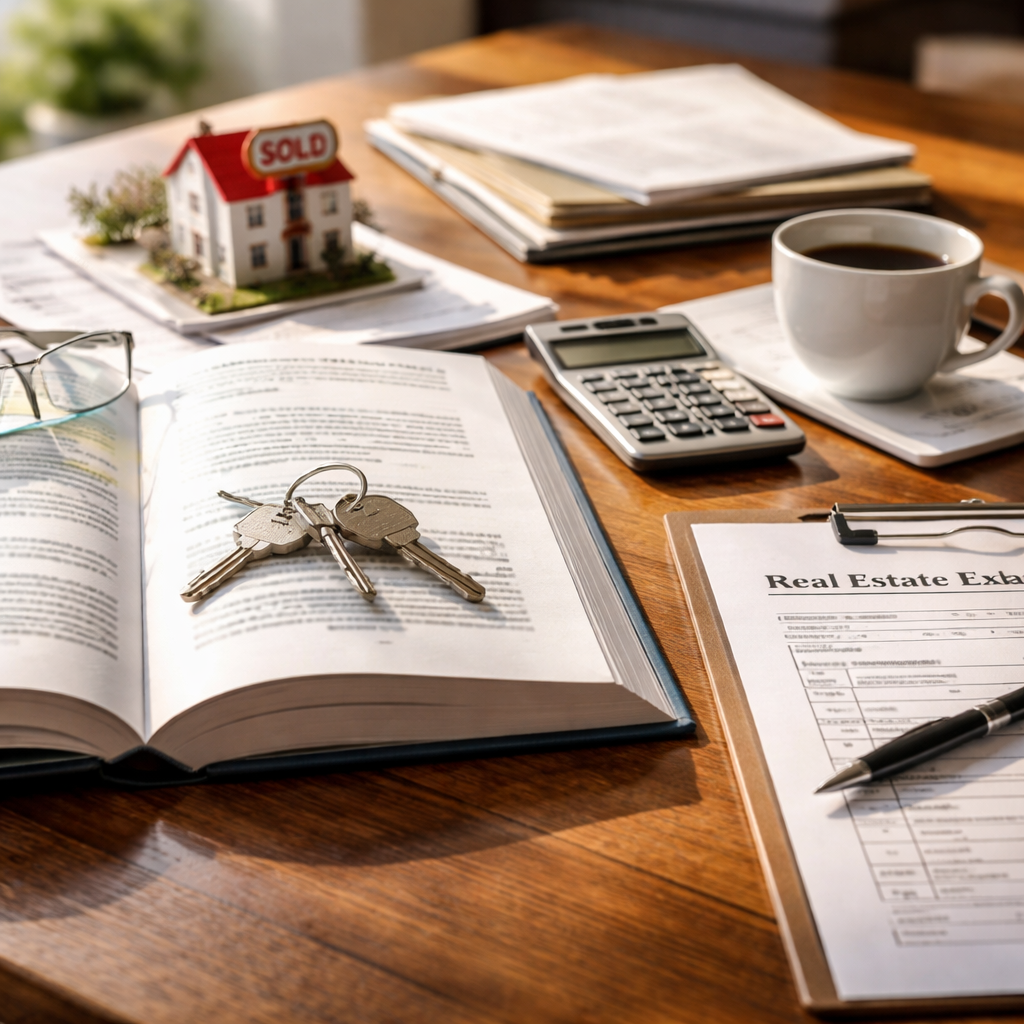
Thinking about switching careers or stepping into the property market as a professional? Learning how to get a real estate license is more straightforward than most people expect — but it does require careful planning, the right preparation, and a clear understanding of what each step actually involves. This guide breaks it all down without unnecessary fluff.
Why a real estate license matters more than people think
A license isn’t just a legal formality. It’s the foundation of your credibility as an agent. Without it, you cannot legally represent buyers or sellers in property transactions, earn commissions, or operate under a brokerage. More importantly, the licensing process itself teaches you the fundamentals of real estate law, contracts, ethics, and market practices — knowledge that directly shapes your early performance in the field.
That said, the path to getting licensed varies significantly depending on where you live. Each U.S. state, for example, sets its own requirements, exam structure, and continuing education rules. So while the general process shares a common shape, the details are always local.
The core steps that most licensing paths share
Despite the variation between states and countries, the licensing journey typically follows a recognizable sequence. Here’s what that usually looks like:
- Meet the basic eligibility requirements — most jurisdictions require applicants to be at least 18 years old, hold a high school diploma or equivalent, and pass a background check.
- Complete a state-approved pre-licensing education course — this can range from 40 to over 150 hours depending on the state.
- Pass the real estate licensing exam — typically split into a national portion covering general principles and a state-specific portion.
- Find a sponsoring broker — in most places, a newly licensed agent cannot operate independently and must work under a licensed broker.
- Submit your license application — usually through your state’s real estate commission, along with applicable fees and documentation.
- Complete post-licensing or continuing education — required in many states to renew your license after the initial period.
Each of these steps deserves attention, and skipping the preparation phase is the most common reason candidates struggle or fail the exam on the first attempt.
What the pre-licensing course actually covers
Many candidates underestimate the depth of pre-licensing coursework. It’s not just terminology — you’ll be covering property ownership types, real estate contracts, financing principles, fair housing laws, agency relationships, and state-specific regulations. Some programs are available fully online, while others are offered in-person or in a hybrid format.
The quality of your pre-licensing education often determines how confidently you walk into the exam room — and how prepared you are for your first real transaction.
When choosing a pre-licensing provider, look for schools that offer practice exams, instructor support, and a pass-rate guarantee. Many reputable providers publish their students’ exam pass rates, which gives you a realistic benchmark before enrolling.
Preparing for the real estate exam: what actually works
The licensing exam covers a wide range of topics, and time management during the test itself is a real challenge. Most exams are multiple-choice and timed, with separate scores required for both the national and state sections.
| Exam Section | Typical Content Focus | Approximate Question Count |
|---|---|---|
| National portion | Principles of real estate, contracts, finance, property types | 80–100 questions |
| State-specific portion | Local laws, licensing regulations, state agency rules | 30–50 questions |
Effective exam preparation usually combines re-reading course materials, working through practice question banks, and focusing on weak areas identified through mock tests. Candidates who attempt the exam without dedicated review tend to score lower on the math-heavy sections — things like calculating commission percentages, property taxes, or mortgage amortization.
Choosing the right sponsoring broker
This decision gets overlooked far too often. Your sponsoring broker isn’t just a legal requirement — they shape your early career in significant ways. A good brokerage provides mentorship, leads, training systems, and a professional environment where new agents can grow. A poor fit can leave you isolated and directionless in your first year.
When evaluating brokerages, consider the following:
- Commission split structure and any desk fees or monthly costs
- Training programs specifically designed for new agents
- Culture and team environment — you’ll be spending a lot of time with these people
- Local market presence and brand recognition
- Technology tools and marketing support provided
Interview at least two or three brokerages before making your decision. Most are happy to speak with pre-licensed candidates, and the conversation itself can tell you a lot about how they treat agents.
Costs you should budget for from the start
Getting licensed isn’t free, and the total cost often surprises first-timers. Here’s a realistic picture of what to expect:
- Pre-licensing course: typically between $150 and $500 depending on the provider and state
- Exam registration fee: usually $50 to $100 per attempt
- License application fee: varies by state, generally $50 to $250
- Background check: often $30 to $70
- MLS membership and board dues (after licensing): can range from $500 to over $1,000 annually
Factor these costs into your career transition plan before you begin. Some brokerages offer to cover certain fees as part of a recruitment incentive, so it’s worth asking during your brokerage interviews.
What comes after you pass — building your real estate career from day one
Passing the exam and receiving your license is a genuine milestone, but the real work begins right after. New agents often face a gap between having a license and making their first commission — this period can last anywhere from a few weeks to several months, depending on market conditions, personal effort, and brokerage support.
Building a contact list, learning your local market deeply, attending open houses, and developing a personal marketing presence are all things that successful agents start doing immediately. Real estate is a relationship-driven profession, and your network is your most valuable long-term asset.
Continuing education requirements — which vary by state — will also become part of your ongoing professional life. Most states require license renewal every one to two years, along with a set number of completed education hours. Staying current isn’t just a legal obligation; it’s how you keep your knowledge competitive as laws, market conditions, and technology evolve.
The agents who build lasting careers in real estate tend to treat the licensing phase as the starting line, not the finish line. The license opens the door — everything that comes next is up to you.