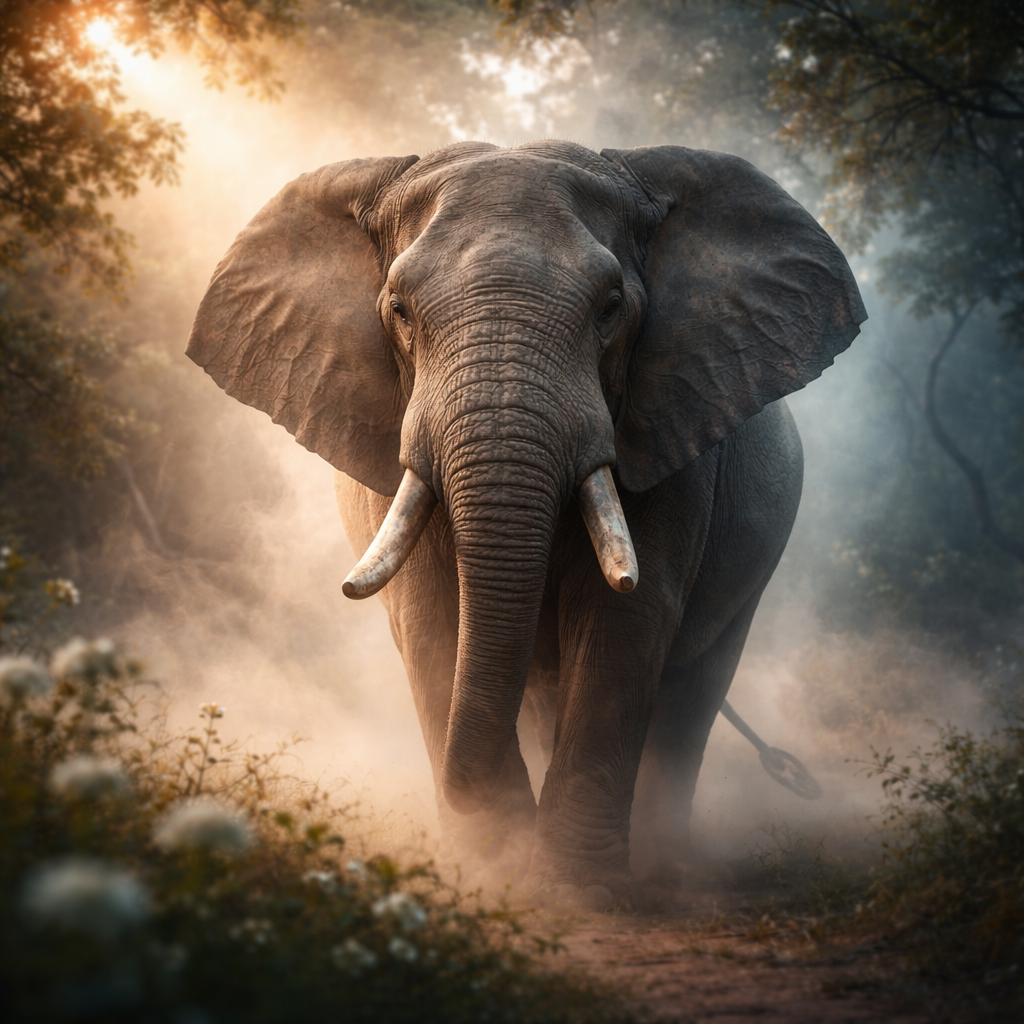
Few nocturnal experiences spark more curiosity than waking up from a vivid elephant dream and immediately wondering what dream about elephants mean — and whether it was just random brain noise or something worth paying attention to. Dream interpretation sits at the crossroads of psychology, cultural symbolism, and personal experience, and elephants, as dream figures, carry an unusually rich set of meanings that vary depending on context, emotion, and detail.
Why elephants appear in dreams at all
Elephants are among the most symbolically loaded animals in human culture. Across traditions — from Hindu iconography to African oral storytelling to Western idioms — they represent memory, wisdom, power, and emotional complexity. When your sleeping mind conjures an elephant, it is often drawing on these deeply embedded cultural associations, combined with whatever emotional material you are currently processing in waking life.
Psychologically speaking, large animals in dreams frequently represent forces or emotions that feel bigger than ourselves — things we cannot easily ignore or control. An elephant fits that role almost perfectly: massive, intelligent, capable of both gentleness and destruction.
Common elephant dream scenarios and what they suggest
Context changes everything in dream interpretation. The same animal can carry completely different emotional weight depending on what it is doing and how you feel during the dream. Here are the most frequently reported elephant dream scenarios:
- A calm, friendly elephant — often associated with feelings of protection, support from someone in your life, or a period of emotional stability.
- A charging or aggressive elephant — may reflect suppressed anger, an overwhelming situation, or a conflict you have been avoiding.
- Riding an elephant — traditionally linked to confidence, ambition, and a sense of being in control of a powerful situation or relationship.
- A baby elephant — frequently connected to new beginnings, vulnerability, or nurturing instincts that need attention.
- A herd of elephants — can symbolize family bonds, community, or a longing for deeper social connection.
- A dying or sick elephant — sometimes reflects grief, the end of a significant chapter, or anxiety about losing something important.
It is worth noting that none of these interpretations are fixed rules. They are starting points for reflection, not diagnoses.
The emotional tone of the dream matters more than the image
Dream researchers and psychologists consistently emphasize that the feeling you carry during and after a dream is often more informative than the literal content. If you dreamed of an elephant but felt peaceful and safe, that dream likely carries a very different message than the same image experienced with panic or dread.
According to Jungian psychology, large animals in dreams often represent the shadow self or archetypal forces — aspects of the psyche that are powerful but not fully integrated into conscious awareness.
This is why keeping a brief dream journal can be genuinely useful. Writing down not just what happened, but how you felt — before the dream fades — gives you much richer material to work with than simply recalling “there was an elephant.”
Cultural perspectives on elephant dream symbolism
Depending on your cultural background or spiritual framework, elephant dreams can carry additional layers of meaning:
| Cultural Context | Elephant Symbolism in Dreams |
|---|---|
| Hindu tradition | Strongly positive — linked to Ganesha, the remover of obstacles; may signal incoming good fortune or cleared path forward |
| African traditions | Associated with ancestral wisdom, leadership, and communal responsibility |
| Western psychology | Often interpreted as a symbol of memory, repressed emotions, or something “too big to ignore” |
| Buddhist symbolism | White elephants in particular represent mental clarity, purity, and spiritual attainment |
None of these frameworks is more “correct” than another. The most useful interpretation is usually the one that resonates with your own personal associations and current life circumstances.
Questions to ask yourself after an elephant dream
Rather than searching for a single definitive meaning, try using the dream as a prompt for self-reflection. The following questions tend to be more productive than looking for a fixed symbolic dictionary answer:
- What was the elephant doing, and did it seem aware of you?
- Were you afraid, calm, fascinated, or something else entirely?
- Is there something in your waking life right now that feels enormous, unmanageable, or long overdue for attention?
- Have elephants held any personal significance for you — a memory, a trip, a childhood connection?
- Did the dream feel like a warning, a comfort, or simply neutral?
Your answers to these questions will likely tell you far more than any generic symbol list.
A practical approach to understanding recurring elephant dreams
If elephants appear in your dreams repeatedly, that pattern is worth taking seriously — not in a superstitious sense, but because recurring dream themes typically point to unresolved emotional material or persistent concerns that the unconscious mind keeps returning to.
It is also worth considering whether the dreams cluster around specific life events — periods of stress, transition, grief, or excitement. Patterns like that rarely appear by coincidence.
When a dream is just a dream — and when it is worth sitting with
Not every dream demands deep analysis. Sometimes you dream about elephants because you watched a wildlife documentary, visited a zoo, or scrolled past an image online. The brain processes and replays sensory input during sleep — that is simply how memory consolidation works.
However, if a dream leaves a strong emotional residue — if it stays with you through the morning and feels significant even when you cannot explain why — that is usually a signal worth honoring. The feelings a dream generates are real, even if the content is not literally real, and exploring them with curiosity rather than anxiety tends to be the most grounding approach.
Elephant dreams, at their core, tend to invite reflection on what is large and enduring in your life: relationships that carry real weight, responsibilities you may be carrying quietly, or strengths you have not yet fully acknowledged in yourself. Whatever the specific scenario, that is usually where the most honest and useful meaning lives.