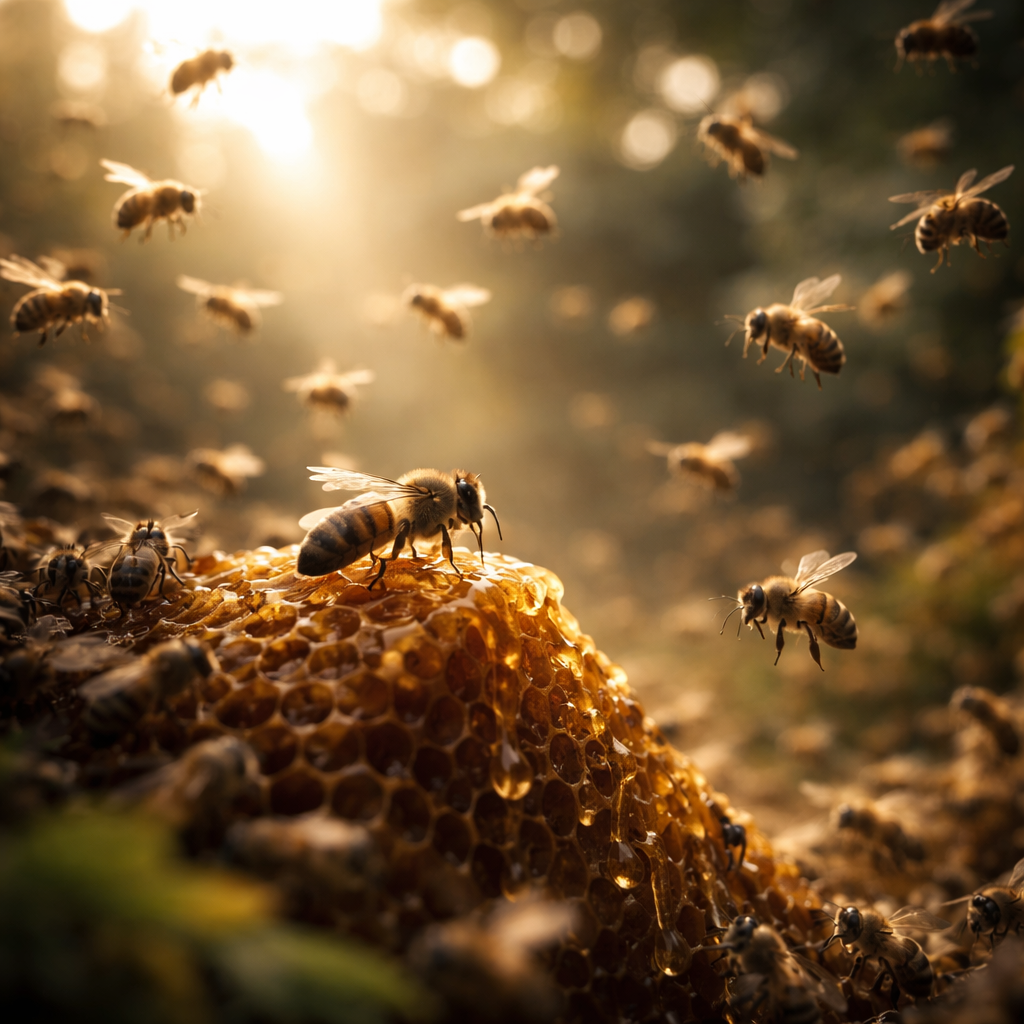
Few things stick with you after waking up quite like a vivid dream involving a swarm of bees — and if you’ve ever wondered what dream about bees mean, you’re far from alone. Dreams featuring bees have been recorded across cultures for centuries, and psychologists, folklore scholars, and dream analysts have long debated their significance. What makes them particularly fascinating is that the meaning shifts dramatically depending on context: what the bees were doing, how you felt, and what happened next all play a role.
Why bees appear in dreams at all
Bees are not random dream visitors. They carry a dense symbolic load in the waking world — industry, community, discipline, communication, and sometimes danger. When the subconscious mind reaches for an image to represent collective effort or a buzzing, overwhelming environment, bees are a natural fit. Dream researchers often point to the principle that our minds recycle emotionally charged symbols from our cultural and personal experience, and bees tick almost every box.
In Jungian psychology, bees are sometimes associated with the Self and the collective unconscious — the idea that individual identity exists within a larger, interconnected system. Seeing bees in a dream may signal that you’re processing your own role within a group: a workplace, a family, a social circle.
Common bee dream scenarios and what they may reflect
Dream symbolism rarely works in absolutes, but certain recurring scenarios do carry recognizable patterns. Here’s a breakdown of the most frequently reported bee dream types and the interpretations most commonly associated with them:
| Dream scenario | Possible interpretation |
|---|---|
| Being stung by a bee | A feeling of betrayal, sharp criticism, or a situation causing emotional pain |
| A swarm of bees chasing you | Avoidance of a stressful situation or overwhelming responsibilities |
| Bees flying peacefully around you | A sense of harmony, productivity, and being in flow with your environment |
| A beehive full of honey | Reward for effort, abundance, or anticipation of success |
| Bees dying or leaving a hive | Concerns about community breakdown, lost motivation, or fear of failure |
| Talking to bees or them listening to you | A desire for clearer communication or feeling heard in your waking life |
These interpretations aren’t fixed rules — they’re starting points for reflection. Your personal associations with bees matter just as much as any symbolic tradition.
The emotional tone is everything
One detail that dream analysts consistently emphasize is that the feeling during the dream often outweighs the imagery itself. Two people can dream of a bee swarm and walk away with entirely opposite emotional experiences — one terrified, one exhilarated. That difference matters.
“The emotional residue of a dream — what you feel upon waking — is often the most reliable guide to its personal meaning.”
— A widely shared principle in contemporary dream psychology
If you woke up from a bee dream feeling calm or even joyful, it’s worth exploring whether something in your life is actually going well — better than you consciously acknowledge. Conversely, if the dream left you anxious or shaken, the bees may be pointing toward a source of unaddressed stress.
Cultural and historical perspectives on bee dreams
Bee symbolism in dreams isn’t a modern invention. Ancient Egyptians associated bees with royalty and the soul. In Greek mythology, bees were considered messengers between the mortal world and the divine. Celtic traditions viewed bees as carriers of secret wisdom. Many of these cultural threads still weave through modern dream interpretation, even when people aren’t consciously aware of them.
- In ancient Egypt, bees were linked to the tears of the sun god Ra and were seen as symbols of resurrection and the soul’s journey.
- Greek oracles at Delphi were sometimes called “Melissae” — the bees — reflecting the creature’s association with prophetic knowledge.
- In Christian iconography, bees represented diligence, order, and spiritual sweetness.
- Many Indigenous traditions across the Americas and Africa see bees as messengers connected to the spirit world.
Understanding these layers doesn’t mean your dream carries divine prophecy — but it does explain why bee dreams feel so loaded and meaningful. The symbol has been reinforced across millennia of human storytelling.
What bee dreams might say about your waking life
Dream content rarely emerges in a vacuum. Psychologists working in the cognitive tradition suggest that most dreams are the brain’s way of processing recent experiences, unresolved emotions, or anticipated challenges. With that in mind, a bee dream might be worth connecting to specific aspects of your current life.
Ask yourself: Have you been overworking lately? Feeling underappreciated despite putting in consistent effort? Or perhaps the opposite — have you been avoiding something that requires your attention and focus? Bees as dream symbols tend to surface around themes of productivity, contribution, and the tension between individual needs and collective demands.
When a bee dream might deserve extra attention
Most bee dreams are simply the mind doing its nightly filing. But some recurring dream patterns are worth sitting with more intentionally — particularly if the same dream returns multiple times or causes significant distress upon waking.
Recurring dreams, according to sleep researchers, often indicate an unresolved psychological issue or a persistent emotional need that hasn’t been met. If bees keep showing up night after night, especially in threatening or chaotic scenarios, it may be worth exploring whether there’s something in your waking life that you’re consistently avoiding or struggling to address.
This doesn’t require a therapist — though talking to one is never a bad idea. Sometimes simply sitting down and journaling about the dream, the feelings it produced, and what’s currently weighing on you can bring unexpected clarity.
Your dream, your meaning
Ultimately, no dream dictionary — however detailed — can tell you with certainty what your bee dream means. Symbolic interpretation is a conversation between the image and your own experience, memory, and emotional state. What bees mean to someone who grew up near an apiary is different from what they mean to someone who has a severe bee allergy. Personal history always shapes the dream’s language.
The most useful approach is to treat bee dreams not as coded messages to be deciphered, but as invitations to reflect. What was the dream drawing your attention toward? What part of your life right now feels like a beehive — buzzing, structured, potentially sweet, occasionally overwhelming? Those questions tend to lead somewhere real, even if the answers surprise you.