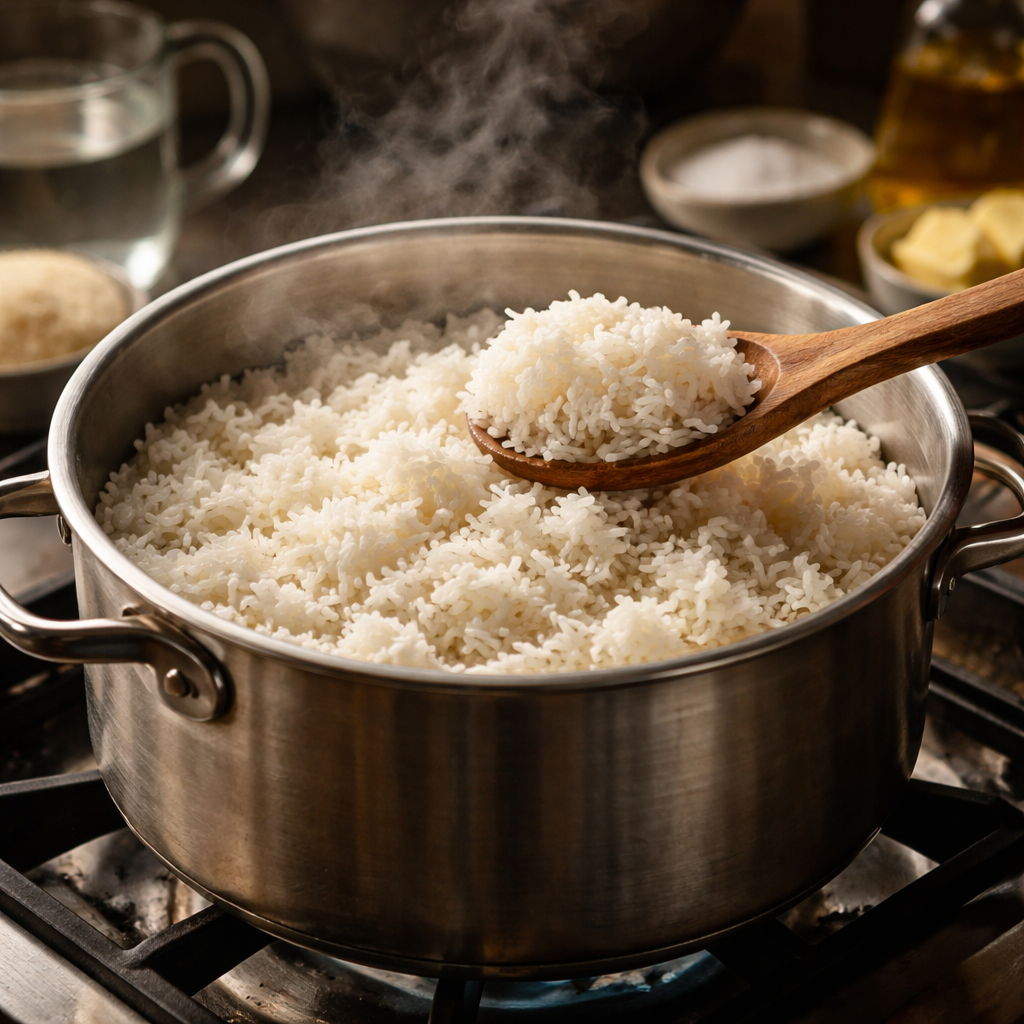
Getting perfectly cooked rice on the stove is one of those kitchen skills that sounds simple but trips up even experienced cooks more often than you’d expect. Learning how to cook rice on stove properly comes down to a handful of variables — the right water ratio, heat control, and knowing when to leave the pot alone. Once you nail these, you’ll never reach for a rice cooker again.
Why stovetop rice beats most other methods
Cooking rice directly on the burner gives you more control over texture than any appliance can offer. You can adjust the steam level mid-cook, catch it at exactly the right moment, and adapt the method to different rice varieties without being locked into preset settings. It also teaches you to read the pot — the sounds, the steam, the timing — which makes you a better cook overall, not just with rice.
That said, most stovetop rice failures come from two places: too much water or lifting the lid too soon. Both are easy to fix once you understand what’s actually happening inside the pot.
Choosing the right rice and rinsing it correctly
Before heat enters the picture, the type of rice matters. Long-grain white rice like basmati or jasmine behaves very differently from short-grain varieties like arborio or sushi rice. Each has its own starch content, which directly affects how sticky or fluffy the final result will be.
| Rice Type | Best Use | Water Ratio (rice:water) | Cook Time |
|---|---|---|---|
| Long-grain white rice | Side dishes, pilafs | 1:1.75 | 15–18 min |
| Basmati rice | Indian dishes, biryanis | 1:1.5 | 12–15 min |
| Short-grain white rice | Sushi, rice bowls | 1:1.25 | 15–18 min |
| Brown rice | Grain bowls, meal prep | 1:2.25 | 40–45 min |
| Jasmine rice | Thai dishes, stir-fries | 1:1.5 | 15 min |
Rinsing rice before cooking is not optional if you want fluffy, separated grains. Place the raw rice in a fine mesh strainer and rinse under cold water for about 30 seconds, stirring the grains with your hand until the water runs mostly clear. This removes excess surface starch that causes clumping and gummy texture.
Skipping the rinse is the single most common reason home-cooked rice turns out sticky when it shouldn’t be.
Step-by-step: the standard stovetop method
This process works reliably for most white rice varieties. Once you’ve done it a few times, it becomes second nature.
- Measure your rice and water using the ratio from the table above. Use a measuring cup, not estimation.
- Combine rinsed rice and cold water in a heavy-bottomed saucepan with a tight-fitting lid. Add a pinch of salt and, if you like, half a teaspoon of neutral oil or butter to keep grains separate.
- Bring to a full boil over medium-high heat with the lid off. Watch it — this is the only time you’ll be actively monitoring.
- Once boiling, stir once, reduce heat to the lowest setting your burner allows, and cover tightly.
- Cook undisturbed for the time indicated for your rice type. Do not lift the lid during this phase.
- Remove from heat and let sit, still covered, for 10 minutes. This resting step is not optional — it allows steam to redistribute evenly through the grains.
- Uncover and fluff gently with a fork, lifting from the bottom. Do not stir or press.
The “no peeking” rule during cooking feels counterintuitive, but every time you lift the lid, you release steam and drop the internal temperature. That shift can result in undercooked grains even if the timer is right.
Heat control is everything
The transition from boiling to simmering is where most stovetop rice problems begin. On a gas stove, the lowest flame setting is usually enough. On an electric or induction cooktop, you may need to move the pot to a smaller burner or use a heat diffuser, because electric coils hold residual heat longer and can scorch the bottom of the rice before the top is done.
If you smell toasted rice near the end of the cook time, don’t panic immediately — a thin golden crust on the bottom (called socarrat in Spanish cooking or tahdig in Persian cuisine) is considered a delicacy in many food traditions. But if it smells burnt, you’ve gone too far and the heat was too high throughout.
- Always use a heavy-bottomed pot — thin pans create hot spots that burn the base.
- If your lid doesn’t fit tightly, place a sheet of foil under it before closing.
- Let rinsed rice drain for 5 minutes before adding to the pot to avoid excess water.
- Cold leftover rice reheats best with a splash of water and a covered pan on low heat.
- For more flavorful rice, swap water for low-sodium chicken or vegetable broth.
Troubleshooting: when things go sideways
Even with the right technique, things occasionally go wrong. Here’s how to read the problem and fix it without starting over.
- Rice is mushy: Too much water or too long on the heat. Next time, reduce water by two tablespoons and check five minutes earlier.
- Rice is crunchy in the center: Not enough water or heat was too low. Add a splash of hot water, cover again, and steam on the lowest setting for five more minutes.
- Rice is stuck together: Likely not rinsed, or the ratio was off. Fork-fluffing immediately after resting can salvage most batches.
- Water boiled over: Heat was too high at the start. Bring to boil more gradually, or use a pot two sizes larger than you think you need.
No method works perfectly the first time on every stove, because burner intensity varies widely between kitchens. Treat your first attempt as calibration — adjust the water ratio or timing based on the result, and you’ll land on your ideal formula within two or three tries.
The small details that actually make a difference
Once you’re comfortable with the basic method, a few small adjustments can lift your rice from good to genuinely great. Toasting dry rice in the pot with a little butter or oil for two minutes before adding water adds a subtle nutty depth that most people can’t identify but everyone notices. This technique is widely used in pilaf-style cooking and works beautifully with basmati and long-grain varieties.
Adding aromatics to the cooking water — a bay leaf, a crushed cardamom pod, or a strip of lemon zest — infuses the grains with background flavor without making them taste strongly of anything specific. It’s the kind of thing that makes people ask what’s different about your rice without being able to pinpoint it.
Finally, the fork matters. A spoon compresses the grains as you fluff, which destroys the light texture you just worked to create. Use a fork, work from the outside edges toward the center, and lift rather than stir. That last step takes about ten seconds and is the difference between fluffy and clumped — every single time.