Many people wake up from a vivid climbing dream and immediately wonder what dream about climbing a mountain mean — and the curiosity makes perfect sense, because these dreams tend to feel unusually intense, emotionally charged, and hard to shake off even hours later.
Dream interpretation is not an exact science, but it draws on decades of psychological research, particularly from Jungian analytical psychology and cognitive dream studies. Mountains in dreams are one of the most universally recognized symbols across cultures, and the act of climbing them adds another layer of meaning that is deeply personal and context-driven.
Why mountains appear in dreams so often
Mountains carry a heavy symbolic weight in the human psyche. They represent challenge, aspiration, isolation, and the unknown — all things the mind tends to process during sleep. Psychologists suggest that when the brain encounters unresolved tension between where you are and where you want to be, it often reaches for landscape metaphors. A mountain is one of the most direct: it is something that stands between you and a higher point.
This is why climbing mountain dreams frequently appear during periods of transition — starting a new job, ending a relationship, pursuing a goal that feels just out of reach. The dream is not predicting the future; it is reflecting your current emotional state back to you in visual form.
What the climb itself reveals
The way you climb in the dream matters as much as the mountain itself. Dream researchers and therapists often pay close attention to the quality of the effort involved. Here is what different climbing experiences typically suggest:
- Climbing steadily and confidently — a sign of self-assurance and readiness to face upcoming challenges in waking life.
- Struggling or slipping back — may reflect feelings of frustration, self-doubt, or a sense that progress is harder than expected.
- Climbing alone versus with others — solitary climbing can indicate independence or loneliness; climbing with companions often mirrors real-life support systems.
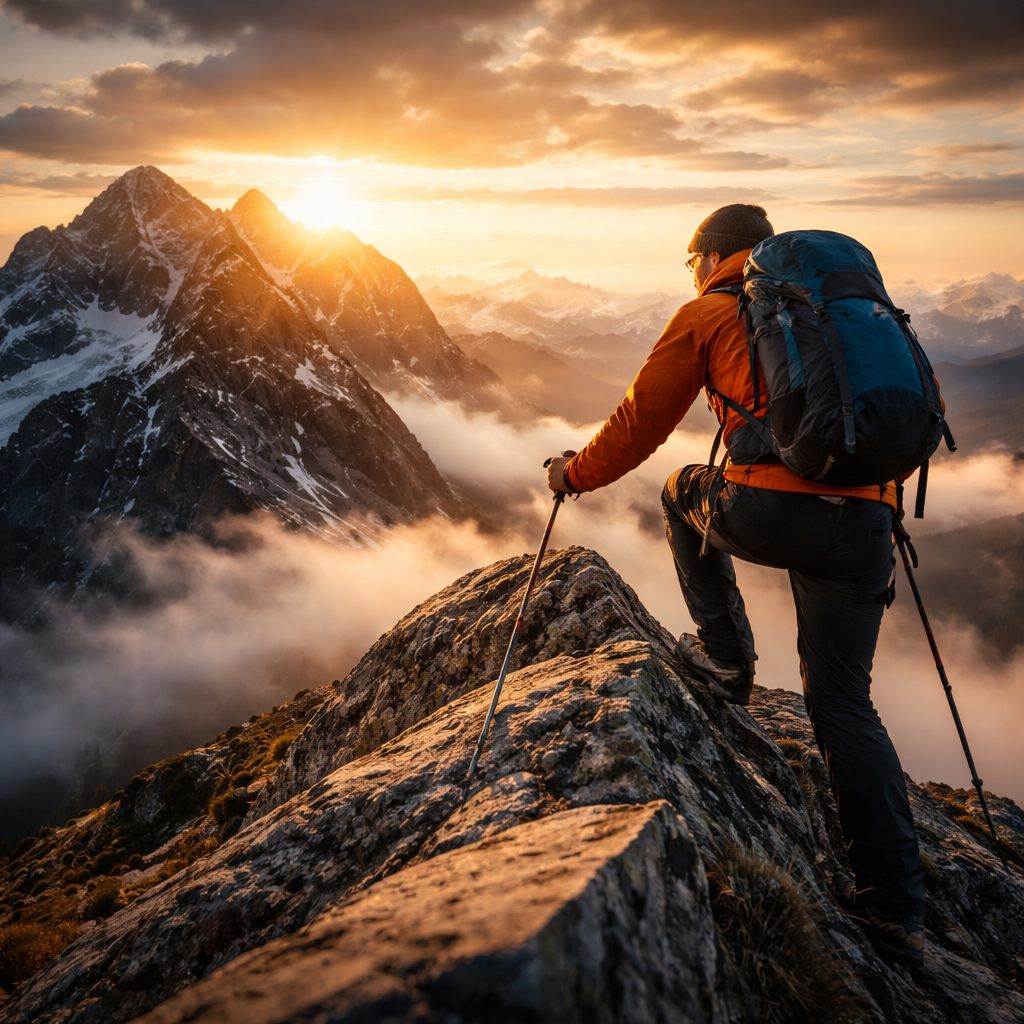
- Reaching the summit — associated with accomplishment, clarity, or a breakthrough moment the dreamer is approaching or desires.
- Stopping midway or turning back — does not necessarily mean failure; it can signal a subconscious need to reassess direction before continuing.
Context shapes everything here. A dream where you struggle and fall can feel like a nightmare, but from a psychological standpoint it may simply be the mind rehearsing resilience — processing fear in a safe environment.
Carl Jung described mountains in dreams as symbols of the Self — that highest, most integrated version of a person that we spend a lifetime trying to reach. The climb, then, is not just an obstacle. It is the whole point.
The emotional tone changes the meaning entirely
Two people can dream of climbing the same mountain and experience completely opposite emotions — one feels exhilarated, the other terrified. Dream analysts consistently emphasize that the feeling inside the dream is the primary key to interpretation, not just the imagery.
| Emotional tone during the dream | Common psychological interpretation |
|---|---|
| Excitement and determination | Motivation is high; you feel ready to take on a significant life challenge |
| Fear and anxiety | Uncertainty about a goal or fear of failure in a current situation |
| Peaceful and focused | Inner alignment; a sense of moving in the right direction |
| Exhaustion without reward | Possible signs of burnout or feeling that effort is not being recognized |
| Awe at the view from the top | Desire for perspective, clarity, or recognition of how far you have come |
When you recall your dream, try to sit with the emotion first before analyzing the symbols. The imagery is the language; the feeling is the message.
Spiritual and cultural dimensions worth knowing
Across many traditions, mountains are sacred spaces — places where humans meet the divine, face their deepest fears, or receive wisdom. In dream symbolism rooted in various cultural frameworks, climbing a mountain often carries a spiritual undertone related to personal elevation, enlightenment, or a search for meaning beyond the everyday.
In some interpretive traditions, the mountain represents the ego and the summit represents transcendence of it. Whether you approach this spiritually or purely psychologically, the underlying idea is similar: the dream is pointing to growth that requires effort and a willingness to keep moving upward despite discomfort.
When recurring mountain dreams deserve closer attention
A one-time mountain climbing dream is interesting to reflect on. A recurring one is worth taking seriously. Repetitive dream themes — especially those involving effort, height, and obstacles — are the mind’s way of flagging something unresolved. This could be an ongoing work situation, a relationship dynamic, or a personal goal that keeps getting postponed.
Recurring mountain dreams do not require a therapist to interpret, though speaking with one is always a valid option. Often, simply acknowledging the recurring theme and asking yourself what aspect of your life currently feels like an uphill climb is enough to begin understanding what your subconscious is working through.
Your mountain, your meaning
Dream symbolism is a guide, not a rulebook. The interpretations above are grounded in established psychological frameworks and cross-cultural analysis — but your personal associations always take priority. If mountains remind you of a specific place, a person, or an experience, those connections will color the dream in ways no general guide can fully account for.
The most useful thing you can do after a climbing dream is not to search for a definitive answer, but to use the imagery as a mirror. Ask what the mountain represents in your current life. Ask whether the climb feels manageable or overwhelming. Ask what would need to change for the dream version of you to reach the top — and whether that answer applies to your waking reality as well.
Dreams about ascending, struggling, and persisting through difficult terrain are among the most consistently meaningful experiences the sleeping mind produces. They are not random noise. They are, in the most literal sense, your mind working something out — and that alone makes them worth paying attention to.