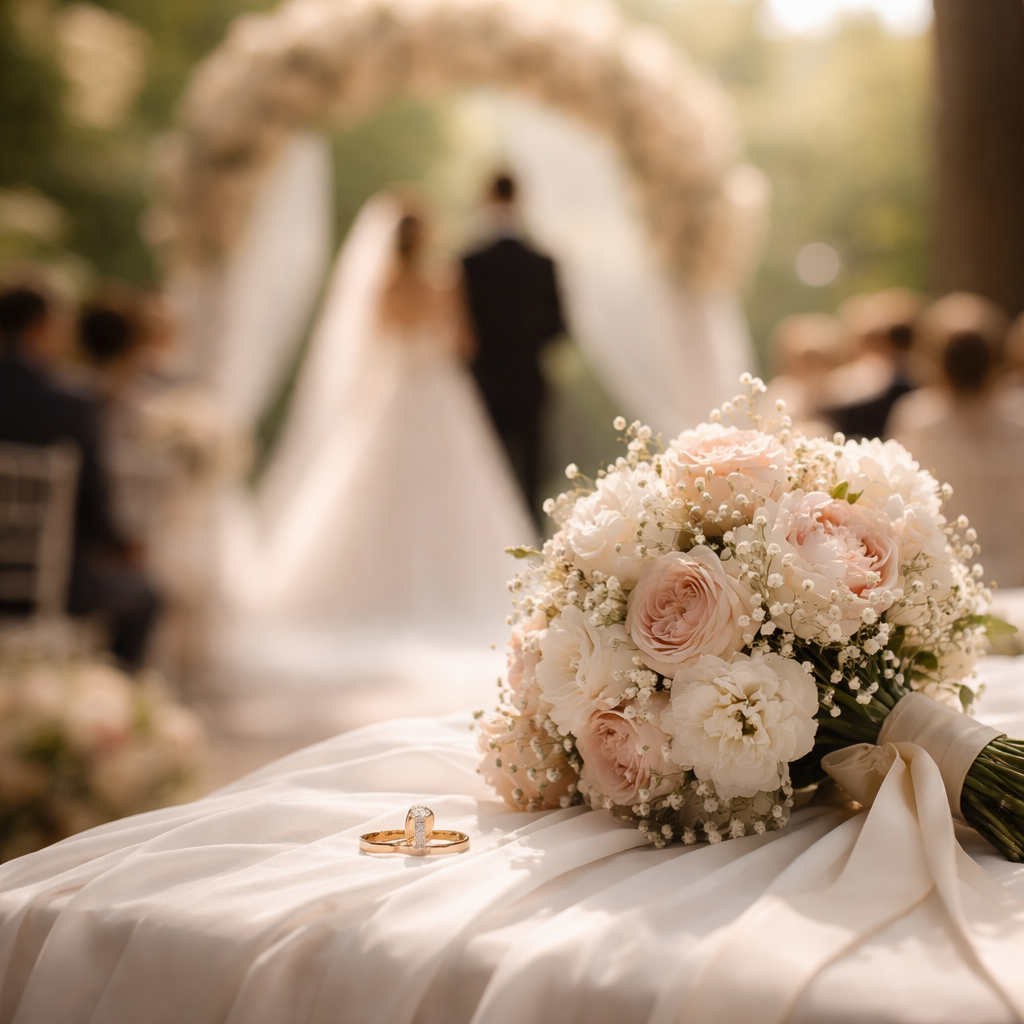
You wake up from a vivid scene — white dress, flowers, guests, someone standing at the altar — and immediately wonder what dream about weddings mean and whether it has anything to do with your real life. The short answer is: it depends on the details, your emotions during the dream, and your current life situation. Dream interpretation is not a rigid science, but psychology and cultural symbolism offer some genuinely useful frameworks for understanding these nighttime narratives.
Why wedding dreams are so emotionally loaded
Weddings carry some of the heaviest symbolic weight of any event in human experience. They mark transitions, commitments, public declarations, and irreversible choices. So when your sleeping brain reaches for a symbol to represent a major life change — a new job, a decision you’ve been avoiding, a relationship shifting — a wedding ceremony is often what it reaches for.
That’s why these dreams don’t necessarily mean you want to get married or that a wedding is coming. More often, they reflect something happening internally: a sense of transformation, an unresolved question about loyalty or commitment, or a desire for stability in a period of chaos.
Common wedding dream scenarios and what they tend to reflect
Rather than treating every wedding dream the same way, it helps to pay attention to what specifically happened and how it felt. Here are the most frequently reported scenarios:
| Dream scenario | Possible psychological meaning |
|---|---|
| You’re the one getting married | A major commitment or life transition you’re processing |
| The wedding is chaotic or ruined | Anxiety about a decision, fear of failure or public judgment |
| You’re a guest at someone else’s wedding | Observing change happening around you, possibly feeling left behind |
| You’re marrying a stranger | Integrating unfamiliar aspects of yourself (Jungian interpretation) |
| You’re marrying an ex | Unresolved feelings, or qualities of that person you still value |
| The wedding is called off | Relief about avoiding a commitment, or fear of abandonment |
Notice that several of these interpretations have nothing to do with romance. A wedding in a dream is often a metaphor for any kind of formal agreement or personal transition — not exclusively a romantic one.
The emotional tone matters more than the plot
Two people can dream of the exact same wedding scenario and wake up feeling completely differently about it. One person feels joyful and excited; another feels trapped or panicked. That emotional residue is arguably more important than the narrative details.
Dream researchers consistently note that the feeling you carry out of a dream often reveals more than the imagery itself. A dream that looks frightening on paper might actually feel liberating — and that contrast is worth paying attention to.
If you dreamed of a wedding and woke up feeling relieved, that’s different from waking up with dread or warmth or grief. Try journaling the emotion first, before analyzing the plot.
What it means to dream about someone else’s wedding
Dreaming that a friend, sibling, or coworker is getting married is actually quite common, and it rarely predicts their actual wedding. More typically, it reflects how you perceive their life path relative to your own. You might be processing feelings of comparison, admiration, or a quiet awareness that your own life is heading in a different direction.
Sometimes the “other person” in the dream is a symbolic stand-in for a part of yourself. If the person getting married represents ambition, creativity, or freedom to you — the dream might be about your own relationship with those qualities.
When the dream turns into a nightmare
A wedding gone wrong in a dream — missing rings, wrong partner, no guests showing up, forgetting the vows — tends to surface during periods of high-stakes decision making. These are classic anxiety dreams, not omens.
- Dreaming the wrong person shows up at the altar often reflects confusion about a choice you’re facing in waking life.
- A ceremony where everything falls apart can mirror fear of public failure or losing control of a situation.
- Running away from your own wedding in a dream frequently indicates ambivalence — not about marriage specifically, but about a commitment of any kind.
Cultural and spiritual layers of wedding dream symbolism
Different traditions assign different meanings to wedding imagery in dreams. In many European folk traditions, dreaming of a wedding was considered a sign of incoming news — not necessarily good or bad, just significant. In some South Asian interpretive traditions, a wedding dream can symbolize prosperity or a new beginning in business or family life.
From a Jungian psychological perspective, marriage in dreams often represents the union of opposites within the self — the integration of qualities you’ve been ignoring or suppressing. This reading has nothing to do with literal relationships and everything to do with inner psychological balance.
It’s worth holding multiple interpretations loosely rather than committing to just one. The meaning that resonates most with where you actually are in life is usually the most useful one.
How to make sense of your own wedding dream
There’s no universal decoder, but there are practical questions that tend to unlock meaningful insight:
- Who was present in the dream, and what do those people represent to you?
- What was the dominant feeling — joy, dread, confusion, peace?
- Was the ceremony going smoothly, or was something off?
- Are you in the middle of a major decision or life change right now?
- Is there a commitment in your waking life that you’re either resisting or longing for?
Sitting with these questions honestly — without rushing toward a neat interpretation — usually surfaces something real. Dreams don’t deliver messages in plain language, but they do reflect the emotional patterns and unresolved material that your conscious mind tends to push aside during the day.
The dream already told you something — now listen
Wedding dreams, whether joyful or unsettling, tend to stick with you for a reason. They’re not random noise. They often arrive at exactly the moments when something in your life is shifting, when a choice is pending, or when you’re quietly wrestling with what you want your future to look like.
You don’t need to over-interpret or assign fixed meaning to every image. But paying attention to the emotional core of these dreams — and asking honestly what in your waking life might be generating it — can offer a kind of self-awareness that’s genuinely hard to access any other way.