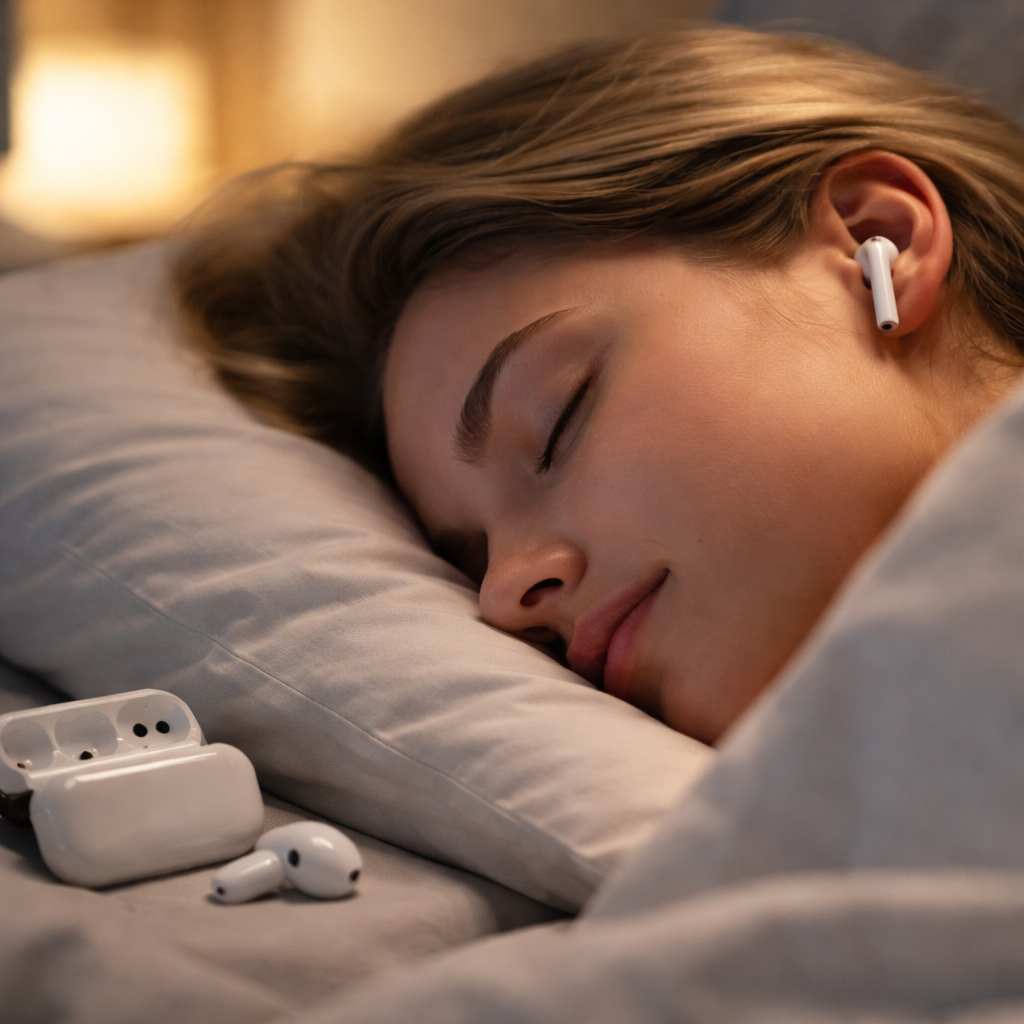
Falling asleep with music, podcasts, or white noise playing through AirPods has become a genuinely common habit — but the question of whether is it safe to sleep with AirPods gets surprisingly little straightforward attention despite how many people do it every night.
What actually happens to your ears during the night
When you wear any in-ear device for an extended period, especially during sleep, the ear canal environment changes. The natural airflow is reduced, moisture builds up, and the skin inside the canal stays in prolonged contact with a foreign object. None of this is immediately dangerous, but it does create conditions worth understanding before you make it a nightly routine.
AirPods, particularly the in-ear Pro models with silicone tips, create a seal that traps warmth and humidity. Over time, this can contribute to earwax buildup, minor irritation, or even otitis externa — a mild outer ear infection sometimes called swimmer’s ear — in people who are already prone to ear sensitivity.
The real risks, ranked by how likely they actually are
Not all concerns are equal. Some risks are theoretical and rare; others are more practical and worth taking seriously.
| Risk | How common | Who is most affected |
|---|---|---|
| Ear canal irritation or soreness | Fairly common | People with sensitive skin or small ear canals |
| Earwax buildup or impaction | Moderate | Regular nightly users over weeks |
| Outer ear infection | Less common | Those with moisture-prone ears |
| Noise-induced hearing fatigue | Depends on volume | Anyone sleeping with audio above 60 dB |
| Physical discomfort or pressure sores | Common with side sleepers | People who sleep on their side |
Physical pressure is often the most overlooked issue. Side sleepers frequently press the AirPod directly against the inner ear cartilage for hours. This can cause a dull aching sensation by morning, and in rare cases, prolonged nightly pressure on cartilage tissue can lead to irritation that takes days to fully resolve.
Volume and hearing health: the number that matters
Audiologists generally point to 85 decibels as the threshold above which prolonged exposure begins to carry risk for hearing. During sleep, many people set audio lower than they would while awake — which is actually a protective factor. If you are using sleep sounds, brown noise, or calm music at a low volume, the hearing risk is minimal.
The World Health Organization estimates that 1.1 billion young people are at risk of hearing loss due to unsafe listening practices — volume and duration together are the key variables, not device type alone.
The danger increases if you fall asleep while audio is still playing at a normal waking volume and it continues for six to eight hours uninterrupted. This is where a sleep timer becomes genuinely useful — most podcast apps and music streaming platforms offer one, and AirPods connected to an iPhone can use the built-in sleep timer in the Clock app to cut audio after a set period.
Bluetooth radiation: separating fact from concern
This topic comes up frequently in online discussions. AirPods use Bluetooth, which emits non-ionizing radiofrequency radiation — a type of electromagnetic field that is fundamentally different from ionizing radiation like X-rays. Current scientific consensus, including positions from the WHO and major health agencies, does not classify low-level Bluetooth exposure as harmful to human health at the intensities produced by consumer earbuds.
That said, research on long-term, chronic exposure to Bluetooth devices worn inside the ear canal is still an evolving field, and some researchers have called for more longitudinal studies. If you prefer a cautious approach, using AirPods occasionally rather than every single night is a reasonable middle ground.
Who should be especially careful
Most healthy adults who occasionally fall asleep with AirPods are unlikely to experience lasting harm. However, certain groups have good reasons to be more thoughtful about the habit:
- People with a history of ear infections or chronic otitis media
- Those who already have tinnitus or noise sensitivity
- Individuals with narrow or unusually shaped ear canals that retain more moisture
- Children and teenagers, whose auditory systems are still developing
- Anyone currently experiencing ear pain, itching, or discharge
Practical steps if you want to keep the habit
If wearing AirPods to sleep genuinely helps you relax or fall asleep faster, there is no reason to stop entirely — but a few adjustments can make the practice much safer over the long term.
First, keep the volume at or below 50% of maximum, which for most devices keeps output well within safe listening range. Second, use a sleep timer so audio does not play continuously all night. Third, clean your AirPods regularly — earwax and bacteria can accumulate on the silicone tips and transfer back into the ear canal. Apple recommends cleaning AirPod tips with a slightly damp lint-free cloth and allowing them to dry completely before use.
If you sleep on your side, consider switching to only wearing the AirPod in the upper ear, leaving the lower one out. This simple adjustment eliminates most of the cartilage pressure issue and still delivers audio to your brain effectively enough to fall asleep.
- Set a 30–45 minute sleep timer on your audio app before bed
- Keep volume below 50% of your device’s maximum
- Clean AirPod tips at least once a week
- Take at least one or two nights off per week to let your ear canals breathe
- See a doctor if you notice any pain, itching, or changes in hearing after adopting this habit
The honest bottom line on sleeping with earbuds
Occasional use at low volume with a sleep timer is unlikely to cause problems for most people. Nightly use over months and years, especially at higher volumes and without giving your ears any rest, is where the cumulative risks — ear irritation, wax buildup, potential hearing fatigue — start to become more realistic rather than theoretical.
Listening to something calming before sleep has genuine benefits for many people, from reducing anxiety to shortening the time it takes to fall asleep. The goal is not to scare you away from a habit that clearly works — it is to help you do it in a way that your ears will not complain about five years from now. Small adjustments in volume, duration, and hygiene go a long way toward keeping both your sleep quality and your hearing health intact.