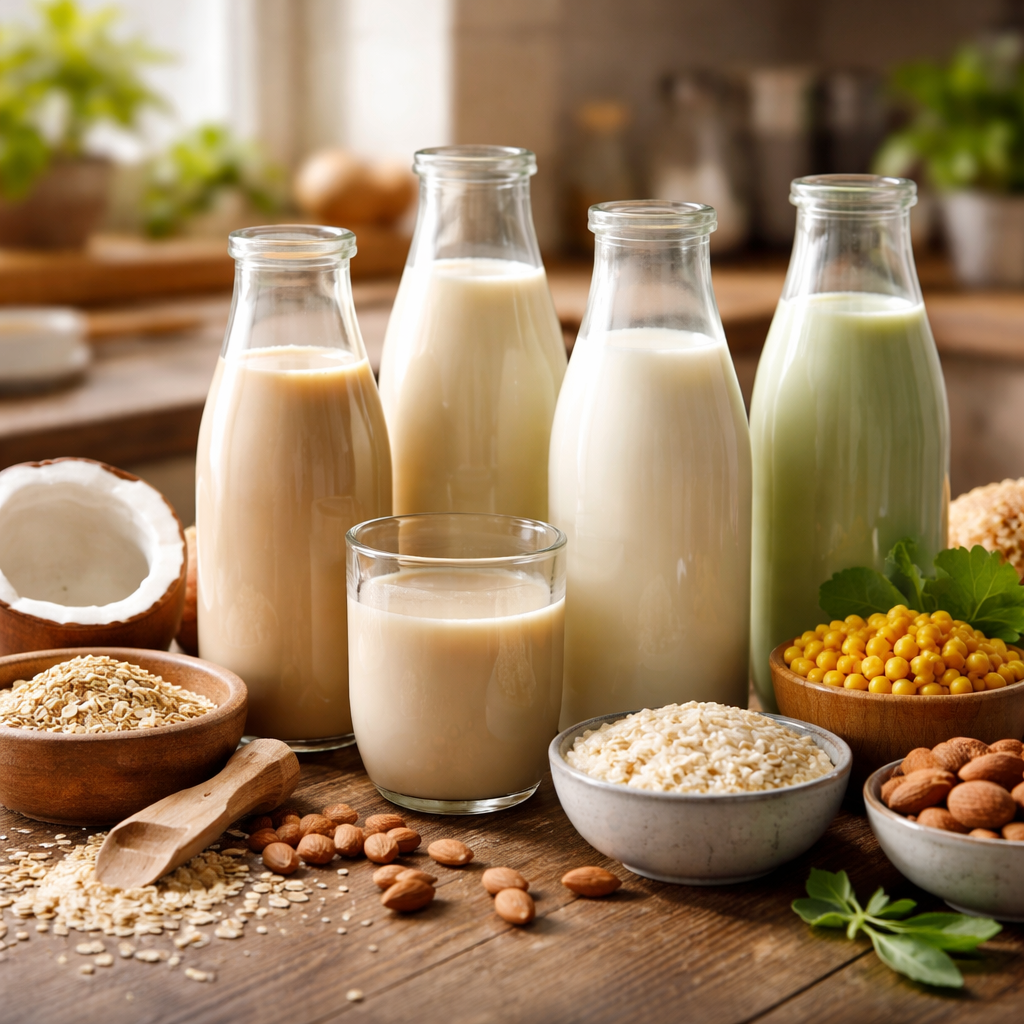
Not everyone who avoids dairy is lactose intolerant — many people simply want more variety, lighter digestion, or a smaller environmental footprint. Whatever your reason for exploring an alternative to milk, the options available today are genuinely impressive, and choosing the right one can make a bigger difference than you might expect.
Why the switch matters more than the label
Walk into any grocery store and you’ll find a shelf packed with plant-based cartons. But the difference between them isn’t just flavor — it’s nutritional profile, texture, behavior when heated, and how they interact with coffee, baked goods, or savory sauces. Treating all non-dairy milks as interchangeable is the fastest way to end up disappointed.
Each option comes from a different source and carries a different set of strengths. Understanding what you actually need from a milk substitute — protein, creaminess, neutral taste, foaming ability — makes the decision straightforward rather than overwhelming.
The main plant-based options and what they’re actually good for
Here’s a practical breakdown of the most widely available non-dairy milks and where each one genuinely performs well:
| Milk alternative | Protein per 100ml | Best used for | Notable downside |
|---|---|---|---|
| Oat milk | ~0.5–1g | Coffee, cereals, baking | Higher in carbohydrates |
| Soy milk | ~3–4g | Cooking, smoothies, protein intake | Beany flavor in some brands |
| Almond milk | ~0.5g | Light drinks, overnight oats | Low protein, thin texture |
| Coconut milk (drink) | ~0.2g | Curries, desserts, hot drinks | Strong flavor, high in fat |
| Pea milk | ~3–4g | Protein boost, neutral cooking | Less widely available |
| Rice milk | ~0.1g | Allergy-friendly option | Watery, high glycemic index |
Soy milk remains the closest match to cow’s milk in terms of protein and amino acid profile, which is why it’s often recommended for people who aren’t just avoiding dairy for taste reasons but genuinely need to maintain their protein intake from food sources.
Oat milk’s rise — and the reason it stuck around
Oat milk became popular for a simple reason: it behaves well. It froths, it blends smoothly into hot drinks without curdling, and its naturally mild sweetness works in coffee without needing added sugar. Barista-grade oat milks are specifically formulated with added oils and stabilizers to perform under heat and steam, which is why they foam so much better than the regular version from the same brand.
If you’re using plant-based milk for coffee drinks and it keeps separating or curdling, the issue is almost always acidity — try a barista edition or let the milk come to room temperature before pouring.
The downside people don’t talk about enough is the carbohydrate content. Oat milk is naturally higher in simple carbs compared to most other plant milks, which matters if you’re monitoring blood sugar or following a low-carb eating pattern.
Baking and cooking: where the wrong choice shows up immediately
In hot drinks, the differences between plant milks are noticeable but manageable. In baking, they become critical. The fat content, water content, and sugar profile of your dairy-free milk affects the texture of cakes, pancakes, and sauces in ways that are hard to fix after the fact.
- For creamy sauces and soups, full-fat coconut milk or unsweetened soy milk hold up much better than almond or rice milk.
- For pancakes and muffins, oat milk or soy milk provide the closest result to whole milk — the batter behaves similarly and the end texture is comparable.
- For custards and puddings, oat milk works well because of its natural starch content, which supports a slightly thicker consistency.
- For savory dishes where a neutral taste matters, unsweetened pea milk is surprisingly effective and doesn’t compete with other flavors.
One practical rule worth following: always choose unsweetened versions for cooking. Sweetened plant milks can throw off the balance of a dish in ways that are hard to predict, especially in savory contexts.
Nutrition gaps worth knowing about
Switching away from dairy doesn’t automatically create nutritional problems — but it does require some awareness. Cow’s milk is naturally rich in calcium, vitamin B12, vitamin D, iodine, and riboflavin. Most plant-based milks are fortified to compensate, but the levels and the bioavailability vary between products.
Reading the label on fortified plant milks is genuinely worth the extra ten seconds. Some brands add calcium carbonate, which is well-absorbed; others use calcium phosphate. Vitamin D2 is commonly added to plant milks, though D3 (more effective at raising serum levels) is increasingly used in newer formulations — usually derived from lichen rather than animal sources.
- Iodine is rarely added to plant-based milks, yet it’s essential for thyroid function — people relying heavily on non-dairy milks may want to track their intake from other sources like seaweed or iodized salt.
- B12 is added to many soy and oat milks, but not all — check the label rather than assuming.
- Protein from soy and pea milk is complete, meaning it contains all essential amino acids. Most other plant milks do not provide meaningful protein at all.
Finding what actually works for your routine
There’s no single best plant-based milk — there’s the best one for what you’re doing with it. Many people end up keeping two or three options at home: something neutral for cooking, something that foams well for coffee, and something protein-rich for smoothies or post-workout drinks.
If you’re just starting to explore non-dairy options, oat milk is often the most forgiving starting point because of its versatility and familiar taste. From there, branching into soy or pea milk fills in the protein gap that oat milk doesn’t address.
The broader point is that dairy-free doesn’t mean compromise — it means making deliberate choices based on what you actually eat and drink. Once you match the milk to the moment, the switch stops feeling like a sacrifice and starts feeling like a genuinely better fit.