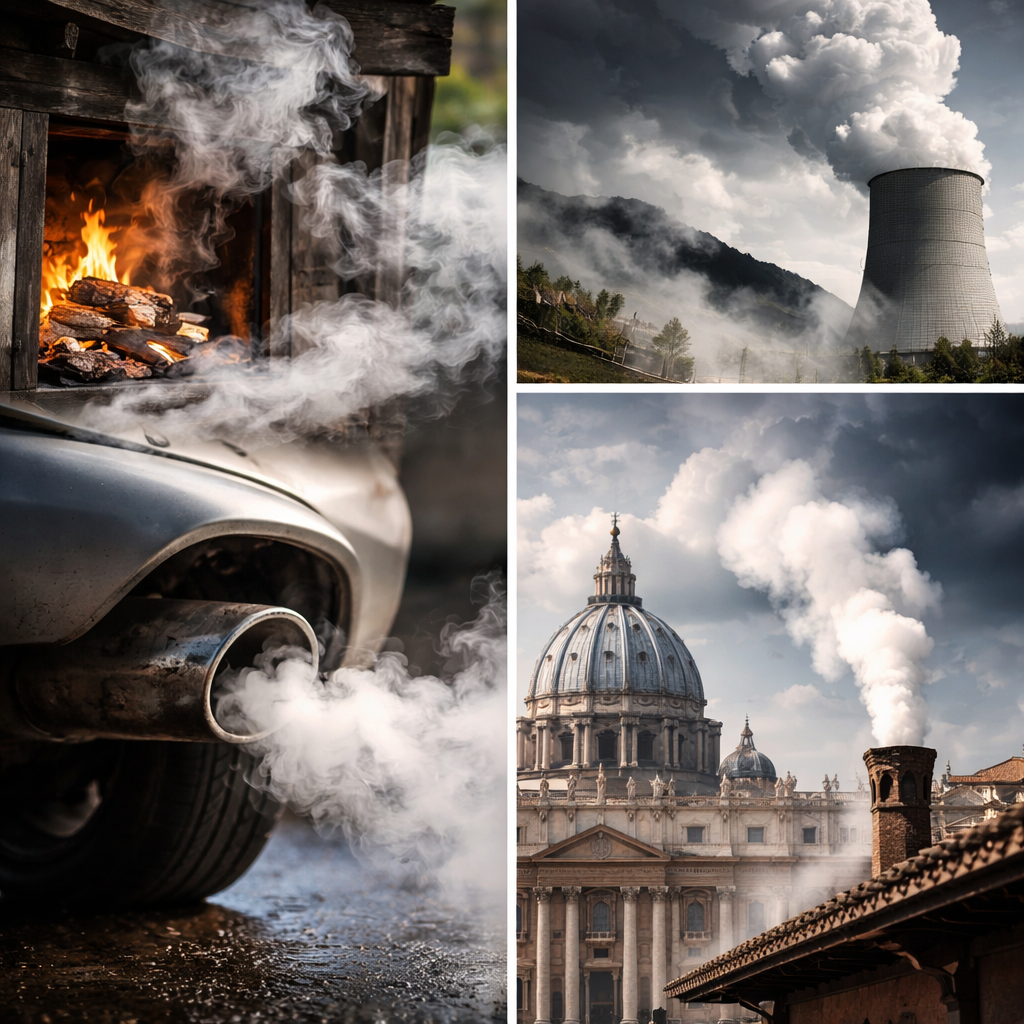
White smoke can mean completely different things depending on where you see it — and getting that context wrong can cost you time, money, or peace of mind. The meaning of white smoke shifts dramatically based on its source: a car exhaust pipe, a chimney, an engine compartment, or even a ceremonial setting. Understanding what you’re actually looking at requires paying attention to a few key details that most people tend to overlook.
Why Context Is Everything When Reading Smoke Color
Smoke color is essentially a diagnostic language. Just like a doctor reads symptoms, an experienced mechanic, firefighter, or homeowner can interpret what a specific color of smoke is trying to communicate. White smoke, in particular, tends to be the most misread — often mistaken for harmless steam or dismissed entirely when it actually signals something worth investigating.
The confusion usually starts because white smoke looks “clean” compared to black or blue smoke. But appearance alone is misleading. The real question is always: where is it coming from, and under what conditions?
White Smoke From a Car: When to Worry and When to Relax
One of the most common situations where people encounter white smoke is from a vehicle’s exhaust. Here’s where the distinction between steam and actual smoke becomes critical.
On cold mornings, it’s perfectly normal to see white vapor rising from your exhaust pipe for the first minute or two after starting the engine. That’s condensation burning off — water vapor that collected overnight. It disappears quickly and has no real smell. Nothing to worry about.
Persistent white smoke that continues after the engine warms up is a different story entirely. It’s one of the classic symptoms of a blown head gasket — a failure that allows coolant to leak into the combustion chamber and burn alongside the fuel. This produces thick, white or grayish-white exhaust smoke with a distinctly sweet smell, often described as similar to antifreeze.
If your coolant reservoir is dropping without any visible external leak, and you’re seeing persistent white exhaust smoke, treat it as a serious warning sign. Head gasket repairs are expensive, but ignoring the issue can destroy an engine entirely.
Other engine-related causes of white smoke can include a cracked engine block, a damaged cylinder head, or a faulty fuel injector releasing too much fuel into the system. Each of these requires professional diagnosis.
White Smoke and Chimneys: A Different Kind of Reading
From a fireplace or wood-burning stove, the color and density of smoke leaving a chimney tells you a lot about combustion efficiency. White or light gray smoke typically indicates that wet or unseasoned wood is being burned. Wood with high moisture content doesn’t ignite cleanly — it smolders, releases more water vapor and unburned particles, and produces that characteristic pale smoke.
This matters beyond aesthetics. Burning wet wood leads to creosote buildup inside the chimney flue — a flammable deposit that’s a leading cause of chimney fires. If you’re consistently seeing white, wispy smoke from your chimney, it’s a signal to switch to properly seasoned wood with a moisture content below 20%.
| Smoke Type | Likely Cause | Action Needed |
|---|---|---|
| Thin white vapor (brief) | Cold engine condensation | None — completely normal |
| Thick white exhaust smoke | Coolant burning in engine | Mechanic inspection urgently |
| White chimney smoke | Wet or unseasoned firewood | Switch to dry, seasoned wood |
| White industrial smoke | Steam release or water vapor | Context-dependent — monitor |
Cultural and Symbolic Significance
Beyond the mechanical and practical world, white smoke carries deep symbolic meaning in certain cultural and religious contexts. The most globally recognized example is the white smoke signal used during a papal conclave in the Vatican. When a new Pope is elected, a chemical mixture is added to the burned ballots to produce white smoke — a visual announcement to the crowds gathered in St. Peter’s Square that a decision has been made. Black smoke signals that no consensus was reached.
This tradition dates back centuries and remains one of the most watched smoke signals in the world, demonstrating how something as simple as smoke color can carry enormous communicative weight in the right setting.
White Smoke in Industrial and Outdoor Settings
In industrial environments, large plumes of white smoke — or more accurately, steam — rising from cooling towers or factory stacks are often completely harmless water vapor. Power plants, in particular, release significant amounts of steam as part of normal operations, and this is frequently mistaken for pollution by those unfamiliar with the process.
That said, not all white industrial emissions are benign. Some chemical processes release white fumes that contain particulates or irritants, which is why environmental monitoring of industrial smoke remains important. Color alone is not a reliable measure of toxicity in industrial contexts.
Practical Tips for Identifying White Smoke
When trying to interpret white smoke in any situation, a few straightforward observations go a long way:
- Note how long the smoke persists — brief wisps behave very differently from sustained plumes
- Check for associated smells — sweetness often indicates coolant; a neutral or woody scent points to combustion issues
- Consider the temperature and weather conditions — cold air makes exhaust vapor appear much denser and whiter than it actually is
- Pay attention to accompanying symptoms — engine overheating, dropping fluid levels, or unusual sounds add crucial diagnostic context
- Don’t rely on color alone — the density, consistency, and source location matter just as much
What White Smoke Is Actually Telling You
Across all these different settings — cars, chimneys, ceremonies, industry — white smoke consistently functions as a signal worth paying attention to rather than automatically dismissing. In some cases it’s harmless and temporary. In others, it’s one of the clearest early warnings you’ll get before a much larger problem develops.
The key takeaway is to resist the instinct to either panic or ignore it. Instead, ask the right questions: where is this smoke coming from, how long has it been happening, and what else is going on around it? Those three questions will usually lead you to a clear and actionable answer — whether that means grabbing dry firewood, booking a mechanic appointment, or simply enjoying the morning show from your tailpipe on a cold day.