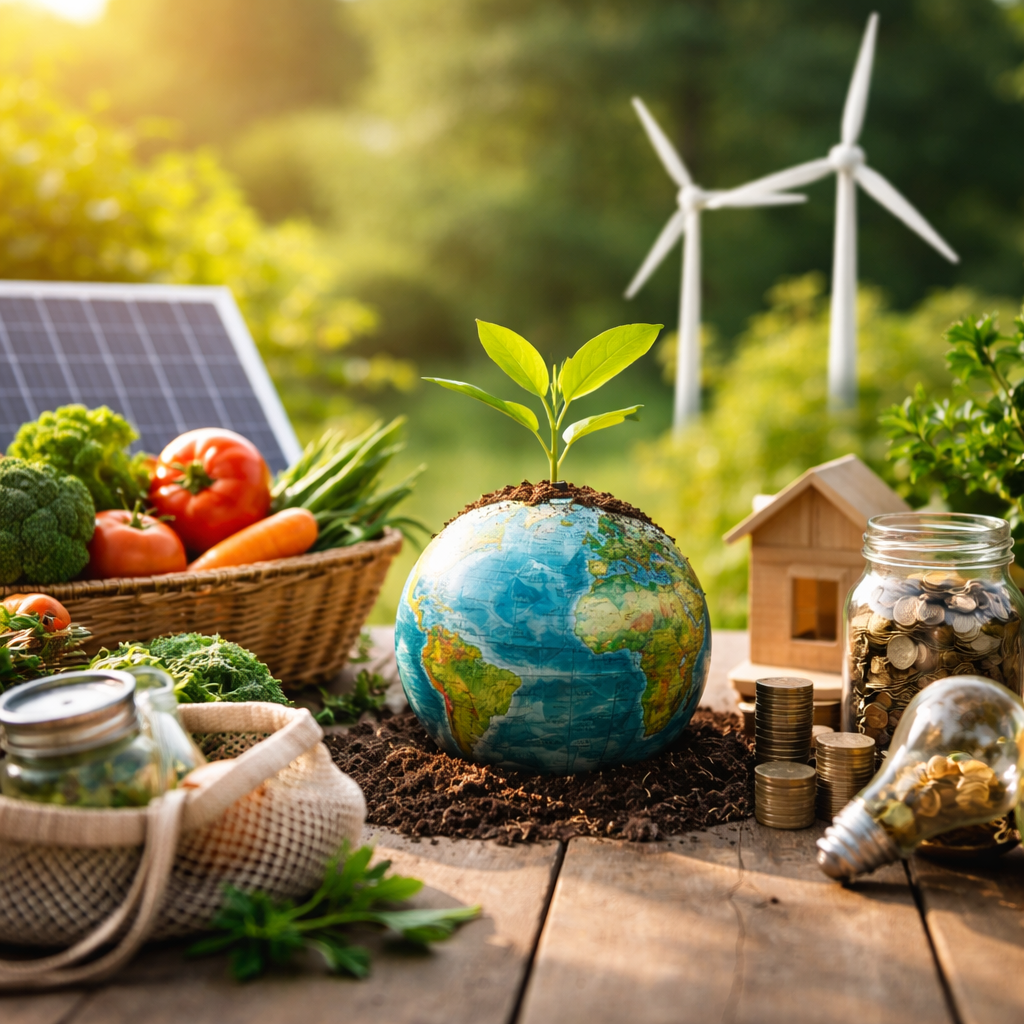
Few concepts get used as broadly — and as loosely — as sustainability, yet understanding the real meaning of sustainability can genuinely shift the way you make decisions, from what you buy at the grocery store to how companies design their supply chains. It’s not a buzzword reserved for environmentalists or policy documents. It’s a framework with clear principles, and once you get it, it starts showing up everywhere.
Where the idea actually comes from
The most widely cited definition comes from the 1987 Brundtland Report, published by the United Nations World Commission on Environment and Development. It describes sustainable development as “meeting the needs of the present without compromising the ability of future generations to meet their own needs.” That’s a deceptively simple sentence. It contains two core ideas: intergenerational responsibility and resource limits.
“Sustainable development is development that meets the needs of the present without compromising the ability of future generations to meet their own needs.”
— Brundtland Report, 1987, UN World Commission on Environment and Development
What made this definition stick is that it doesn’t anchor sustainability to any single domain. It doesn’t say “save forests” or “reduce emissions.” It sets up a logic that can be applied to agriculture, urban planning, finance, healthcare, or education. That versatility is precisely why the concept has lasted and spread across so many fields.
The three pillars that hold everything together
Modern sustainability thinking is structured around three interconnected dimensions, often called the triple bottom line: environmental, social, and economic. None of them operates in isolation.
| Pillar | Core focus | Examples in practice |
|---|---|---|
| Environmental | Preserving natural systems and biodiversity | Reducing carbon emissions, protecting water sources, limiting waste |
| Social | Ensuring equity, health, and well-being for people | Fair labor practices, access to education, community resilience |
| Economic | Supporting long-term financial viability | Circular economy models, green investment, ethical business practices |
These three dimensions don’t always point in the same direction, and that tension is part of what makes sustainability a genuinely complex topic. A factory that installs solar panels but pays workers below a living wage isn’t truly sustainable — it’s partially green, but socially hollow. Real sustainability asks all three questions at once.
Why people confuse sustainability with environmentalism
It’s a reasonable mix-up. Environmental concerns — climate change, deforestation, ocean pollution — dominate the public conversation about sustainability, and they deserve the attention they get. But reducing sustainability to ecology misses a significant portion of what the concept covers.
Think about a city that builds excellent public transit. It reduces emissions, yes — but it also improves air quality for lower-income neighborhoods that couldn’t afford cars, and it reduces infrastructure spending over time. That single decision touches all three pillars simultaneously. Sustainability, at its core, is systems thinking applied to long-term human flourishing.
How sustainability shows up in everyday life
You don’t need to be a policymaker or a corporate strategist to engage with sustainable living. Many of the most impactful choices are small, repeated, and cumulative.
- Choosing products with longer lifespans over cheap disposable alternatives reduces manufacturing demand and landfill waste.
- Supporting local food producers shortens supply chains, cuts transport emissions, and keeps money circulating in regional economies.
- Reducing meat consumption — even partially — has documented effects on land use, water consumption, and greenhouse gas output.
- Renting, sharing, or repairing items instead of buying new fits within the circular economy model that sustainability advocates promote.
- Being mindful of energy use at home — insulation, appliance efficiency, heating habits — contributes to systemic demand reduction.
None of these actions require a complete lifestyle overhaul. Sustainability, in practice, tends to be incremental rather than revolutionary for individuals — and that’s actually fine.
Greenwashing and why it matters
As sustainability has become a selling point, it has also become a marketing tool — and not always an honest one. Greenwashing refers to the practice of making misleading claims about the environmental or social credentials of a product, brand, or policy.
Spotting it isn’t always easy, but there are patterns to watch for:
- Vague language like “eco-friendly,” “natural,” or “green” with no specific data or certifications to back it up.
- Highlighting one small sustainable attribute while ignoring larger harmful practices.
- Using imagery of nature, forests, or clean water to imply environmental responsibility without substantiating claims.
- Certifications that are self-issued rather than verified by independent third parties.
Being a critical consumer of sustainability claims is itself a form of engagement with the concept. It pushes companies toward accountability and rewards genuine progress over performative gestures.
Sustainability at the scale of organizations and governments
Individual choices matter, but structural change operates at a different scale. Organizations that take sustainability seriously tend to embed it into core strategy rather than treat it as a communications exercise. This includes measuring and reporting on carbon footprints, setting science-based emissions targets, auditing supply chains for social risks, and designing products for disassembly and reuse.
Governments, on the other hand, shape the conditions within which both individuals and organizations make decisions. Carbon pricing, building codes, agricultural subsidies, zoning laws, and trade agreements all carry sustainability implications, whether they’re framed that way or not.
The United Nations Sustainable Development Goals, adopted in 2015, offer a global framework of 17 targets covering everything from clean energy and responsible consumption to reduced inequalities and climate action. They function as a shared reference point across nations and industries, even if progress remains uneven.
Something worth sitting with
Sustainability isn’t a destination — it’s an ongoing orientation toward how decisions get made. Understanding it deeply means recognizing that every system, whether ecological, social, or economic, has limits, and that working within those limits intelligently is both a practical necessity and an ethical stance. The more you understand it, the less it feels like a constraint, and the more it starts to look like common sense with longer time horizons.