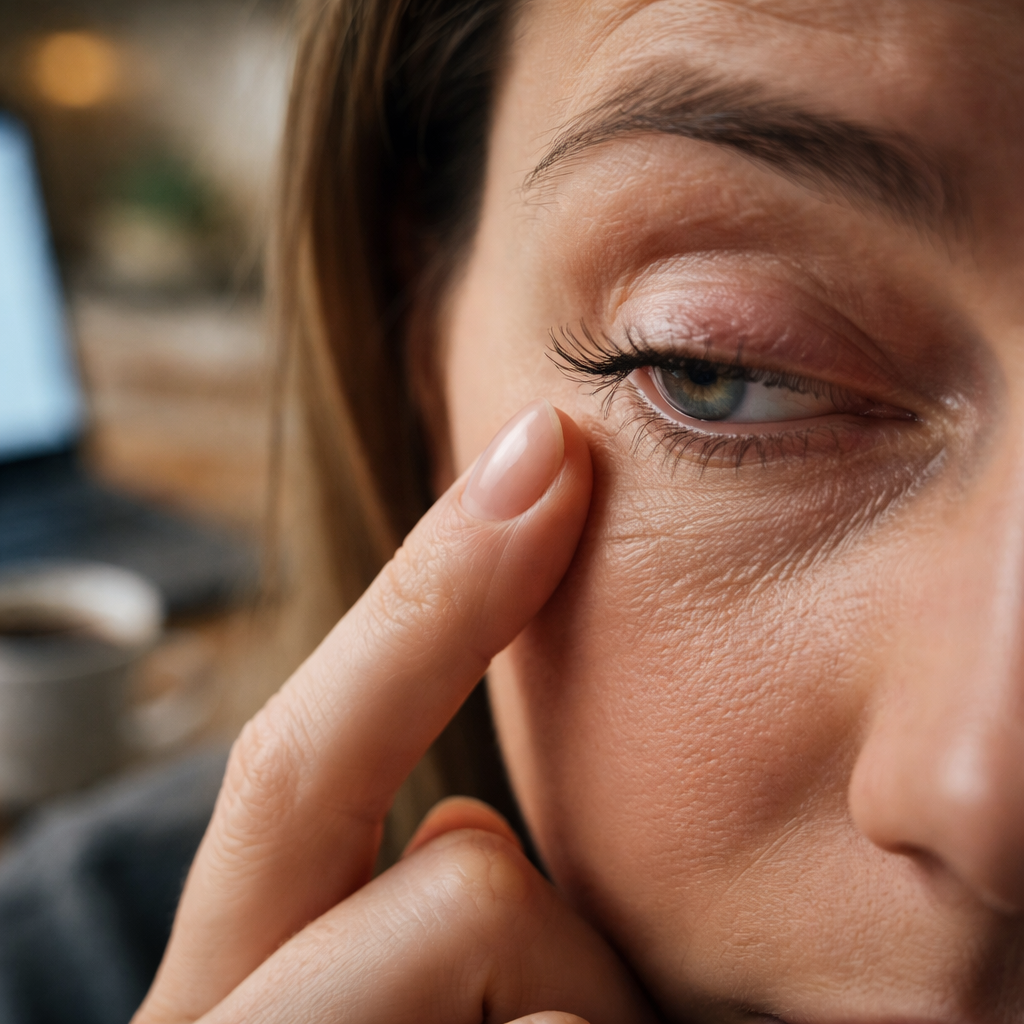
That subtle flicker in your eyelid that seems to appear at the worst possible moment — before a big presentation, during a stressful week, or right after a sleepless night — is something almost everyone has experienced. The meaning of eye twitching depends on several factors, and in most cases it reveals more about your lifestyle than about any serious medical condition.
What actually causes the eyelid to twitch
Eye twitching, known medically as myokymia, refers to involuntary, repetitive spasms of the eyelid muscle. These spasms are usually felt in the lower or upper eyelid of one eye and can last anywhere from a few seconds to several minutes. They may come and go over the course of days or even weeks.
The most frequently documented triggers include fatigue, excessive caffeine intake, dry eyes, stress, and prolonged screen exposure. In clinical observations, these factors are consistently linked to temporary eyelid spasms that resolve on their own without any treatment.
- Sleep deprivation — even one or two nights of poor sleep can irritate the nervous system enough to trigger spasms
- High caffeine consumption — coffee, energy drinks, and certain teas overstimulate the muscles
- Digital eye strain — staring at screens for extended periods without breaks dries out the eyes and fatigues the surrounding muscles
- Nutritional deficiencies — low levels of magnesium in particular are associated with muscle twitching throughout the body
- Alcohol and tobacco use — both can disrupt nerve signaling and lead to involuntary muscle contractions
- Stress and anxiety — heightened cortisol levels affect muscle control and nerve function
Understanding which of these is your personal trigger often requires a bit of honest self-reflection. Did the twitching start during an unusually stressful period? Did you cut back on sleep? Have you been drinking more coffee than usual lately? The answers often point directly to the cause.
When eye twitching is more than just tiredness
Most eyelid twitches are benign and self-limiting. However, in less common cases, persistent or more intense twitching can signal an underlying neurological or eye-related condition that deserves medical attention.
If the twitching affects both eyes simultaneously, spreads to other parts of the face, or is accompanied by vision changes, it is important to consult a healthcare provider rather than self-diagnose.
There are two more serious conditions worth knowing about. Blepharospasm is a neurological disorder that causes forceful, involuntary closing of both eyelids. Hemifacial spasm involves twitching that starts at the eye and gradually moves down one side of the face — this can sometimes indicate irritation of the facial nerve. Both conditions are diagnosable and treatable, but they are significantly less common than everyday eyelid myokymia.
| Type | Affects | Common cause | Requires medical attention |
|---|---|---|---|
| Myokymia | One eyelid | Stress, fatigue, caffeine | Rarely |
| Blepharospasm | Both eyelids | Neurological disorder | Yes |
| Hemifacial spasm | One side of the face | Facial nerve irritation | Yes |
Practical steps to make it stop
Since the majority of eye twitches are lifestyle-related, the most effective relief usually comes from addressing the root cause rather than looking for a quick fix. That said, there are several evidence-based approaches that can help reduce or eliminate the spasms.
Prioritizing quality sleep is consistently one of the most impactful changes a person can make. When the body is well-rested, the nervous system operates more efficiently and is less prone to sending erratic signals to muscle fibers. Reducing caffeine intake — even temporarily — often produces noticeable results within a few days.
If dry eyes are part of the picture, lubricating eye drops available over the counter can help. Magnesium supplementation has also been discussed in medical literature as potentially helpful for muscle twitching, though it is always best to consult a doctor before starting any supplement.
For stress-related twitching, the path forward is less about the eye itself and more about overall nervous system regulation. Regular physical activity, mindfulness practices, adequate hydration, and conscious breathing techniques are all known to support the body’s ability to manage stress responses.
Eye twitching across cultures — superstition versus science
It is worth acknowledging that in many cultures around the world, a twitching eye carries symbolic or superstitious meaning. In some African and Caribbean traditions, a left eye twitch is associated with receiving bad news, while a right eye twitch signals good luck. In parts of Asia, the interpretation differs based on gender — a twitching left eye may be seen as favorable for women but unfavorable for men.
These interpretations are deeply rooted in cultural heritage and have been passed down through generations. While they hold no scientific basis, they reflect a universal human tendency to seek meaning in physical sensations, especially ones that feel unexpected or recurring.
From a medical standpoint, neither the left eye nor the right eye carries any predictive meaning about future events. The side that twitches is simply determined by which eyelid muscle is currently under the most strain or irritation.
When to stop waiting it out
Most eye twitches resolve within a few days to a couple of weeks once the triggering factor is addressed. If yours has persisted significantly longer, or if you notice any of the following, a visit to a doctor or ophthalmologist is genuinely warranted:
- The twitching continues for more than three weeks without any clear improvement
- The eyelid is drooping or closing completely during spasms
- Twitching is spreading to other facial muscles
- There is redness, swelling, or unusual discharge from the eye
- Vision appears blurred or altered during or after spasms
There is no need to panic over a brief, harmless eyelid twitch — but there is also no need to dismiss something that is clearly disrupting your daily life. Your body communicates through physical signals, and a persistent one is simply worth having properly evaluated.
Taking care of your eyes means taking care of the whole system that supports them — your sleep, your stress levels, your hydration, your screen habits. In most cases, that is precisely where the answer lies.