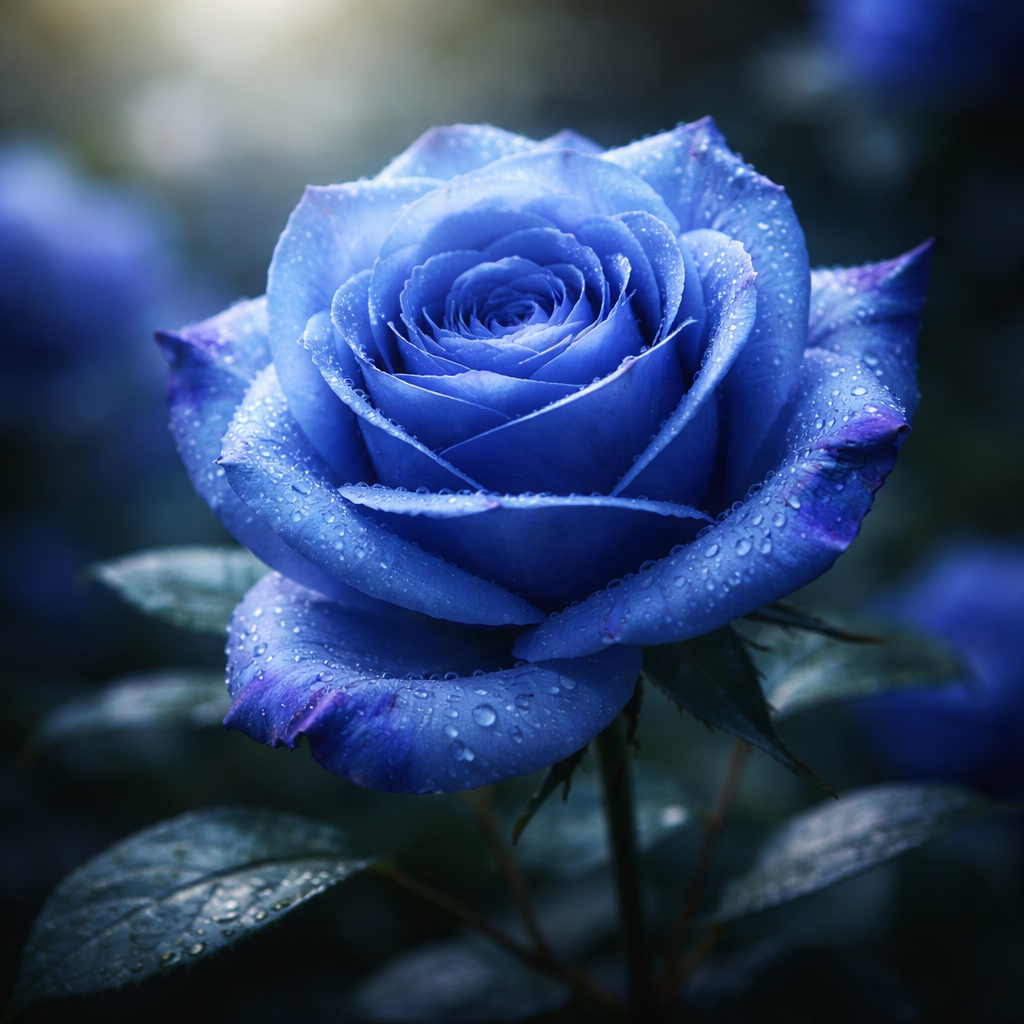
A blue rose has never existed in nature — and that single fact alone has shaped its meaning for centuries. The meaning of blue roses is rooted not in botanical reality but in human longing: for the impossible, the mysterious, and the deeply personal. Because blue pigment simply cannot be produced by rose genetics naturally, every blue rose carries a symbolic weight that no red or yellow variety can match.
Why blue roses carry such unusual symbolism
Most flowers earn their symbolism through long cultural use — roses were red in Roman festivals, white at medieval weddings. Blue roses, by contrast, earned theirs through absence. For centuries, horticulturists attempted and failed to breed a truly blue rose. That persistent impossibility turned the flower into a symbol of unattainable goals, rare beauty, and the kind of love that defies ordinary explanation.
This is why giving someone a blue rose sends a very different message than handing them a bouquet of mixed flowers. It speaks of depth — of feelings that can’t quite be put into words, and of admiration that borders on the extraordinary.
The layered meanings behind blue roses
Blue rose symbolism isn’t fixed to one single idea. Depending on context, culture, and even the shade of blue, the meaning can shift quite noticeably. Here are the most widely recognized interpretations:
- Mystery and the unknown — blue is universally linked to depth, the ocean, and the sky; blue roses amplify this association
- Unattainable or impossible love — historically tied to the fact that blue roses couldn’t exist in nature
- Uniqueness and rarity — used to express that someone is one of a kind
- New beginnings — in some modern interpretations, blue roses represent stepping into the unfamiliar with courage
- Spiritual connection — in certain cultural traditions, blue flowers are linked to the divine or transcendent
- Calm and tranquility — the cool blue tone is often associated with peaceful, steady emotions
What makes blue roses particularly interesting is how personal their meaning can become. Two people might give or receive the same flower and understand entirely different things from it — and both interpretations would be valid.
Blue roses across different cultures
In Western traditions, blue roses have long been tied to romantic pursuit — particularly the kind where feelings go unspoken or unrequited. Victorian-era flower language, known as floriography, positioned blue roses as a symbol of mystery and the longing for something just out of reach.
In East Asian cultures, particularly in Japan, blue roses took on additional meaning after Suntory — a Japanese company — created the first genetically modified blue rose in the early 2000s. This achievement turned the blue rose into a symbol of the possible within the impossible, representing perseverance and scientific ambition alongside its traditional romantic associations.
“The blue rose is not a flower you give lightly. It says: you are unlike anyone I have ever known.”
In literature and art, blue roses appear as metaphors for creative vision, the pursuit of ideals, and artistic obsession. Tennessee Williams famously used a blue rose as a motif in The Glass Menagerie, where it represents fragile uniqueness and the desire to be seen differently.
How blue roses are actually made
Understanding the symbolism of blue roses becomes even richer when you know the science behind their creation. Roses naturally lack the gene needed to produce delphinidin, the pigment responsible for blue tones in flowers like delphiniums and violets. This biological gap is what made the blue rose impossible for so long.
| Type of blue rose | How it’s created | True blue? |
|---|---|---|
| Dyed blue roses | White roses soaked in blue floral dye | No |
| Painted blue roses | Petals hand-painted or spray-coated | No |
| Genetically modified blue roses | Delphinidin gene introduced via genetic engineering | Near-blue (lavender-violet tone) |
| Naturally “blue” varieties | Deep purple or lilac roses marketed as blue | No — visually purple |
Even the most advanced genetically modified blue rose produced so far tends to appear more lavender or violet than a true sky blue. This means the blue rose remains, in practice, a goal still being pursued — which only reinforces its symbolism of the beautiful and the not-quite-reachable.
When to give a blue rose — and what it actually says
Choosing to give someone a blue rose is a considered act. It’s not a casual gesture like a bunch of grocery store tulips. Because of its layered meanings, a blue rose communicates something deliberately thoughtful. Here are some situations where it fits naturally:
- Expressing admiration for someone who feels genuinely one of a kind
- Marking a milestone that involved overcoming something seemingly impossible
- A romantic gesture for someone you feel deeply connected to in an unusual way
- Celebrating a creative achievement or artistic endeavor
- Offering comfort with an undertone of quiet wonder rather than sadness
Blue roses in the language of color psychology
Color psychology adds another dimension to blue rose meaning. Blue as a color is widely associated with trust, depth, loyalty, and introspection. When combined with the rose — traditionally a symbol of love and emotion — the result is a flower that communicates love in a quieter, more contemplative register than red roses do.
Where a red rose shouts passion, a blue rose whispers something more complex. It suggests a love that reflects, that wonders, that feels a little overwhelmed by its own intensity. This makes blue roses particularly resonant for people who feel their emotions deeply but don’t always have an easy time expressing them.
Still impossible, still beautiful
The enduring appeal of the blue rose is inseparable from its history of impossibility. Even now that science has brought us closer to a true blue rose, the flower hasn’t lost its mystique — if anything, that near-achievement has added a new layer to its meaning. It reminds us that some things remain elusive not because we haven’t tried, but because the pursuit itself is part of the point.
Whether you’re drawn to blue roses for their symbolism, their rarity, or simply their striking appearance, they carry a message that few other flowers can deliver: that beauty and meaning can live comfortably in the space between the real and the impossible.