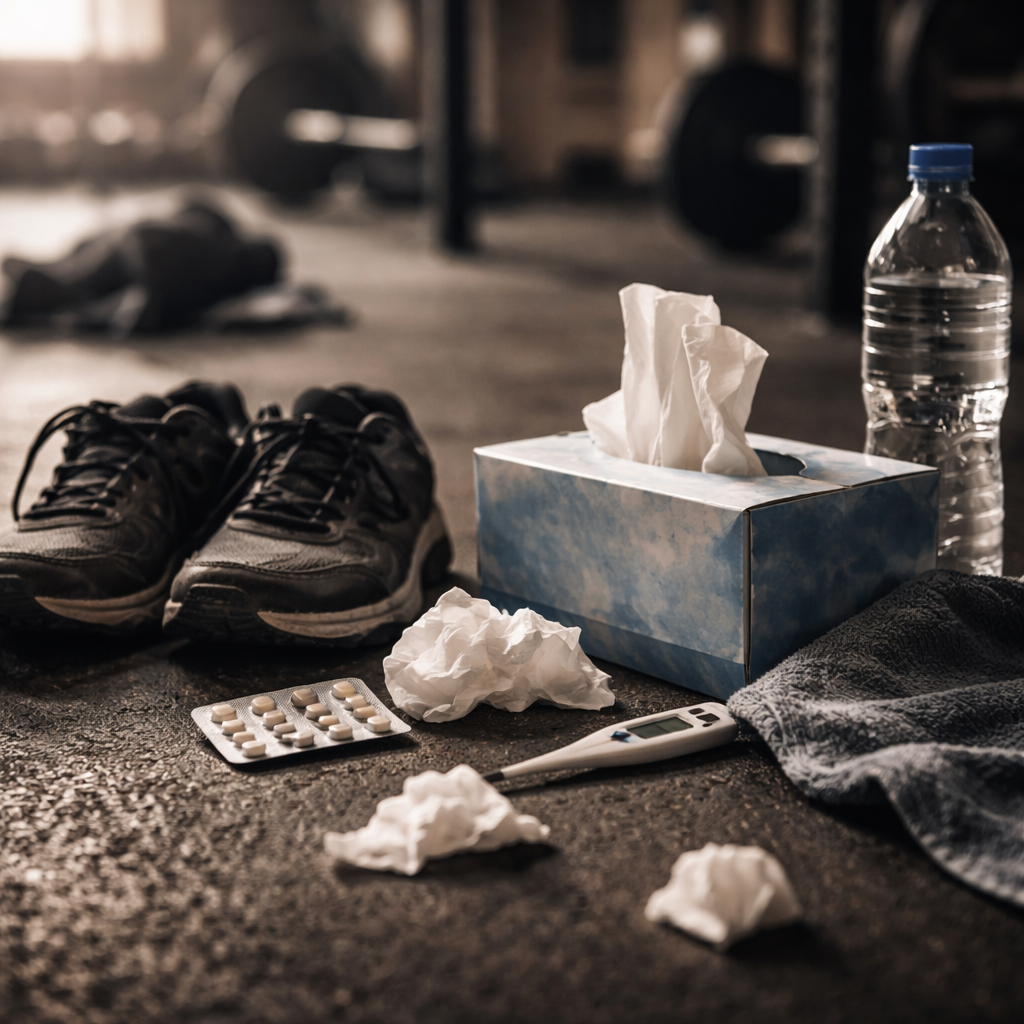
Most fitness-minded people face the same dilemma at some point: you have a workout scheduled, but your throat is scratchy, your nose is running, and your energy is somewhere underground. Is it safe to workout while sick, or does pushing through do more harm than good? The honest answer depends on what kind of sick you actually are — and the difference matters more than most people realize.
The “neck check” rule that sports medicine actually uses
There is a practical guideline that has been circulating in sports medicine circles for decades, and it holds up surprisingly well in everyday life. It is sometimes called the neck check: if your symptoms are above the neck — a mild runny nose, slight congestion, a bit of sneezing — light to moderate exercise is generally considered acceptable for otherwise healthy adults. If symptoms are below the neck — chest tightness, body aches, nausea, fever, or a deep cough — the recommendation is to rest completely.
This is not just a gym-culture myth. The reasoning behind it is physiological. When you have a fever, your core body temperature is already elevated. Exercise raises it further, and that combination can put real strain on your cardiovascular system, increase dehydration risk, and potentially prolong recovery time rather than shorten it.
When rest is not optional
Certain conditions make exercise genuinely risky, not just uncomfortable. Knowing them helps you make a better-informed decision instead of guessing.
- Fever above 38°C (100.4°F): exercising with a fever stresses the heart and can lead to dangerous dehydration. Rest until your temperature has been normal for at least 24 hours.
- Chest congestion or difficulty breathing: working out when your respiratory system is already compromised can trigger bronchospasm and worsen inflammation in the airways.
- Suspected flu or COVID-19: both illnesses carry a real risk of myocarditis — inflammation of the heart muscle — if you exercise during the acute phase. This is not a theoretical risk; it has been documented in otherwise healthy athletes.
- Gastrointestinal illness: vomiting and diarrhea cause fluid loss that exercise would dramatically worsen.
- Extreme fatigue or muscle weakness: your body is redirecting resources to fight infection. Forcing a hard session during this state delays recovery and increases injury risk.
Your immune system does not multitask well. When it is fighting an infection, adding physical stress pulls resources away from recovery. Rest is not laziness — it is strategy.
What counts as “light exercise” and what does not
If you have mild cold symptoms and feel up to moving, the key word is intensity. Light movement can actually support circulation and help you feel less stiff — but there is a big gap between a gentle walk and a high-intensity interval session.
| Type of activity | Appropriate when mildly sick? |
|---|---|
| Slow walk outdoors or on a treadmill | Generally yes, if no fever |
| Gentle yoga or stretching | Generally yes |
| Light cycling at a conversational pace | Possibly, listen to your body |
| Strength training at normal intensity | Not recommended |
| HIIT or cardio intervals | No — skip it |
| Team sports or group classes | No — also avoid spreading illness |
One thing worth adding to the table above: even if you personally feel okay exercising, going to a shared gym or fitness class while contagious puts other people at risk. Airborne viruses do not care about your training schedule.
How being sick actually affects your performance
Even when symptoms seem minor, your body is under real physiological stress. The immune response involves cytokine release — signaling proteins that trigger inflammation and often cause fatigue, brain fog, and reduced muscle coordination. This is why you feel “off” even with something as simple as a mild cold.
From a performance standpoint, research consistently shows that aerobic capacity, strength output, and reaction time all decrease during illness. Trying to train at your usual level when your body is fighting an infection almost always results in a worse workout anyway — so the trade-off rarely makes sense.
Getting back to training after illness
The return to exercise after being sick is often rushed, and that is where many people make their second mistake — the first being training through illness in the first place. Feeling better is not the same as being fully recovered. Your body may still have lingering inflammation and reduced glycogen stores even after symptoms disappear.
A general return-to-training framework that works for most people looks like this:
- Day 1 back: easy movement only — walking, light stretching, nothing that raises your heart rate significantly.
- Day 2–3: if day 1 felt fine, add light cardio or bodyweight exercises at about 50–60% of your normal effort.
- Day 4–5: increase intensity gradually if energy and recovery are tracking well.
- Full return: resume normal training only when sleep, appetite, and energy levels are back to baseline.
There is no universal timeline here, and that is intentional. A mild 48-hour cold and a week-long flu are not the same event. Treat them differently, and your body will reward you with a faster return to consistent training.
What your body is actually asking for
Somewhere between the fear of losing fitness gains and the pressure to stay consistent, it is easy to forget that rest is itself a form of physical training. Muscle repair, immune activation, and metabolic recovery all happen primarily at rest. Missing a few days of exercise while sick will not undo weeks of progress — but forcing hard sessions through illness can set you back significantly longer than the illness itself would have.
Hydration, sleep, and adequate nutrition during illness do far more to preserve fitness and speed recovery than any workout could. Prioritizing those three things is genuinely the most productive thing an active person can do when they are sick. Movement can wait — and when you come back fully recovered, your training will show it.