You crack an egg, notice the date on the carton has passed, and pause — is it safe to use expired eggs, or should they go straight into the bin? Before tossing them out of habit, it’s worth knowing that the expiration date stamped on a carton is often a sell-by or best-by date, not a hard safety cutoff. The actual freshness of an egg depends on storage conditions, the egg’s shell integrity, and a few simple tests you can do at home right now.
What “expired” actually means on an egg carton
There’s a real difference between the dates printed on egg packaging, and mixing them up leads to unnecessary food waste. Here’s a quick breakdown of the three most common label types:
| Label Type | What It Means | Safe to Eat After? |
|---|---|---|
| Sell-By Date | Last day retailers should sell the product | Yes, often 3–5 weeks after |
| Best-By / Best Before | Peak quality window, not a safety date | Usually yes, with a freshness check |
| Expiration / Use-By | Manufacturer’s recommended safety limit | Proceed with caution; test first |
The USDA recommends refrigerated eggs can remain safe for 3 to 5 weeks from the purchase date, regardless of the sell-by date printed on the box. What matters most is consistent refrigeration at or below 40°F (4°C).
The float test: your most reliable home tool
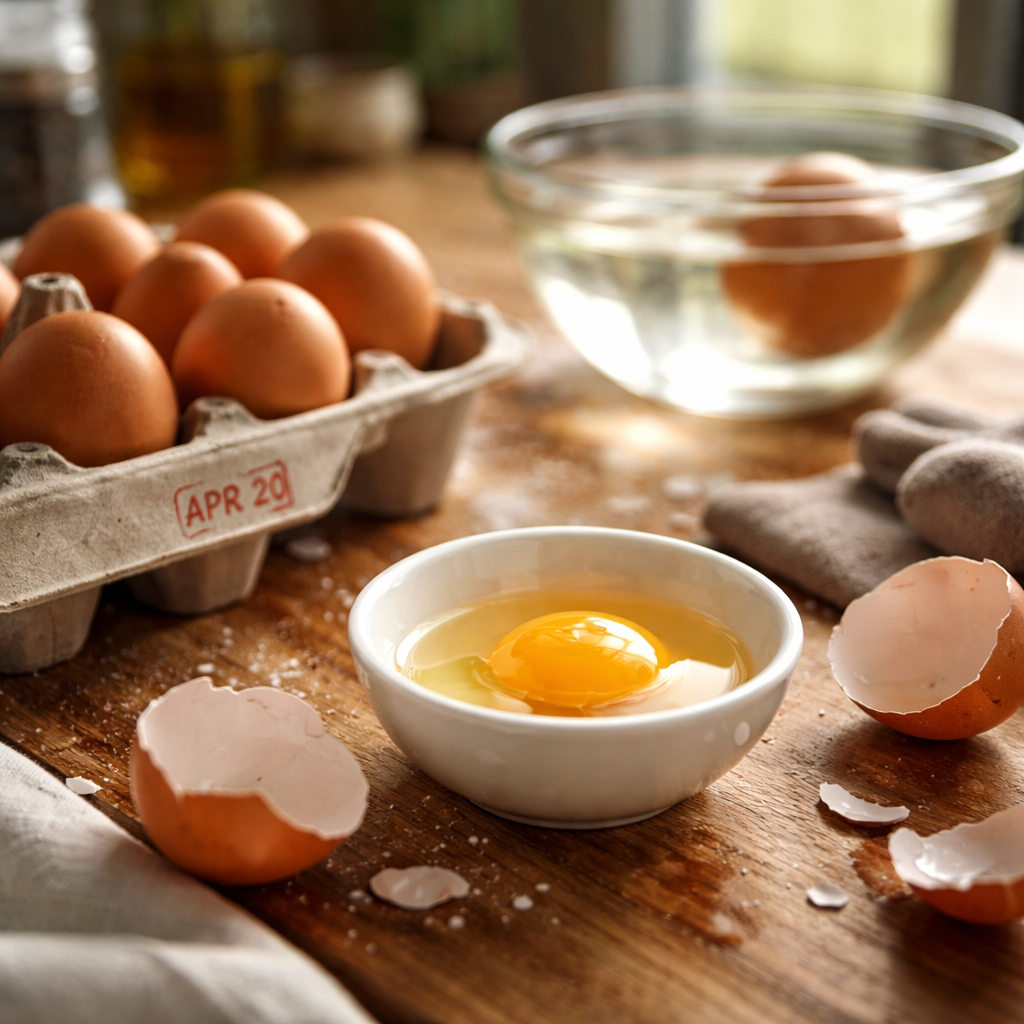
No fancy equipment needed. Fill a deep bowl or glass with cold water and gently place the egg inside. What happens next tells you a lot about egg freshness:
- Sinks and lays flat on its side — very fresh, ideal for poaching or frying
- Sinks but stands upright or tilts — still good, best used for baking or hard boiling
- Floats to the surface — the egg has likely gone bad and should be discarded
The science behind this is straightforward: as an egg ages, moisture and carbon dioxide escape through the shell’s tiny pores, and air gradually fills the space inside. A large air cell makes the egg buoyant. Floating doesn’t automatically mean the egg is rotten, but it’s a strong signal to move to the next test — the smell check.
“A fresh egg should have virtually no smell when raw. If it releases any sulfur-like or off odor after cracking, discard it without tasting.”
Crack it open: what to look for
If the float test leaves you uncertain, cracking the egg onto a flat plate gives you more visual clues. A fresh egg will have a firm, rounded yolk sitting high above a thick, gel-like egg white. An older egg tends to spread out more, with a flatter yolk and thinner whites — still perfectly edible in most cases, just not ideal for dishes where appearance matters, like fried eggs or eggs benedict.
What you’re specifically watching for are signs of spoilage: a pink, iridescent, or greenish tint in the whites, an unusual sliminess, or any off smell the moment it’s cracked. These are indicators of bacterial contamination, most notably Pseudomonas bacteria, and the egg must be thrown away immediately.
The Salmonella question people actually want answered
Salmonella is the legitimate concern behind most egg safety questions, and it’s worth addressing directly. Salmonella contamination in eggs comes primarily from infected hens, not from the age of the egg itself. This means a brand-new egg can potentially carry Salmonella, while a three-week-old properly refrigerated egg might be perfectly clean.
That said, proper cooking eliminates the risk. Cooking eggs to an internal temperature of 160°F (71°C) kills Salmonella reliably. If you’re planning to use older eggs in scrambled eggs, baked goods, quiches, or frittatas — all of which involve thorough cooking — the safety margin is significantly higher than if you’re making runny yolks or homemade mayonnaise.
People who should be especially careful with egg freshness include pregnant women, young children, elderly individuals, and those with compromised immune systems. For these groups, using eggs closer to the purchase date and ensuring thorough cooking is the safest approach.
Storage habits that actually extend egg freshness
How you store eggs matters just as much as when you bought them. A few habits make a real difference in keeping eggs safe and fresh longer:
- Keep eggs in the main body of the refrigerator, not in the door — temperature fluctuates more near the door seals
- Store them in their original carton, which protects the shells from absorbing odors from other foods
- Never wash eggs before storing — the natural coating (called the cuticle or bloom) on unwashed eggs helps seal the shell against bacteria
- Hard-boiled eggs should be consumed within one week when refrigerated, and they lose the protective benefits of the shell, making them more vulnerable than raw eggs
One thing that surprises many people: in the United States, eggs are washed before sale, which removes the bloom and makes refrigeration mandatory. In many European countries, eggs are sold unwashed and can sit at room temperature safely for a couple of weeks. Neither method is inherently unsafe — they’re just different systems with different rules.
When the answer is simply: use them
If your eggs pass the float test and smell completely neutral after cracking, they’re safe to cook and eat. The texture of older eggs actually has some advantages — slightly older egg whites whip more easily into stiff peaks for meringues, and older hard-boiled eggs peel more cleanly than very fresh ones because the air cell has expanded slightly from the shell membrane.
Food waste is a genuine problem, and eggs are one of the most commonly discarded foods based on date labels alone. Applying a quick two-minute freshness check before discarding an egg that might be completely fine is a small habit with a real impact — both for your household budget and for reducing unnecessary waste.
The bottom line is simple: the date on the carton is a starting point, not the final word. Your senses and a bowl of water are more reliable guides than the ink on a cardboard box.