Millions of people take a low-dose aspirin every morning without a second thought — yet the question of whether it is safe to take aspirin daily is far more nuanced than most assume, and recent medical guidance has shifted in ways that surprise even health-conscious adults.
What daily aspirin actually does inside your body
Aspirin belongs to a class of drugs called NSAIDs — nonsteroidal anti-inflammatory drugs — but its most talked-about effect is something else entirely: it permanently inhibits platelets, the tiny blood cells responsible for clotting. Even a single 81 mg tablet can keep platelets from clumping together for the entire 7–10 days of their lifespan. This is why low-dose aspirin became so widely used for cardiovascular protection. Thinner blood means a clot is less likely to block a coronary artery and trigger a heart attack.
That mechanism sounds straightforwardly beneficial — until you realize that clotting is also what stops you from bleeding uncontrollably after an injury, or prevents a small stomach ulcer from becoming a serious hemorrhage. The same property that protects one part of your body can harm another.
Who actually benefits from a daily aspirin regimen
Medical guidelines draw a clear line between two groups of people, and the recommendations for each are quite different.
| Group | Recommendation | Reasoning |
|---|---|---|
| People with existing cardiovascular disease (prior heart attack, stroke, stent) | Daily low-dose aspirin is generally recommended | Benefits of preventing a second event outweigh bleeding risks |
| Adults over 60 with no prior cardiovascular event | Generally not recommended for primary prevention | Bleeding risk rises with age and often exceeds potential benefit |
| Adults 40–59 with elevated cardiovascular risk | Individual decision with a doctor | Modest potential benefit; shared decision-making is essential |
This distinction — between primary prevention (stopping a first event) and secondary prevention (preventing a recurrence) — is at the heart of why guidance has changed. For years, daily aspirin was almost casually recommended to middle-aged adults as a general precaution. Large clinical trials, including the ASPREE and ARRIVE studies, demonstrated that for healthy older adults, the risk of serious gastrointestinal or intracranial bleeding was not offset by a meaningful reduction in heart attacks.
The bleeding risk that tends to get underestimated
Gastrointestinal bleeding is the most common complication of long-term aspirin use. Symptoms can range from mild discomfort to a life-threatening bleed that requires hospitalization. Several factors significantly increase this risk:
- Age above 60
- History of peptic ulcers or gastroesophageal reflux disease
- Concurrent use of other NSAIDs, anticoagulants, or corticosteroids
- Infection with H. pylori bacteria
- Heavy alcohol consumption
Intracranial bleeding — bleeding inside the skull — is rarer but far more dangerous. While aspirin reduces the risk of ischemic stroke (caused by a clot), it slightly increases the risk of hemorrhagic stroke (caused by a burst blood vessel). For people with well-controlled blood pressure and no history of stroke, this trade-off usually favors aspirin when prescribed for secondary prevention. But for the general population, it is a genuine concern.
“Aspirin is not a supplement. It is a drug with real pharmacological effects, real risks, and a real dose-response relationship. Treating it as a harmless daily vitamin is a clinical misconception.”
Aspirin and cancer prevention — what the evidence says
One area of ongoing research involves colorectal cancer. Some observational data suggest that long-term aspirin use may reduce the risk of developing colorectal polyps and, potentially, colorectal cancer. This has generated genuine scientific interest. However, most major health organizations stop short of recommending aspirin specifically for cancer prevention outside of specific high-risk genetic conditions, citing the lack of randomized trial data strong enough to justify the bleeding risks for the broader public.
The picture is still being painted, and it would be premature to start a daily aspirin regimen based on cancer prevention hopes alone.
Practical things worth knowing before you start or stop
If you are already taking daily aspirin on the advice of a cardiologist following a heart attack or stent placement, stopping suddenly can be dangerous. Platelets rebound and your clotting activity may temporarily spike, raising short-term risk. This is called rebound hypercoagulability, and it means that discontinuing aspirin should always be discussed with your doctor first.
On the flip side, if you started taking aspirin on your own initiative years ago — perhaps after reading a headline about heart health — it is worth revisiting that decision with a physician, especially if you have crossed into a higher-risk age bracket or your health profile has changed.
- Do I have existing cardiovascular disease or documented atherosclerosis?
- What is my calculated 10-year cardiovascular risk score?
- Do I have any risk factors for GI or intracranial bleeding?
- Am I taking any medications that interact with aspirin?
- If I am already taking aspirin, is there a reason to continue or stop?
The 81 mg dose and why it became standard
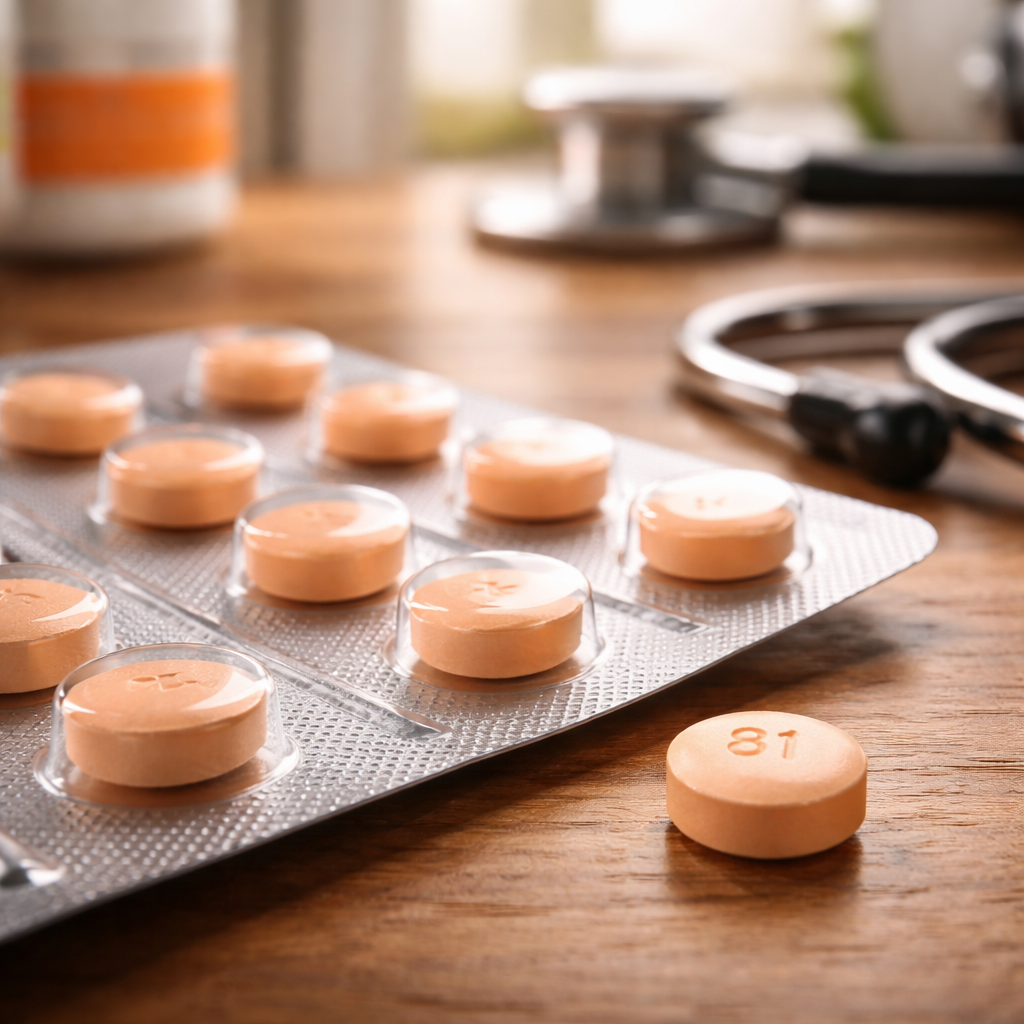
Low-dose aspirin — typically 81 mg, sometimes called baby aspirin — became the standard for cardiovascular purposes because it is effective at inhibiting platelet aggregation while causing less gastric irritation than full 325 mg doses. However, research indicates that even 81 mg carries measurable bleeding risk with long-term daily use, particularly in older adults. The dose is lower, but the pharmacological commitment is the same: every day you take it, you are modifying your blood’s ability to clot for the next ten days.
Where the conversation about daily aspirin really needs to happen
The shift in medical thinking about aspirin is not a reason for alarm — it is a sign that medicine is doing what it should: updating recommendations as better evidence emerges. For people already living with cardiovascular disease, daily low-dose aspirin remains a well-supported therapy. For everyone else, the honest answer is that this is not a self-medication decision. Your age, cardiovascular risk score, bleeding history, other medications, and lifestyle all factor into whether the benefit genuinely outweighs the harm in your specific case.
The most useful thing you can do is not to search for a universal answer, but to have a detailed, honest conversation with your healthcare provider — ideally armed with the questions that matter most to your situation.