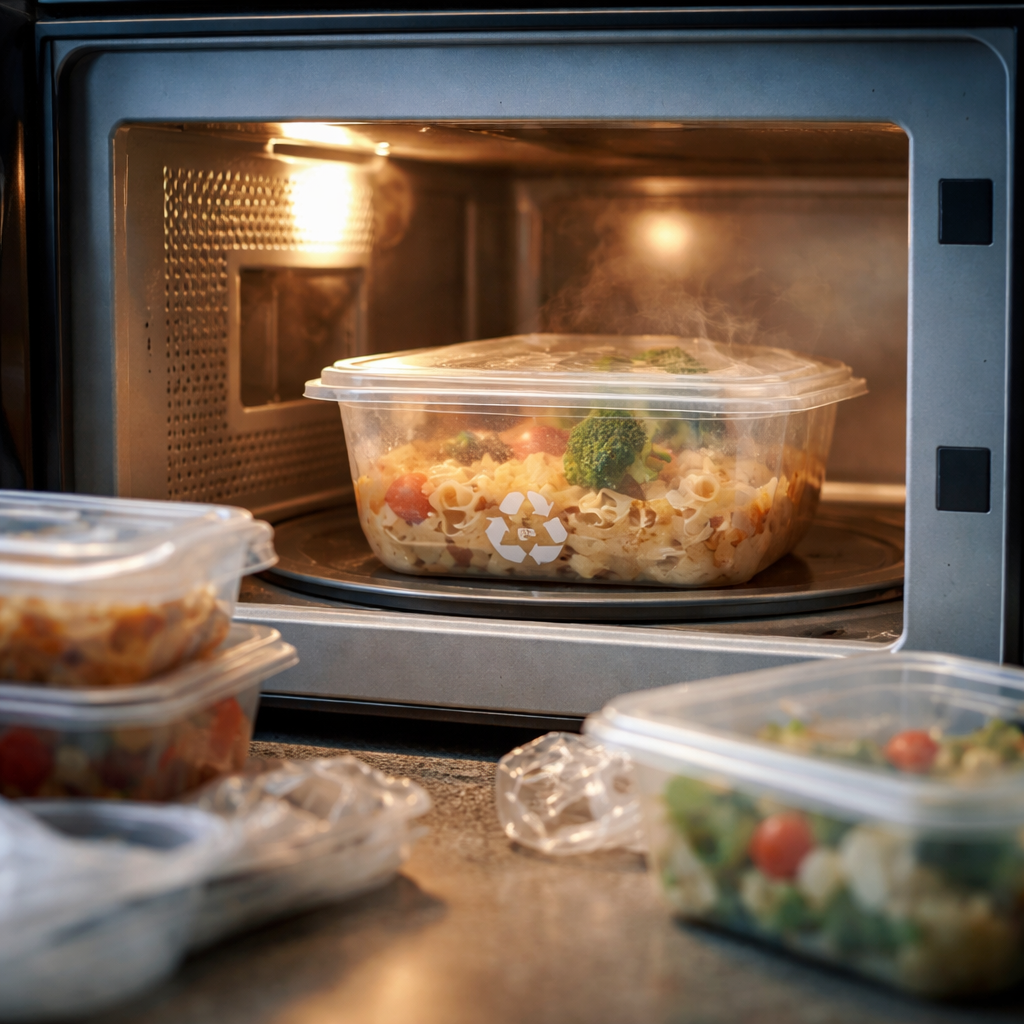
Most people heat food in plastic containers without a second thought — but is it safe to microwave plastic, really? The answer is more nuanced than a simple yes or no, and understanding the difference could genuinely change how you use your kitchen every day.
Not all plastic behaves the same way under heat
One of the biggest misconceptions is that plastic is a single material. In reality, it covers dozens of chemically distinct compounds, and their behavior under microwave radiation varies significantly. Some plastics are engineered to withstand heat without releasing chemicals into food. Others begin to break down at relatively low temperatures, leaching substances that you definitely don’t want in your meal.
The key factor is the resin identification code — that small triangle with a number stamped on the bottom of most plastic containers. Here’s what those numbers actually mean for microwave use:
| Resin Code | Material | Microwave Safe? |
|---|---|---|
| 1 | PET (Polyethylene terephthalate) | Not recommended for repeated heating |
| 2 | HDPE (High-density polyethylene) | Generally considered safer |
| 3 | PVC | Avoid — releases harmful chemicals |
| 4 | LDPE (Low-density polyethylene) | Use with caution |
| 5 | PP (Polypropylene) | Most microwave-safe option |
| 6 | PS (Polystyrene) | Avoid — can leach styrene |
| 7 | Other / mixed plastics | Unpredictable — generally avoid |
Polypropylene (code 5) is widely regarded by food safety researchers as the most stable option for microwave use. It has a high melting point and doesn’t easily release compounds into food when heated. Still, even PP containers should not be used indefinitely — scratches and wear over time can compromise their integrity.
What actually happens when plastic heats up
When certain plastics are exposed to heat, they can release chemical compounds into the food they contain. The most studied of these are phthalates and bisphenol A (BPA) — substances used in manufacturing that can migrate into food under thermal stress. BPA in particular has been linked in research to hormonal disruption, as it mimics estrogen in the body.
According to the U.S. Food and Drug Administration (FDA), only containers labeled “microwave safe” have been tested and approved for heating food. Any other plastic container — including takeout boxes, margarine tubs, or single-use cups — should not be used in the microwave.
It’s worth noting that “BPA-free” on a label doesn’t automatically mean the plastic is safe to heat. Some manufacturers replaced BPA with bisphenol S (BPS) or other bisphenol variants, which may carry similar risks. The science here is still evolving, and caution remains the more reasonable approach.
Practical signs that a container shouldn’t go near your microwave
You don’t always need to read fine print to know when a plastic container is a poor choice for heating. Pay attention to the following warning signs:
- The container warps, softens, or changes shape after heating — a clear sign it can’t handle the temperature
- There’s no label indicating microwave safety anywhere on the packaging
- The plastic smells unusual or chemical-like after being microwaved
- The container is scratched, stained, or cracked — degraded plastic migrates compounds more easily
- It’s a single-use item: takeout boxes, deli containers, disposable cups
- The plastic feels thin or flexible at room temperature
These signs don’t always mean immediate danger, but they do signal that the material wasn’t designed for the conditions you’re putting it through.
Safer alternatives worth considering
Switching away from plastic for microwave use doesn’t require a complete kitchen overhaul. A few practical substitutions can significantly reduce your exposure to potentially harmful compounds:
- Glass containers with microwave-safe lids are the most reliable option — they don’t interact with food at any temperature
- Ceramic and stoneware dishes work well, provided they don’t have metallic glazes or decorations
- Microwave-safe silicone covers or splatter guards are a good alternative to plastic wrap
- Wax paper and parchment paper are safe to use for covering food during reheating
Reading the label — and knowing when it’s not enough
The phrase “microwave safe” on a container means it has been tested to ensure the plastic doesn’t melt or warp under standard microwave conditions. What it does not guarantee is that zero chemical migration occurs. This is a distinction many consumers aren’t aware of — and one that matters if you’re heating food regularly for children, during pregnancy, or for people with health sensitivities.
The FDA sets limits on how much of a substance can migrate into food from packaging, but those thresholds are based on average adult consumption estimates. They may not reflect the cumulative effect of heating food in plastic containers every day over years.
This doesn’t mean you need to panic over every reheated lunch. It does mean that building a few smarter habits — like transferring food to a glass dish before microwaving — is a low-effort way to reduce an unnecessary risk.
The bottom line your microwave drawer probably never told you
Convenience has a way of overriding caution in daily life. Plastic containers are lightweight, cheap, and everywhere — and most of us have been using them in the microwave for years without obvious consequences. But low-level chemical exposure rarely has immediate dramatic effects; the concern is long-term accumulation.
The practical takeaway is straightforward: use containers explicitly labeled as microwave safe, prefer glass or ceramic when you can, replace worn or scratched plastic containers regularly, and be especially cautious with fatty foods. None of this requires a lifestyle overhaul — just a small shift in habit that your future self is likely to appreciate.