Most dog owners have used peanut butter at least once — to sneak in a pill, keep a pup busy with a lick mat, or just as a quick reward. But is it safe to give dogs peanut butter on a regular basis, or is it one of those treats that comes with hidden risks? The honest answer is: it depends on what’s in the jar.
Not All Peanut Butter Is Created Equal
Plain, unsalted peanut butter made from nothing but peanuts is generally considered safe for dogs in moderate amounts. It’s a decent source of protein and healthy fats, and most dogs absolutely love the taste. The problem shows up when you flip the jar around and read the label.
One ingredient you need to watch for is xylitol — a sugar substitute that’s completely harmless to humans but extremely toxic to dogs. Even small amounts can cause a rapid drop in blood sugar, liver failure, and in severe cases, death. Xylitol is increasingly common in “natural” or “reduced sugar” peanut butter products, so never assume a product is safe without checking.
Always read the full ingredient list before giving any human food product to your dog. If xylitol appears anywhere on the label — even listed as “birch sugar” — put the jar away immediately.
Beyond xylitol, other things to avoid include added salt, artificial sweeteners, and high levels of added sugar. None of these are appropriate for dogs, and over time they can contribute to obesity, dental issues, and cardiovascular strain.
What Makes Peanut Butter Appealing — and Useful
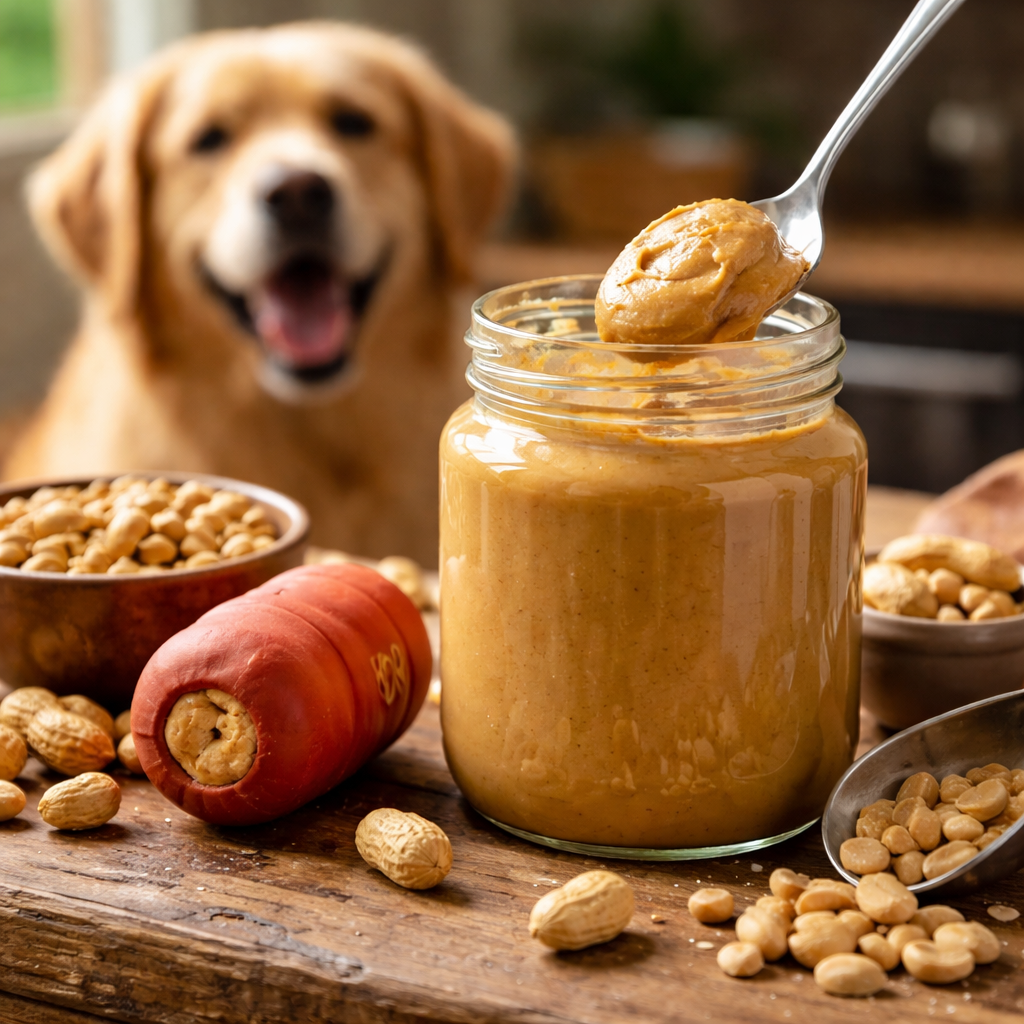
There’s a reason peanut butter is such a popular tool in dog training and enrichment. Its thick, sticky texture means it keeps dogs occupied for a while, which makes it ideal for lick mats, stuffed Kongs, or distracting a dog during nail trims or vet visits. The strong smell also makes it highly motivating for even picky eaters.
From a nutritional standpoint, natural peanut butter does offer some benefits when given occasionally:
- Protein that supports muscle maintenance
- Healthy monounsaturated fats that can support coat health
- Vitamin E, which has antioxidant properties
- Niacin (Vitamin B3), which supports energy metabolism
- Magnesium and potassium in small amounts
That said, peanut butter is calorie-dense. For smaller dogs especially, even a tablespoon adds up quickly when you consider their total daily caloric needs. It should function as an occasional treat, not a dietary staple.
How Much Is Actually Appropriate?
There’s no universal “safe dose” written in stone, but veterinary guidance generally points to treats making up no more than 10% of a dog’s daily calorie intake. Peanut butter falls under that umbrella.
| Dog Size | Approximate Serving | Frequency |
|---|---|---|
| Small (under 10 kg) | ½ teaspoon | A few times per week at most |
| Medium (10–25 kg) | 1 teaspoon | A few times per week |
| Large (over 25 kg) | Up to 1 tablespoon | A few times per week |
If your dog has a history of pancreatitis, obesity, or any digestive sensitivity, it’s worth consulting your vet before introducing peanut butter at all. The high fat content can trigger flare-ups in dogs prone to pancreatitis, even when the peanut butter itself is technically “safe.”
Dogs With Allergies: A Real Consideration
Peanut allergies in dogs are less common than in humans, but they do exist. If you’re giving your dog peanut butter for the first time, start with a very small amount and watch for any signs of an allergic reaction over the next 24 hours.
Symptoms that may indicate an allergic response include:
- Itching or hives, particularly around the face and ears
- Swelling around the muzzle or eyes
- Vomiting or diarrhea shortly after eating
- Excessive paw licking or scratching
- Lethargy or unusual behavior
If you notice any of these, stop giving peanut butter and contact your vet. It’s a straightforward precaution that can prevent a minor treat from becoming a bigger health issue.
Choosing the Right Jar
When shopping for dog-friendly peanut butter, the shorter the ingredient list, the better. Ideally, you want a product that contains nothing but peanuts — or peanuts and a small amount of salt at most. Some brands now explicitly market themselves as xylitol-free and dog-safe, which removes the guesswork.
A good rule of thumb: if you wouldn’t recognize an ingredient on the label without googling it, that product probably isn’t the best choice for your dog either.
You can also make your own peanut butter at home using a blender and dry-roasted unsalted peanuts. It takes minutes, costs very little, and gives you complete control over what goes into it — which is genuinely the safest option if you plan to use it frequently.
Practical Ways to Use Peanut Butter With Your Dog
Beyond simply offering a spoonful, peanut butter can be a surprisingly versatile tool in everyday dog care. Here are a few ideas that actually work:
- Spread a thin layer inside a rubber chew toy and freeze it — this extends the distraction time and can soothe teething puppies
- Use it as a high-value lure when teaching new commands or working on recall training
- Apply a small amount to a lick mat during grooming sessions to keep your dog calm and cooperative
- Mix a tiny amount into homemade dog treats for baking
- Use it to mask the taste and smell of medication that your dog refuses to take
The Bottom Line on Peanut Butter and Dogs
Peanut butter can be a perfectly fine treat for most healthy dogs — enjoyable, motivating, and occasionally useful. The key is paying attention to what’s in the product, keeping portions reasonable, and knowing your individual dog’s health history. It’s not a superfood for pets, but it’s not something you need to avoid entirely either.
When in doubt, your vet is always the right person to ask — especially if your dog has any underlying conditions. But for the average healthy dog, a small spoonful of natural peanut butter now and then is nothing to worry about.