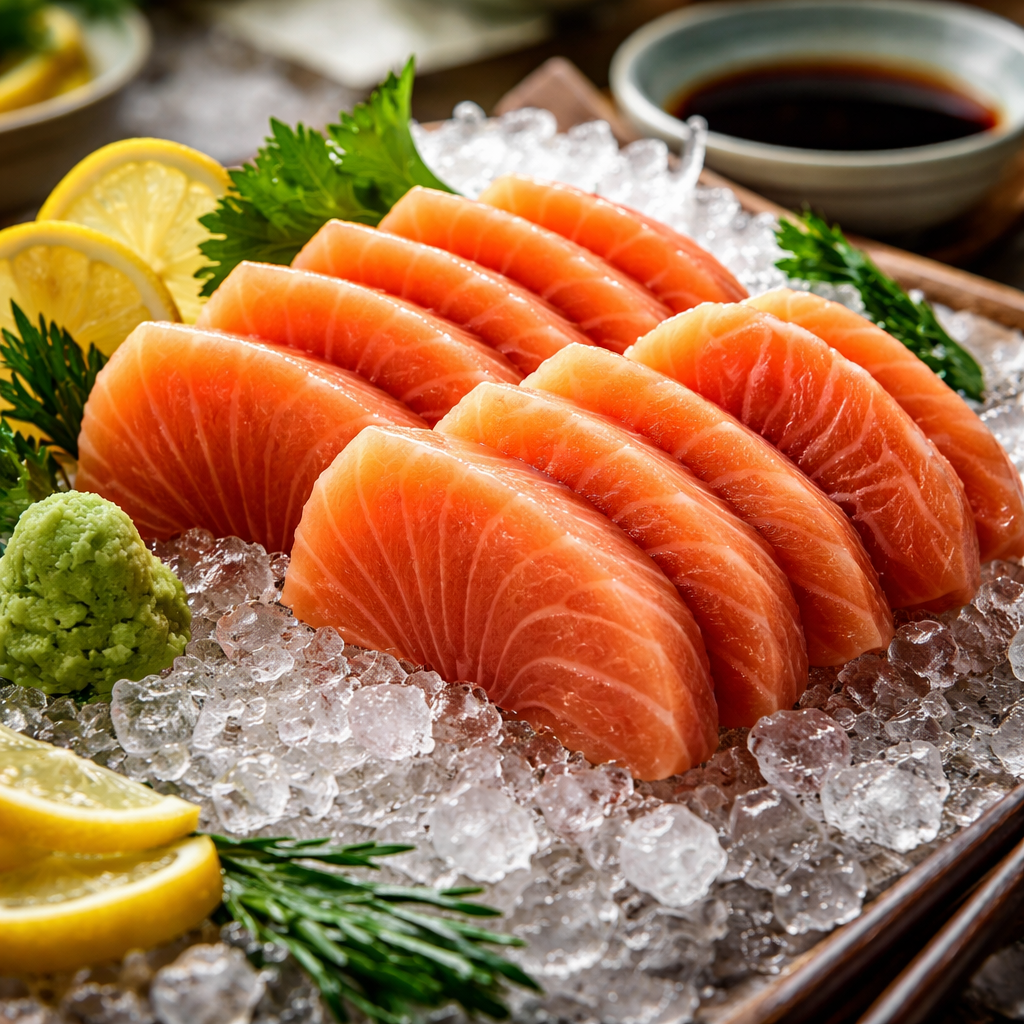
Every time someone orders salmon sashimi or considers making a homemade poke bowl, the same question tends to surface: is it safe to eat raw salmon? The short answer is — it depends heavily on the source, handling, and preparation method. The longer answer is what actually matters if you care about your health and still want to enjoy one of the world’s most beloved fish.
What makes raw salmon potentially risky
Raw salmon, like any uncooked fish, can harbor pathogens that cooking would otherwise eliminate. The main concerns fall into two categories: parasites and bacteria.
Wild-caught salmon is known to carry Anisakis — a parasitic roundworm that can cause anisakiasis, an illness characterized by abdominal pain, nausea, and vomiting. These worms are visible to the naked eye but are typically found deep in the flesh, making casual inspection unreliable. Farmed salmon, raised in controlled environments and fed processed feed rather than wild prey, carries a significantly lower risk of Anisakis infection — though it is not entirely risk-free.
On the bacterial side, Salmonella and Listeria monocytogenes are the most commonly cited threats. These bacteria thrive when fish is improperly stored or handled, which is why the cold chain from catch to table is so critical.
The role of freezing in making raw salmon safer
Here’s something many home cooks don’t realize: freezing is one of the most effective ways to eliminate parasite risk in raw fish. The U.S. Food and Drug Administration (FDA) recommends that fish intended to be eaten raw should be frozen at -20°C (-4°F) for at least 7 days, or at -35°C (-31°F) for 15 hours, to kill parasites.
Sushi-grade or sashimi-grade salmon sold at reputable fish markets and restaurants has almost always undergone this freezing process — it’s not just a label, it’s a safety standard.
This is why the salmon you pick up at a standard grocery store isn’t automatically safe for raw consumption, even if it smells fresh and looks vibrant. Freshness and parasite-free status are two different things entirely.
How to choose salmon that’s actually safe to eat raw
Choosing the right salmon makes all the difference. Here’s what to look for before you slice into it:
- Buy from a trusted fishmonger or retailer who explicitly labels fish as sushi-grade or sashimi-grade.
- Ask directly whether the fish has been frozen to FDA-recommended parasite-destruction standards.
- Opt for farmed Atlantic salmon when possible — it carries a lower parasitic risk compared to wild Pacific varieties.
- Check for a clean ocean smell; any strong, ammonia-like or sour odor is a red flag.
- Look for firm, bright flesh with no browning around the edges or visible sliminess.
It’s also worth noting that salmon purchased specifically for sushi restaurants goes through strict supplier vetting. Replicating that at home requires intentional sourcing, not just grabbing the freshest-looking fillet from the display case.
Who should avoid raw salmon entirely
Even with the best sourcing practices, raw salmon carries a small residual risk that most healthy adults can accept comfortably. However, certain groups should steer clear of raw or undercooked fish altogether.
| Group | Reason to avoid raw fish |
|---|---|
| Pregnant women | Listeria risk poses serious danger to fetal development |
| Elderly individuals | Weakened immune response makes infection harder to fight |
| Young children (under 5) | Immune systems are not yet fully developed |
| Immunocompromised individuals | Conditions like HIV, cancer treatment, or organ transplants reduce ability to fight pathogens |
For everyone else, eating properly sourced and handled raw salmon occasionally poses minimal health risk — and can even be part of a nutritious diet rich in omega-3 fatty acids, high-quality protein, and vitamins like B12 and D.
Nutritional value: does eating salmon raw change anything?
One common reason people seek out raw preparations is the belief that cooking destroys nutrients. There’s some truth to this. Heat does reduce levels of certain B vitamins and can break down some omega-3 fatty acids, though the difference isn’t dramatic enough to base your eating decisions on nutrition alone.
What raw salmon does offer, when prepared well, is a distinct texture and flavor profile — silky, clean, and mild — that cooking simply can’t replicate. Dishes like salmon tartare, gravlax, and sashimi highlight these qualities in ways that have made raw fish preparations beloved across cultures worldwide.
Safe handling at home: a practical approach
If you’ve sourced your salmon correctly and want to prepare it at home, handling matters just as much as what you bought. Keep these points in mind:
- Keep raw salmon refrigerated at or below 4°C (40°F) until the moment of preparation.
- Use a clean, dedicated cutting board for raw fish — avoid cross-contamination with other foods.
- Prepare and serve immediately; don’t let raw salmon sit out for more than 30 minutes.
- Use sharp, clean knives — a clean cut reduces surface bacterial exposure.
- If you’re unsure of the salmon’s provenance, freeze it yourself at home for at least 7 days at -20°C before consuming raw.
Home freezers in most households reach around -18°C to -20°C, which falls within the FDA guideline range. Using a dedicated freezer thermometer to confirm your appliance actually reaches those temperatures is a smart move that many people overlook.
Raw salmon is not binary — it’s about informed choices
The conversation around eating raw salmon shouldn’t be reduced to a simple yes or no. It’s a question of sourcing, handling, individual health status, and understanding the actual risks involved. Millions of people eat raw salmon regularly as part of Japanese, Scandinavian, and other culinary traditions without incident — because they’ve learned to respect the conditions that make it safe.
With the right fish from the right source, proper freezing history, and clean preparation at home or in a reputable restaurant, raw salmon can absolutely be a safe and genuinely delicious part of your diet. The key is treating it with the same care and knowledge that any skilled chef or informed home cook would bring to the table.