A compact outdoor space is not a compromise — it’s actually a design challenge that forces creativity. People searching for ideas for small gardens often discover that limitations push them toward smarter, more intentional choices than larger spaces ever would. The result? Outdoor areas that feel personal, lush, and surprisingly spacious.
Think vertically before you think horizontally
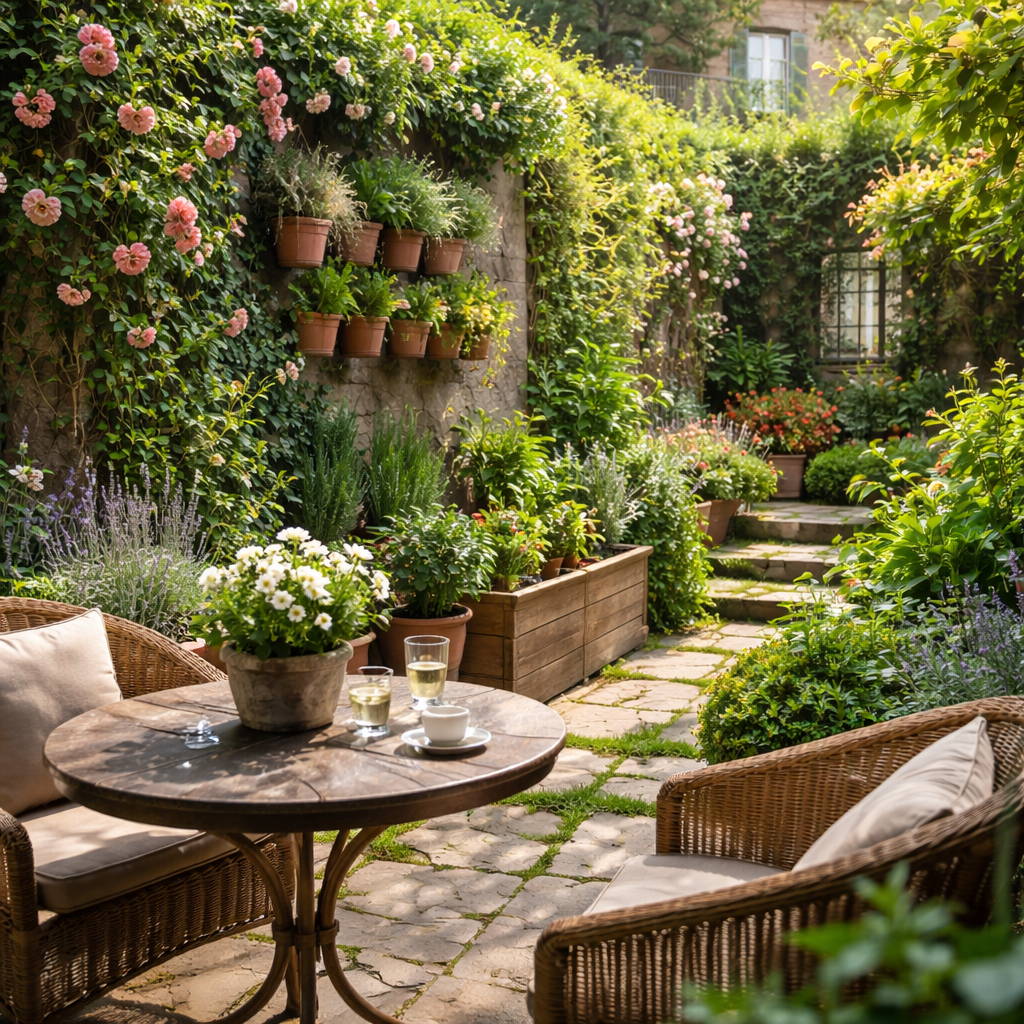
The single biggest mistake in small garden design is treating the ground as the only usable surface. Walls, fences, and even the sides of sheds offer enormous potential. Vertical gardening — using trellises, wall-mounted planters, and climbing plants — can triple the effective planting area without taking up a single square foot of floor space.
Climbing roses, jasmine, and clematis are classic choices for vertical coverage. For edible gardens, beans, cucumbers, and peas grow naturally upward with minimal support. Even shelving units mounted on an exterior wall can hold rows of herbs or seasonal flowers, creating a living wall effect that looks intentional and polished.
Vertical space is the most underused asset in any small outdoor garden. Once you start looking up, the space problem largely disappears.
Zoning: making a small garden feel like several spaces
One of the more counterintuitive ideas for compact outdoor areas is to divide the space rather than leave it open. When a small garden is split into distinct zones — a seating corner, a planting bed, a pathway — the eye has more to explore, and the garden feels larger as a result. This principle is borrowed directly from interior design and works just as well outdoors.
You don’t need hard structures to create zones. Low hedges, a change in paving material, a single raised bed, or even a carefully placed container can signal a shift from one area to another. The goal is to create a sense of journey, even in a space measured in square meters.
| Zone idea | Best suited for | Key element |
|---|---|---|
| Seating nook | Relaxation and entertaining | Compact bistro table or built-in bench |
| Raised planting bed | Vegetables or cut flowers | Timber or brick border |
| Herb corner | Cooking gardens | Grouped terracotta pots |
| Sensory pathway | Movement and exploration | Stepping stones with ground cover |
Container gardening as a flexible foundation
Containers are arguably the most powerful tool for small space gardening. They allow you to move plants around with the seasons, experiment without commitment, and create height variation that a flat bed simply cannot offer. A grouping of containers in different sizes — tall, medium, and low — immediately adds structure and visual depth to any patio or balcony.
The key to making container gardens look intentional rather than cluttered is to repeat colors and materials. Three terracotta pots of different sizes will always look more cohesive than five mismatched containers, even if the plants inside are different. This consistency creates calm rather than chaos.
Light, mirrors, and the art of visual expansion
Outdoor mirrors are a well-kept secret among garden designers. A large weather-resistant mirror mounted on a fence can double the perceived depth of a narrow garden and reflect light into shaded corners. Combined with strategic lighting — solar path lights, uplighting on a feature plant, or string lights overhead — even the smallest courtyard garden can feel atmospheric after dark.
Plant selection also plays a role in light manipulation. Pale-colored flowers and silver-leaved plants like lamb’s ear or dusty miller naturally reflect light and brighten dark corners. Placing them at the back of a bed draws the eye further into the garden, extending the sense of depth.
Choosing plants that do more than one job
Space efficiency in planting comes down to choosing multi-functional species. In a small garden, every plant should earn its place — ideally in more than one way. A blueberry bush provides flowers in spring, fruit in summer, and fiery red foliage in autumn. A climbing hydrangea covers a wall, provides shade, and blooms spectacularly. Lavender attracts pollinators, smells incredible, and dries beautifully for indoor use.
- Espalier fruit trees — grow flat against a wall, produce fruit, and act as a living screen
- Fennel — edible, tall, feathery texture that adds movement to borders
- Rosemary — structural, evergreen, aromatic, and useful in the kitchen
- Alliums — low maintenance, deer-resistant, and visually dramatic in small groups
- Japanese anemone — fills gaps in late summer when most perennials are fading
Thinking this way shifts the question from “how many plants can I fit?” to “how much value can each plant provide?” — and that shift alone tends to produce much better-looking small gardens.
What actually makes a small garden feel finished
There’s a difference between a garden that’s been planted and one that feels complete. In compact spaces, the finishing touches carry disproportionate weight. A single well-chosen garden sculpture, a water feature no larger than a pot, or a consistent color palette running through cushions, pots, and planting can pull everything together in a way that makes the space look designed rather than assembled.
Don’t underestimate the power of repetition either. Repeating the same plant three times across a small border creates rhythm and intention. Using the same shade of blue in your pots and your seating cushions ties the space together visually. These are small decisions that require no extra budget but make an enormous difference in how the garden is perceived — both by you and anyone who visits.
A small garden, when approached with genuine thought rather than frustration, becomes one of the most rewarding design projects a homeowner can take on. The constraints are real, but so is the satisfaction of a space that feels exactly right for the life being lived in it.