Most people who pick up a brush for the first time have no shortage of enthusiasm — but run dry on ideas for painting almost immediately. That blank canvas can feel surprisingly intimidating, and the question “what should I paint?” stops more creative sessions before they even begin than any lack of skill ever could. The good news: inspiration rarely comes from waiting. It comes from knowing where to look and how to start.
Why the “what to paint” question is actually the wrong one
Experienced painters rarely ask themselves what to paint. Instead, they ask what they want to express, explore, or practice. Shifting that internal question changes everything. You stop looking for a perfect subject and start noticing that subjects are everywhere — in the texture of a peeling wall, a half-empty coffee cup, or the way afternoon light splits across a wooden floor.
That shift in mindset also reduces the pressure to produce something “good.” Painting with a specific purpose — even if that purpose is just practicing shadows — gives you a framework that blank creative freedom often cannot.
Subject ideas organized by skill level and mood
Not every idea suits every moment. Sometimes you want a meditative, low-effort session; other times you’re ready for a challenge. Here’s a practical breakdown:
| Mood / Level | Painting idea | What you practice |
|---|---|---|
| Relaxed, beginner | Single fruit or vegetable | Basic form, light source, color mixing |
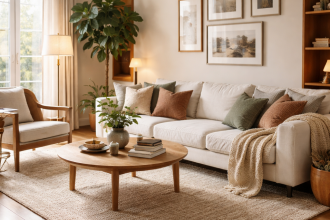
| Focused, intermediate | Interior corner of a room | Perspective, tonal range, atmosphere |
| Experimental, any level | Abstract color study | Emotional use of color, brushwork freedom |
| Challenging, advanced | Portrait under artificial light | Skin tones, directional lighting, likeness |
| Playful, any level | Imaginary landscape | Composition, creative thinking, layering |
Everyday objects that make surprisingly strong subjects
Still life painting has been a training ground for artists for centuries — and for good reason. Common household objects offer consistent lighting conditions, unlimited availability, and an enormous range of surface textures to study. A crumpled paper bag, a glass of water, worn leather shoes, or a stack of books can each become genuinely compelling paintings when approached with attention.
What makes these subjects powerful isn’t their visual complexity. It’s the familiarity — viewers connect with objects they recognize, and painters benefit from being able to observe the subject closely and patiently without it moving or changing.
“The subject is just the excuse. What you’re really painting is light, color relationships, and your own perception.” — a principle repeated across art schools worldwide.
Painting from nature: more accessible than it sounds
Landscape and plein air painting intimidate many beginners because of the sheer amount of visual information outdoors. But the solution isn’t to paint less — it’s to simplify more. Professional landscape painters routinely reduce a complex scene to three or four tonal zones before touching paint to canvas.
If going outdoors feels like too much commitment, working from a photograph of a natural scene is a completely valid starting point. The key is choosing references with strong contrast and a clear focal point rather than trying to render everything equally.
- Start with the sky and establish your lightest values first
- Block in large shapes before adding any detail
- Choose one area of interest and let the rest of the composition support it
- Limit your palette to four or five colors to maintain harmony
Abstract and experimental approaches worth trying
Abstract painting often gets dismissed as easier than representational work, but that misses the point entirely. Working without a recognizable subject forces you to make every decision — color, shape, texture, balance — based purely on visual instinct and compositional logic, without the safety net of “does this look like the thing.”
Some genuinely useful starting points for abstract work include emotion-based color studies (choose colors that match a feeling rather than an object), texture explorations using unconventional tools like palette knives or sponges, and layered glazing experiments where each layer partially reveals what’s underneath.
Using your own life as source material
Personal subject matter — your living space, your neighborhood, people you know, memories from childhood — produces some of the most resonant paintings because the painter’s genuine connection to the subject comes through in the work. This isn’t sentimentality; it’s specificity. The more specific and personal a subject is, the more universally relatable it tends to feel to others.
Try painting the view from your window at different times of day. Try capturing the atmosphere of a specific room at night. Try working from an old family photograph without trying to make it photorealistic — just capturing the mood and memory of it.
When inspiration is genuinely running low
Even working artists go through dry periods. The most reliable way through isn’t to wait for motivation but to paint anyway — even badly, even without a clear goal. Keeping a small sketchbook of quick color thumbnails, copying master works you admire to understand their structure, or setting a strict time limit of fifteen minutes per study can all restart the creative engine faster than any amount of Pinterest browsing.
The creative habit matters more than any single idea. The painters who consistently produce interesting work aren’t the ones who always have brilliant concepts ready — they’re the ones who show up regularly and let ideas emerge through the process of making.