Most backyards sit half-empty for years — not because their owners lack space, but because the sheer range of ideas for backyard projects feels overwhelming at first glance. The good news is that a single well-chosen upgrade, whether it costs a weekend of work or a modest budget, can completely shift how you use and feel about your outdoor space.
Start with what you actually need, not what looks good on Pinterest
Before picking materials or drawing up plans, it helps to think honestly about how your household spends time outdoors. Do you cook outside often? Do kids need room to run? Is privacy from neighbors a priority? Answering these questions first saves money and prevents the classic mistake of building a gorgeous pergola that nobody uses because it faces the wrong direction or sits too far from the kitchen door.
A quick audit of your yard — note the sunny spots, shaded corners, wet areas after rain, and existing structures — gives you a realistic map to work with. Good outdoor design always starts from real conditions, not ideal ones.
Outdoor living zones that actually get used
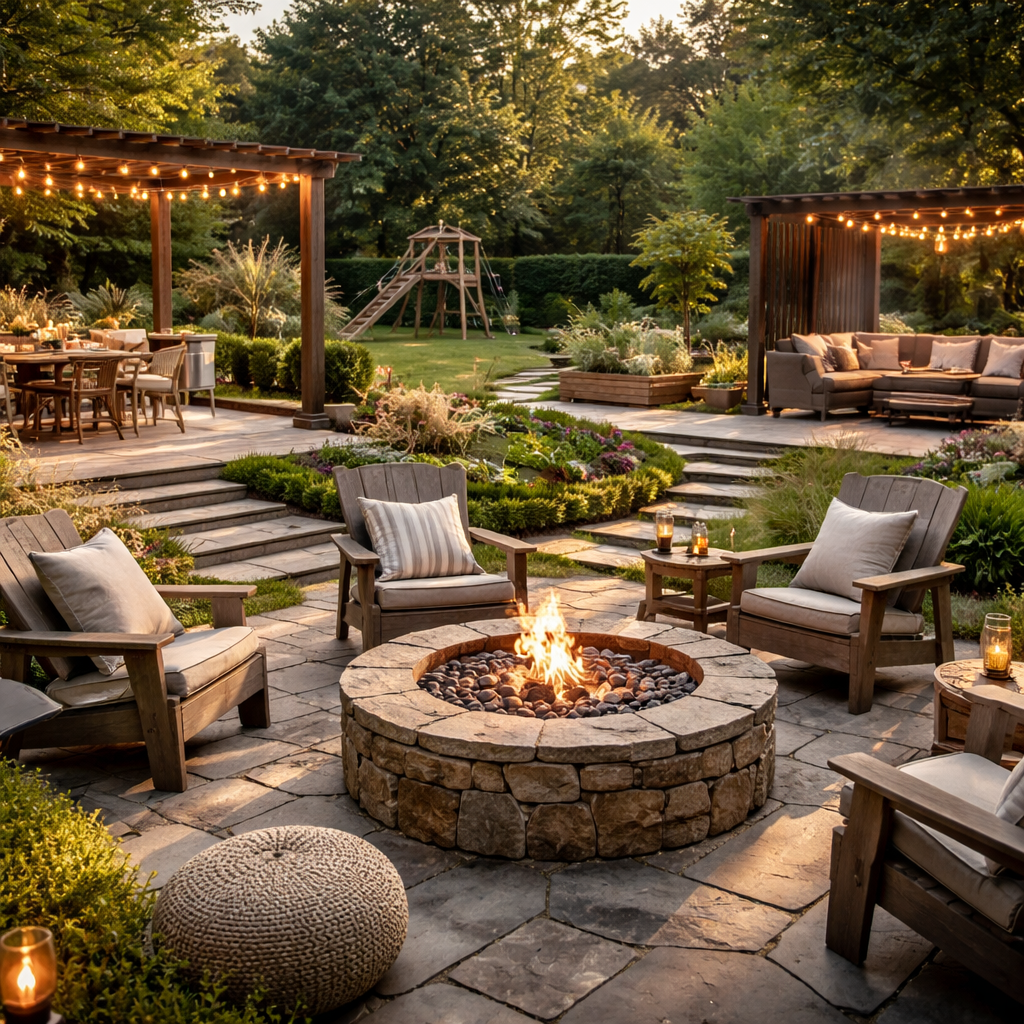
One of the most effective ways to transform a plain backyard is to divide it into distinct functional zones rather than treating it as one open patch of grass. Each zone serves a purpose, and together they make the space feel both larger and more intentional.
- A dedicated dining or grilling area with a weather-resistant surface — pavers, composite decking, or compacted gravel all work well depending on budget
- A lounging corner with comfortable seating, ideally positioned to catch shade in the afternoon
- A fire pit zone set safely away from fences and overhanging branches, which extends usable outdoor hours into cooler evenings
- A play area for children with soft ground cover like rubber mulch or artificial turf
- A kitchen garden or raised bed section if growing food interests anyone in the household
These zones don’t need to be separated by walls or fences — simple changes in ground material, plant borders, or furniture arrangement are often enough to define each area clearly.
Low-maintenance landscaping ideas worth considering
Landscaping is often where backyard projects stall. People picture elaborate garden designs and immediately feel the workload. But low-maintenance landscaping has become far more sophisticated, and plenty of options look polished without demanding constant attention.
Replacing high-maintenance lawn sections with native ground covers or ornamental grasses reduces watering needs, cuts mowing time, and often looks more interesting through the full year than a plain grass lawn.
Drought-tolerant plants, perennial borders, and mulched beds are practical backyard garden ideas that suit most climates. Gravel or stone pathways add structure while eliminating the need to mow around awkward patches. Even a single well-placed tree can dramatically improve shade coverage and the general feel of a backyard within a few growing seasons.
Small backyard? Work with the vertical space
Compact yards call for a different approach. When floor space is limited, going vertical opens up real possibilities without requiring extra square footage.
| Vertical feature | What it adds | Approximate effort level |
|---|---|---|
| Trellis with climbing plants | Privacy, greenery, visual height | Low to medium |
| Wall-mounted herb garden | Fresh herbs, saves ground space | Low |
| Vertical privacy screen | Blocks sightlines, defines space | Medium |
| Hanging planters on fence | Color, texture, softens hard surfaces | Low |
| Pergola or shade sail | Defined overhead space, shade | Medium to high |
Vertical features also draw the eye upward, which gives small outdoor areas a sense of depth they wouldn’t otherwise have. A plain wooden fence lined with wall planters and a simple trellis can turn a cramped urban backyard into something genuinely inviting.
Adding water features and lighting without overcomplicating things
A small water feature — even a compact container fountain — introduces ambient sound that masks street noise and adds a surprisingly calming atmosphere to outdoor spaces. Modern solar-powered options make installation simple and keep running costs at zero.
Outdoor lighting deserves equal attention. It extends the usability of a backyard after sunset and adds a visual dimension that daytime photos never capture. String lights strung between posts or along a fence remain one of the most cost-effective ways to create atmosphere. Path lighting improves safety while defining walkways. Uplighting a single tree or structural element adds drama without requiring a full lighting system.
The projects that bring the most return on time and money
Not every backyard upgrade offers equal value. Some projects look impressive in photos but rarely improve daily life, while others quietly become the most-used part of the outdoor space. Based on how people actually use their backyards, a few categories consistently stand out.
- A solid patio or deck surface — this is the foundation everything else builds on, and cutting corners here creates problems later
- Comfortable, weather-resistant seating — cheap furniture that deteriorates in one season ends up costing more than a durable set bought once
- Privacy solutions — whether through planted hedges, lattice screens, or tall ornamental grasses, privacy transforms how relaxed people feel in their own yard
- A simple outdoor kitchen setup or even a quality grill station, which shifts social life outdoors and reduces pressure on interior spaces during gatherings
Projects that directly serve how the household already spends time outdoors will always outperform those chosen purely for aesthetics or resale value.
Where to go from here
The most useful next step is usually the simplest one: pick a single part of your backyard that bothers you or feels unused, and focus there first. A completed corner — even a small seating nook with a few plants and decent lighting — builds momentum in a way that a full yard plan written on paper never does. One finished area shows you what’s possible, clarifies what you want next, and makes the whole project feel achievable rather than abstract.
Outdoor spaces evolve over time anyway. Very few well-designed backyards happened in a single burst of effort — most were shaped gradually, with each addition responding to how the space was actually being used. Starting somewhere, even imperfectly, is always more productive than waiting for the ideal moment or the perfect plan.