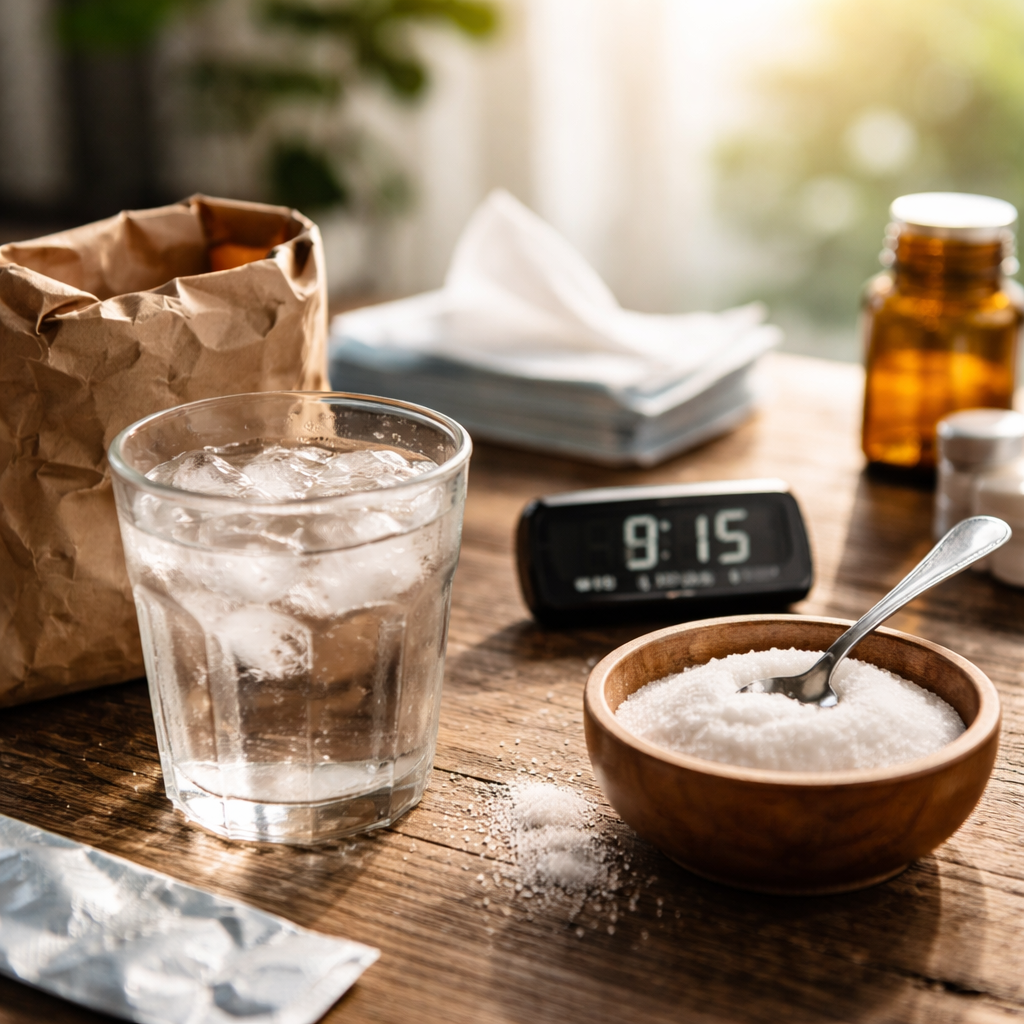
Most hiccup episodes stop on their own within a few minutes — yet when you’re sitting in a quiet room or trying to hold a serious conversation, even sixty seconds of hiccups feels like an eternity. Knowing how to get rid of hiccups quickly and reliably is more useful than it sounds, because the mechanisms behind hiccups are surprisingly well-documented, and the remedies that actually work all follow the same physiological logic.
What is actually happening when you hiccup
A hiccup is an involuntary spasm of the diaphragm — the dome-shaped muscle beneath your lungs that controls breathing. Each spasm causes a sudden intake of air, which is immediately cut off when the vocal cords snap shut, producing the characteristic sound. The reflex is controlled by the vagus nerve and the phrenic nerve, both of which run from the brainstem down through the chest and abdomen.
Common triggers include eating too fast, swallowing air, drinking carbonated beverages, sudden temperature changes in the stomach, excitement, or mild stress. In most cases hiccups are a benign reflex, not a symptom of anything serious. However, if an episode lasts longer than 48 hours, medical evaluation is warranted, because persistent hiccups can occasionally signal irritation of the vagus nerve from an unrelated condition.
Breathing techniques that interrupt the reflex
Because the diaphragm spasm is driven by nerve signals, the fastest category of remedies works by resetting or calming those nerves — primarily through controlled changes in carbon dioxide levels and pressure in the chest.
- Breath-holding: Take a deep breath, hold it for 10–20 seconds without straining, then exhale slowly. Retaining carbon dioxide relaxes the diaphragm and can interrupt the spasm cycle after one or two attempts.
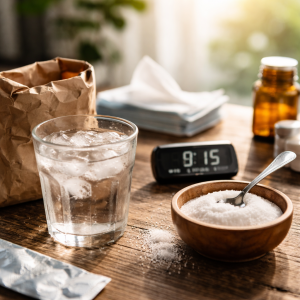
- The paper bag method: Breathing slowly in and out of a small paper bag for about 30 seconds raises CO₂ concentration in the lungs more quickly than simple breath-holding. Use a paper bag only — not plastic.
- Valsalva maneuver: Inhale deeply, then try to exhale against a closed throat (as if you are straining or blowing up a stiff balloon) for about 10 seconds. This increases pressure in the chest cavity and stimulates the vagus nerve.
- Diaphragmatic breathing: Breathe in slowly for 5 seconds, pushing the belly outward rather than lifting the chest, then exhale for 5 seconds. Repeat for two minutes. This method is slower but effective for recurring episodes.
Research published in the journal JAMA Network Open described a technique called the “supraglottic swallow” — inhaling fully, swallowing twice without exhaling, then breathing out — which participants found effective at stopping hiccups during clinical observation. The maneuver simultaneously stimulates the vagus nerve and increases intrathoracic pressure.
Physical actions that stimulate the vagus nerve
The vagus nerve is long, wandering, and remarkably sensitive to physical stimulation. Several practical actions target it directly and have a reasonable evidence base or long clinical tradition behind them.
| Action | How it works | Notes |
|---|---|---|
| Swallowing a teaspoon of granulated sugar | Stimulates the vagus nerve via the oropharynx; the grainy texture may reset the nerve signal | One of the most cited home remedies; supported by anecdotal clinical reports |
| Drinking cold water in small, rapid sips | Cold temperature and repetitive swallowing act as a vagal reset | Works best when you drink 10 consecutive sips without pausing to breathe |
| Pulling your knees to your chest | Compresses the diaphragm and changes the mechanical pressure around it | Combine with slow breathing for better effect |
| Applying gentle pressure to the eyeballs | Triggers the oculocardiac reflex, which slows heart rate and calms vagal tone | Pressure must be light — never push hard on the eyes |
| Gargling with ice water for 30 seconds | Strong pharyngeal stimulation of vagus nerve branches | Highly effective in many anecdotal reports; easy to do anywhere |
A note on popular remedies that have less support
Getting scared to cure hiccups is a well-known folk idea — the theory being that sudden fright triggers an adrenaline response that overrides the diaphragm spasm. While it sometimes works, the effect is inconsistent and there is no controlled evidence supporting it as a reliable method. Similarly, pressing the tongue or pulling it forward has only weak anecdotal backing.
Drinking upside down is another classic suggestion. There is no documented physiological reason why inverting the body would specifically help, though the act of swallowing in an unusual posture may incidentally involve the vagal mechanisms described above. It is harmless to try, but not something to count on.
Practical tip
If one method does not work within 60 seconds, switch to another rather than repeating it. Combining a breathing technique with a vagal stimulation action — for example, breath-holding followed immediately by 10 sips of cold water — tends to be more effective than either approach alone.
When hiccups are a medical concern
The vast majority of hiccup episodes are entirely harmless. That said, there are clear thresholds when self-treatment is not enough and a doctor’s input becomes necessary.
- Hiccups that last more than 48 hours continuously are classified as persistent and require medical assessment.
- Episodes lasting more than a month are called intractable hiccups and are associated with conditions such as gastroesophageal reflux disease, central nervous system lesions, metabolic imbalances, or certain medications.
- If hiccups are accompanied by chest pain, difficulty swallowing, or significant weight loss, see a physician promptly.
For medically persistent cases, physicians may prescribe medications such as baclofen (a muscle relaxant), chlorpromazine, or metoclopramide, depending on the underlying cause. These are not home remedies — they are prescription interventions used when the reflex has an identifiable pathological driver.
The rhythm your body is trying to find
Hiccups are one of those small physical annoyances that feel urgent in the moment and forgotten ten minutes later. Understanding the nerve pathways involved takes away some of that helpless feeling — because once you know the diaphragm spasm is driven by a reflex loop involving the vagus and phrenic nerves, you realize that most effective remedies are really just different ways of speaking to those same nerves. Slow your breathing, stimulate the vagus, raise carbon dioxide, or apply mechanical pressure — the body responds predictably when you work with its own regulatory systems rather than against them. Choose the method that suits the situation, stay calm, and in nearly every case, the hiccups will stop.