Finding tiny rust-colored stains on your sheets or waking up with itchy welts in a line across your skin — these are the signs that push people to urgently search for how to get rid of bed bugs before the infestation spreads further. What makes these insects particularly frustrating is their ability to hide in the thinnest cracks, survive weeks without feeding, and resist many common household pesticides. But here’s the good news: with the right approach and a clear action plan, you can eliminate them completely.
Why bed bugs are harder to eliminate than most pests
Bed bugs are not a sign of poor hygiene — this is one of the most persistent myths around them. They hitchhike on luggage, secondhand furniture, clothing, and even library books. Once inside, they reproduce rapidly: a single female can lay up to 500 eggs over her lifetime. Their flat bodies allow them to fit into spaces as thin as a credit card, making visual inspections genuinely difficult.
They are also nocturnal, feeding mostly between 2 and 5 AM, which means a person can share a bed with them for weeks before noticing any signs. Understanding this biology is the first step toward outsmarting them.
Step-by-step inspection: know what you’re dealing with
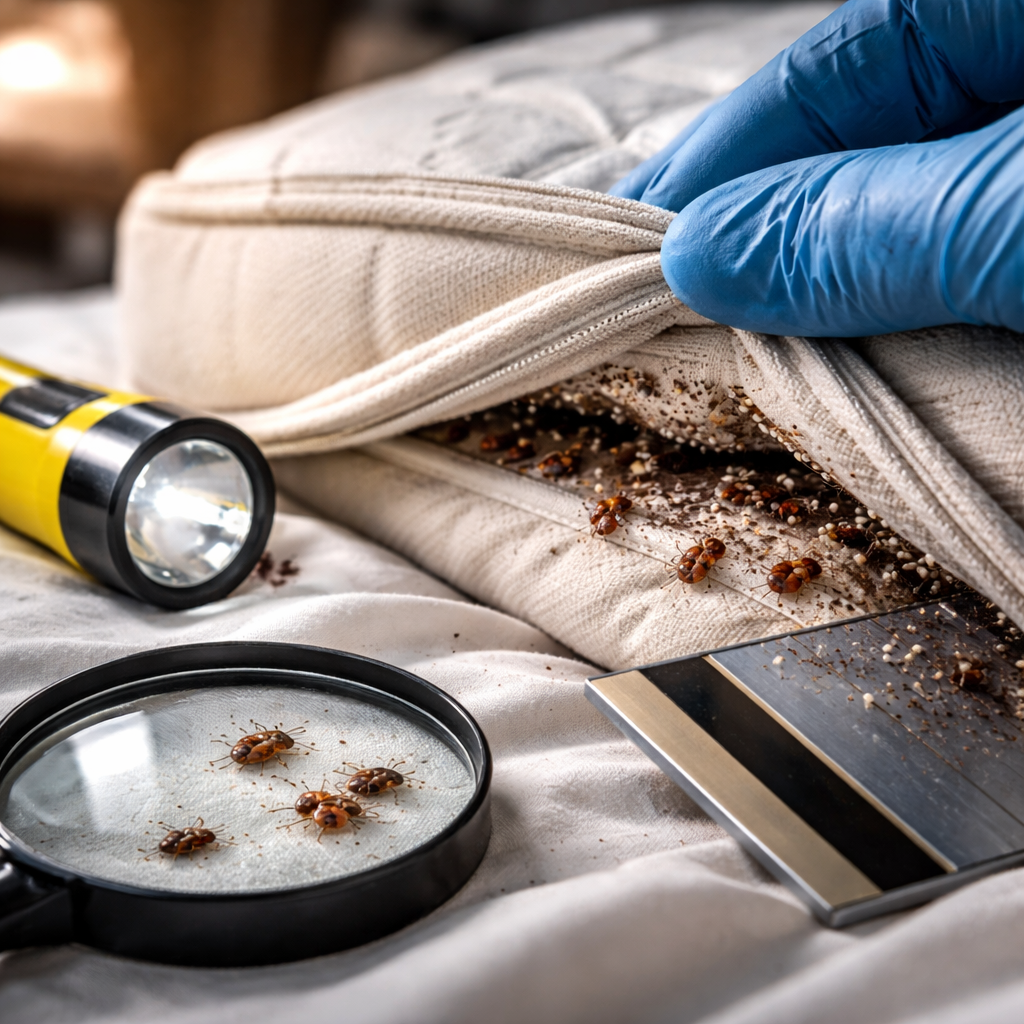
Before treating anything, you need to confirm the infestation and map its extent. Grab a flashlight and a thin card or old credit card for probing tight spaces.
- Strip the bed completely and inspect the seams, piping, and tags of the mattress and box spring.
- Check the bed frame, especially wooden joints, screw holes, and hollow legs.
- Look behind headboards, inside nightstand drawers, and along baseboards.
- Inspect upholstered furniture nearby — couches, armchairs, curtains.
- Check electrical outlets, picture frames, and loose wallpaper edges near the bed.
Signs to look for include live bugs (brown, apple-seed shaped), shed skins, tiny white eggs roughly 1mm long, and dark fecal spots that smear when wiped with a damp cloth.
Heat treatment: the most effective non-chemical method
Bed bugs cannot survive temperatures above 118°F (48°C) sustained for at least 90 minutes, and eggs die at 122°F (50°C). This makes heat one of the most reliable treatment methods available.
For items that can be laundered, wash them on the hottest setting and follow immediately with a high-heat dryer cycle of at least 30 minutes. This applies to all bedding, curtains, stuffed animals, and clothing from the affected room. Place treated items directly into sealed plastic bags until the infestation is resolved.
For items that cannot be washed — shoes, books, small electronics — a sealed black plastic bag left in a hot car on a sunny day can reach lethal temperatures, though this method requires careful temperature monitoring to be effective.
Professional whole-room heat treatment is the most thorough option. Specialized equipment raises the entire room temperature to lethal levels, reaching inside walls, furniture, and mattresses simultaneously. It is more expensive than DIY methods but often resolves infestations in a single treatment.
Chemical treatments: what actually works
Not all pesticides are equal when it comes to bed bugs. Resistance to pyrethroids — one of the most common insecticide classes — is widespread in bed bug populations. Effective chemical approaches typically involve more than one active ingredient.
| Treatment Type | How It Works | Best For |
|---|---|---|
| Diatomaceous earth (food grade) | Physically damages the insect’s exoskeleton, causing dehydration | Cracks, baseboards, under furniture |
| Pyrethrin-based sprays | Attacks the nervous system on contact | Direct application to visible bugs |
| Neonicotinoids | Disrupts nerve transmission; effective on resistant populations | Cracks and crevices where bugs hide |
| Desiccant dusts (silica gel) | Absorbs the waxy coating of the exoskeleton | Wall voids, outlets, baseboards |
Apply chemical treatments only to targeted areas — never spray mattress surfaces directly where a person sleeps. Always follow product label instructions precisely, since misuse reduces effectiveness and raises health risks.
Encasements, traps, and ongoing prevention
Once you’ve treated the infestation, protecting your bed is essential to prevent re-infestation and to trap any surviving bugs before they can feed and reproduce.
Mattress and box spring encasements are zippered covers specifically designed to trap bed bugs inside, where they eventually die, while also preventing new bugs from colonizing the mattress. Look for encasements certified for bed bug protection — not just allergen covers.
Reduce clutter in the bedroom, since bed bugs use it as additional harborage. Seal cracks in walls, baseboards, and around electrical outlets with caulk. When traveling, inspect hotel room mattresses and keep luggage elevated on metal racks rather than placed on the floor or bed.
When to bring in a professional exterminator
DIY methods can work for early-stage infestations that are caught quickly and treated thoroughly. But certain situations call for professional help without delay:
- The infestation has spread to multiple rooms or floors.
- You’ve attempted treatment twice without reducing the bug population.
- You live in a multi-unit building where neighboring units may be infested.
- Elderly, immunocompromised, or young children are in the household.
A licensed pest management professional will conduct a thorough inspection, identify the infestation extent, and apply an integrated treatment plan that typically combines heat, chemical, and physical methods. Ask about their follow-up visit policy — reputable companies include at least one re-inspection as part of the service.
The long game: how to know when they’re truly gone
One of the most stressful parts of dealing with bed bugs is uncertainty — not knowing if the treatment actually worked. Since eggs can survive some treatments and hatch weeks later, patience and continued monitoring are just as important as the initial treatment.
Keep interceptor traps in place and check them weekly for at least three months after treatment. No captures over 12 consecutive weeks is a strong indicator that the infestation has been resolved. During this period, keep encasements on the mattress, continue sealing entry points, and inspect any secondhand items before bringing them inside.
Recovering from a bed bug infestation takes time and consistent effort, but it is entirely possible. The combination of heat, targeted pesticides, physical barriers, and regular monitoring gives you a layered defense that addresses every stage of the bug’s life cycle — and that’s exactly what it takes to win this particular battle for good.