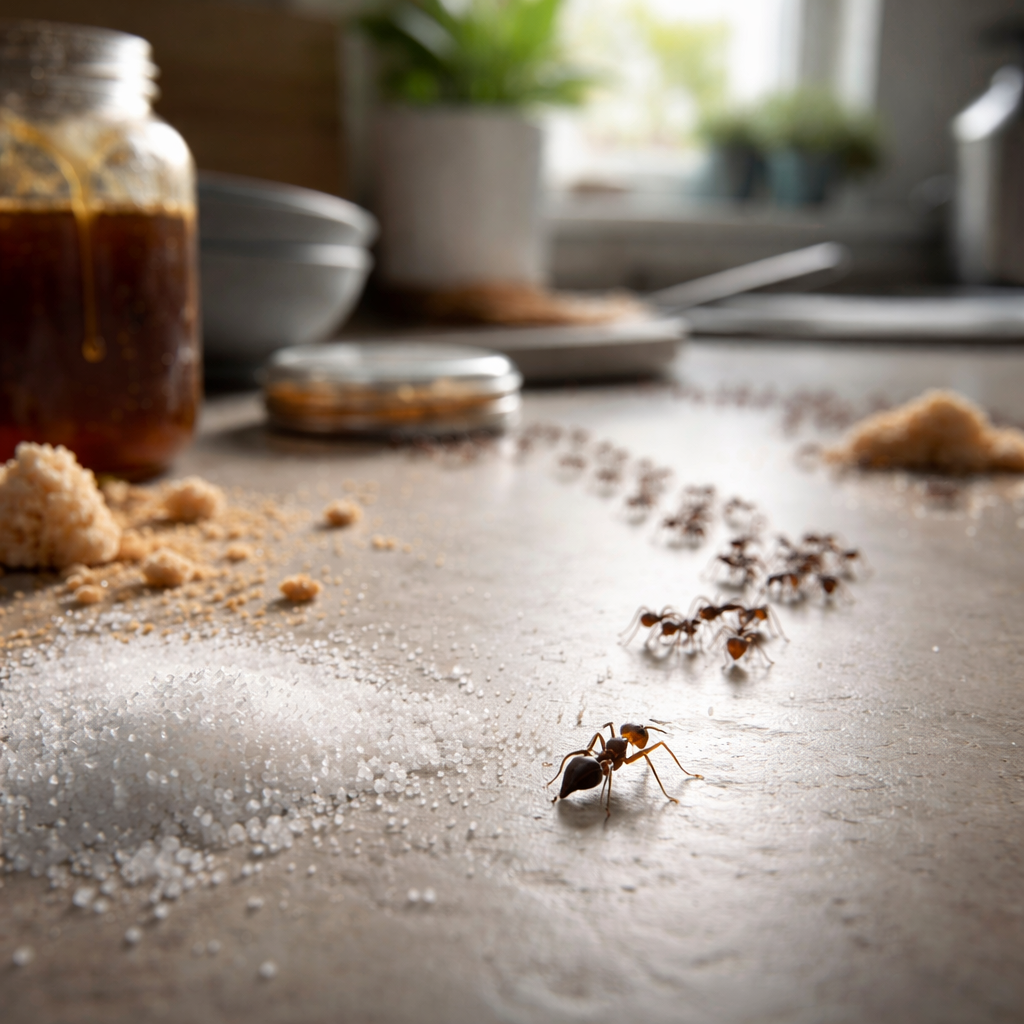
A single scout ant in your kitchen means hundreds more could follow within hours — that’s how fast an ant infestation can escalate. If you’re trying to figure out how to get rid of ants for good, the answer isn’t just spraying something and hoping for the best. It takes understanding their behavior, cutting off what attracts them, and choosing the right method for your specific situation.
Why ants keep coming back (and what you’re missing)
Most people treat the ants they can see. The problem is, visible ants are just scouts or foragers — the colony itself is hidden, often deep in walls, under flooring, or outside in soil. When you only kill the visible workers, the queen keeps producing more. Within days, the trail reappears.
Ants follow chemical pheromone trails left by scouts who found food or water. Even after you clean the surface, trace amounts of pheromones can remain on countertops, floors, and baseboards. Wiping down surfaces with white vinegar or a mild soap solution breaks down these invisible highways and confuses foragers trying to return.
Identifying the ant species matters more than you think
Not all ant problems are solved the same way. Carpenter ants damage wood and need a different approach than odorous house ants or pavement ants. Before choosing any treatment, take a moment to identify what you’re dealing with.
| Ant Type | Common Location | Main Concern |
|---|---|---|
| Odorous house ants | Kitchen, bathrooms | Food contamination |
| Carpenter ants | Wooden structures, damp areas | Structural damage |
| Pavement ants | Cracks in floors, driveways | Nesting indoors |
| Fire ants | Outdoor soil, lawns | Painful stings, aggressive |
Knowing your ant type also helps you choose baits correctly. Some species are attracted to sweet baits, others to protein-based ones. Using the wrong bait means the ants will ignore it entirely.
Natural methods that actually work at home
There’s a wide range of household remedies that genuinely disrupt ant activity without reaching for chemical pesticides. These approaches work best for minor infestations or as a preventive layer.
- Diatomaceous earth — food-grade DE can be sprinkled along baseboards, entry points, and under appliances. It physically damages the exoskeletons of ants and dehydrates them.
- Peppermint essential oil — ants dislike strong scents that mask pheromone trails. A few drops mixed with water in a spray bottle applied to entry points creates a deterrent barrier.
- Boric acid mixed with sugar water — this acts as a slow-acting bait. Worker ants carry it back to the colony, eventually reaching the queen. It takes patience, but it targets the source.
- Cinnamon or cloves near entry points — these spices disrupt scent trails and can deter ants from crossing treated areas.
- Sealing cracks with caulk — this is often overlooked but one of the most effective long-term solutions. No entry point means no indoor colony.
Diatomaceous earth is one of the few natural ant killers that works mechanically rather than chemically, making it safe around pets and children when food-grade quality is used.
When to use ant baits and how to use them correctly
Ant baits are considered by pest control professionals to be one of the most effective tools for eliminating entire colonies rather than just surface-level populations. The key principle: never kill the ants you see near the bait. You want them to carry the toxic bait back to the nest.
Place bait stations close to ant trails but away from direct sunlight and moisture, which can degrade the active ingredients. Be patient — it typically takes several days to a few weeks for a bait to work through a colony. Switching baits too quickly is a common mistake that resets the entire process.
Preventing ant entry: the long-term strategy
Eliminating an existing infestation is only half the job. Without preventive measures, ants will return — especially during warmer months when colonies expand and foragers actively search for food and moisture.
Here’s where most homeowners lose ground: they clean up after an infestation but don’t change the conditions that made their home attractive in the first place. Standing water under a sink, crumbs behind appliances, or gaps around window frames are constant open invitations.
- Store all food — including pet food — in airtight containers.
- Fix any leaking pipes or faucets promptly. Moisture attracts ants as much as food does.
- Keep outdoor vegetation, mulch, and firewood away from the exterior walls of your home.
- Regularly clean behind and under kitchen appliances where crumbs and grease accumulate.
- Inspect door sweeps and window seals seasonally and replace worn-out ones.
When calling a pest control professional makes sense
Some infestations genuinely go beyond what DIY methods can resolve. If you’ve identified carpenter ants tunneling through structural wood, or if repeated baiting and sealing hasn’t reduced activity after several weeks, professional treatment may be the most practical next step.
Pest control specialists can locate satellite colonies, use targeted insecticides that aren’t available over the counter, and provide follow-up treatments that ensure the colony doesn’t simply relocate within your walls. For fire ant infestations outdoors, professional mound treatment is also significantly more reliable than retail products.
The habits that keep your home ant-free for good
Dealing with ants successfully comes down to consistency rather than a single dramatic fix. The homes that stay ant-free aren’t treated once — they’re maintained in a way that removes every reason for ants to enter. That means tight food storage, controlled moisture, sealed entry points, and occasional spot treatments when early signs appear.
Once you’ve broken the cycle — eliminated the colony, removed the attractants, and closed the access points — maintaining that state is far easier than starting from scratch after a new infestation takes hold. Think of it less as pest control and more as an ongoing standard of household maintenance. It’s a small shift in mindset that makes a real difference.