Most healthy couples who are trying to conceive do so within a year — yet knowing how to get pregnant faster and more effectively is something many people wish they had learned sooner. The biology is straightforward, but the practical details are where things often get confusing or overwhelming.
Understanding your cycle is the real starting point
Before anything else, it helps to understand what’s actually happening in your body each month. Ovulation — the release of an egg from the ovary — is the window that makes conception possible. That window is shorter than most people realize: an egg survives for only 12 to 24 hours after release. Sperm, on the other hand, can live inside the female reproductive tract for up to five days.
This means your fertile window is roughly six days long — the five days before ovulation and the day of ovulation itself. Timing intercourse within this period significantly increases your chances of conception.
For people with a regular 28-day cycle, ovulation typically occurs around day 14. But cycles vary widely — and even the same person can ovulate earlier or later from one month to the next. Tracking your cycle over several months gives you a clearer picture than any general guideline can.
Practical ways to track ovulation
There’s no single “best” method — many people use a combination. Here’s what actually works:
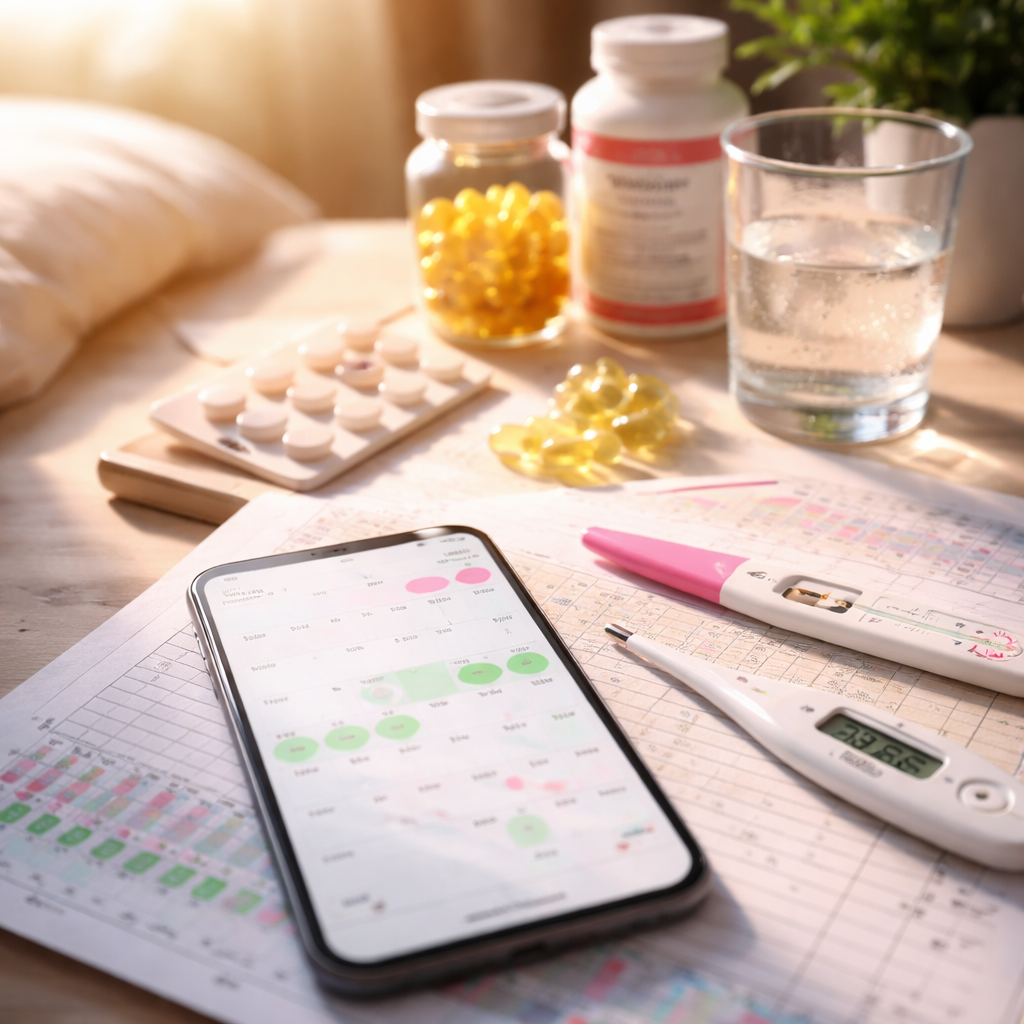
- Basal body temperature (BBT) tracking — your resting temperature rises slightly after ovulation. Measuring it every morning before getting out of bed, using a sensitive thermometer, reveals a pattern over time.
- Ovulation predictor kits (OPKs) — these urine tests detect the surge in luteinizing hormone (LH) that occurs 24–36 hours before ovulation, giving you advance warning.
- Cervical mucus observation — around ovulation, discharge becomes clear, slippery, and stretchy — often described as resembling raw egg whites. This change is a reliable physical sign.
- Cycle tracking apps — useful for logging data, though they’re only as accurate as the information you put in. They work best alongside another method.
Ovulation predictor kits are among the most accessible and reliable tools for identifying the fertile window, especially for people with irregular cycles.
How lifestyle habits influence fertility
Fertility isn’t just a matter of timing — the overall health of both partners plays a significant role. Research consistently shows that certain lifestyle factors affect both sperm quality and egg quality, as well as the hormonal environment needed for implantation.
| Factor | Effect on fertility |
|---|---|
| Smoking | Reduces egg quality, lowers sperm count and motility |
| Alcohol | Disrupts hormonal balance; heavy use linked to reduced fertility in both sexes |
| Body weight | Both underweight and overweight can disrupt ovulation |
| Chronic stress | Affects hormonal signaling; may suppress ovulation |
| Regular moderate exercise | Supports hormonal balance and overall reproductive health |
| Diet rich in folate, zinc, antioxidants | Associated with improved egg and sperm quality |
One often-overlooked point: male fertility matters just as much as female fertility. Roughly half of all fertility challenges involve sperm factors. A semen analysis can give a clear picture of sperm count, motility, and morphology — and it’s worth doing early rather than waiting.
What to start doing before you even try
Preparing your body before actively trying to conceive makes a genuine difference. Most doctors recommend starting folic acid supplementation at least one month before trying — ideally three months. Folic acid (vitamin B9) reduces the risk of neural tube defects in early fetal development, during a period when many people don’t yet know they’re pregnant.
A preconception check-up is also worth scheduling. It’s an opportunity to review any existing health conditions, medications, or vaccinations that may be relevant. Conditions like thyroid disorders, polycystic ovary syndrome (PCOS), or endometriosis can affect conception and are better addressed before trying.
When to seek medical advice
There’s a common misconception that you need to try for a long time before asking for help. General medical guidance suggests consulting a doctor if you’re under 35 and haven’t conceived after 12 months of regular unprotected sex, or after 6 months if you’re 35 or older. If there’s a known condition affecting fertility — on either side — earlier evaluation makes sense.
Seeking help isn’t a sign that something is seriously wrong. In many cases, a minor hormonal imbalance, a timing issue, or a treatable condition is identified quickly. And having information earlier gives you more options.
The emotional side of trying to conceive
It’s worth acknowledging something that medical articles often skip over: trying to conceive can be emotionally intense. The monthly cycle of hope and disappointment takes a real toll. Anxiety, stress within a relationship, and feelings of isolation are common — and completely valid.
Staying connected with your partner through open communication, and not letting conception attempts replace intimacy, matters more than many people expect. Some couples find it helpful to set boundaries around how much they discuss and track — giving themselves permission to step back from the data occasionally.
Trying to conceive is not just a medical process — it’s a deeply personal experience that affects both partners, often in ways that are hard to articulate until you’re in it.
Support groups, counseling, and honest conversations with trusted friends or healthcare providers can all help. You don’t need to navigate this quietly.
Small changes, consistent habits, real results
There’s no guaranteed formula, and that’s worth accepting early. But the combination of understanding your cycle, timing well, supporting your body through nutrition and lifestyle, and addressing any underlying health factors gives you the strongest foundation possible. The couples who tend to feel most in control are not necessarily those with the fewest challenges — they’re the ones who have good information and know when to ask for more support.
Start where you are. Track what you can. And don’t hesitate to involve a healthcare provider earlier rather than later — they’re there precisely for this.