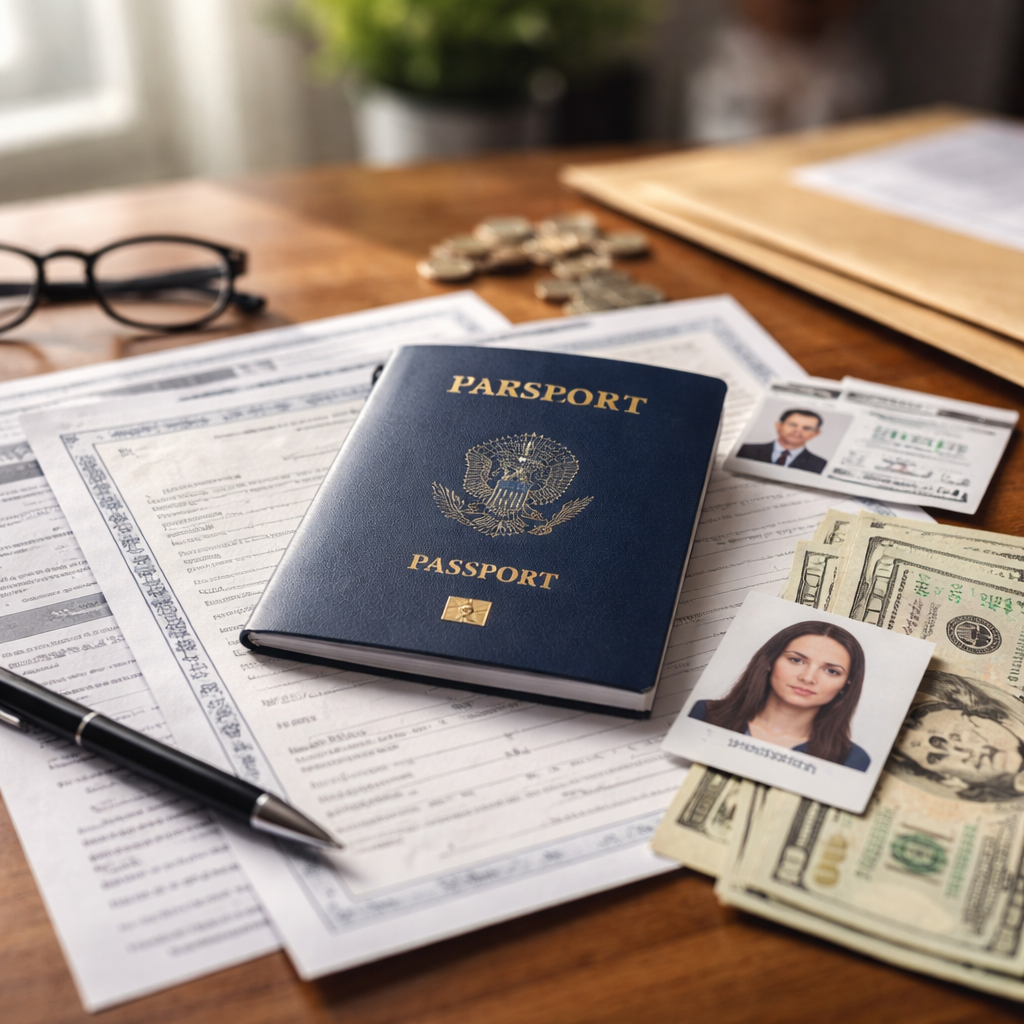
Most people assume that getting a passport is a bureaucratic nightmare — hours of waiting, confusing forms, and unexpected fees. In reality, knowing how to get a passport comes down to a handful of straightforward steps that, once understood, take much of the stress out of the process entirely.
What you actually need before you start
Before filling out a single form, it helps to understand what the process involves at a basic level. A passport is an official government-issued travel document that confirms your identity and citizenship. In the United States, passport applications are managed by the U.S. Department of State, though similar frameworks exist in most countries with minor procedural differences.
For a first-time applicant in the U.S., you’ll need to apply in person at a passport acceptance facility — these include many post offices, county clerk offices, and federal courthouses. Renewal applicants, under certain conditions, can submit their documents by mail.
Here’s what you’ll typically need to gather before your appointment:
- Proof of U.S. citizenship (original birth certificate, naturalization certificate, or previous U.S. passport)
- A valid government-issued photo ID (such as a driver’s license)
- A photocopy of the front and back of your ID
- One recent passport photo that meets the official size and background requirements
- Completed Form DS-11 (for first-time applicants)
- Payment for application and execution fees
It’s worth noting that the passport photo requirements are stricter than most people expect. The photo must be 2×2 inches, taken against a white or off-white background, with a neutral expression, and printed on matte or glossy photo paper. Many post offices and pharmacies offer this service on-site for a small fee.
Choosing between a passport book and a passport card
One decision that often catches applicants off guard is whether to apply for a passport book, a passport card, or both. They serve different purposes, and understanding the distinction can save you money.
| Document | Valid for | Best for |
|---|---|---|
| Passport Book | International air travel, all countries | Frequent international travelers |
| Passport Card | Land/sea border crossings (Canada, Mexico, Caribbean) | Those who travel regionally by land or cruise |
If you plan to fly abroad or visit countries outside North America, the passport book is the only valid option. The card is a convenient and wallet-sized alternative, but it won’t get you through an international airport.
How the application process unfolds step by step
Once you’ve assembled your documents, the process itself is fairly linear. Here’s how it typically works:
- Download and complete Form DS-11 from the official travel.state.gov website. Do not sign it beforehand — you’ll be asked to sign in the presence of the acceptance agent.
- Schedule an appointment at a nearby passport acceptance facility. Walk-ins are sometimes possible, but appointments are strongly recommended.
- Bring all required documents — originals and photocopies — along with your passport photo and payment.
- Submit your application in person. The agent will review everything and retain your citizenship document temporarily if it’s an original.
- Pay the fees. As of recent guidelines, the application fee for a passport book is $130, with an additional $35 execution fee. These amounts are subject to change, so always verify on the official government website.
- Track your application online using the confirmation number provided after submission.
Routine processing typically takes several weeks, while expedited service can cut that time roughly in half for an additional fee. If you have urgent international travel, you may qualify for an appointment at a regional passport agency.
Passport renewal: a different path
If your passport has expired or is about to expire, the renewal process is somewhat simpler. Eligible applicants — generally those whose passport was issued after age 16, is undamaged, and was issued within the last 15 years — can renew by mail using Form DS-82.
For mail renewals, you’ll send your most recent passport (it will be returned to you), a new passport photo, the completed form, and payment directly to the appropriate processing center. No in-person appointment is required in this case.
One important thing to keep in mind: many countries require that your passport remain valid for at least six months beyond your planned travel dates. Always check the entry requirements of your destination before booking.
Common mistakes that delay applications
Common mistakes that delay applications
Even well-prepared applicants can run into avoidable setbacks. These are the most frequent reasons applications get delayed or returned:
- Signing Form DS-11 before appearing in front of the acceptance agent
- Submitting a passport photo that doesn’t meet size or background specifications
- Providing photocopies instead of original citizenship documents
- Forgetting to include both the application fee and the execution fee
- Using an outdated version of the application form
Double-checking your documents against the official checklist on travel.state.gov before your appointment takes about ten minutes and can prevent weeks of delays.
When speed matters: expedited options explained
Standard processing timelines can stretch from several weeks to a couple of months during peak travel seasons. If your travel date is approaching, there are two main ways to speed things up.
The first is paying for expedited service, which is available both at acceptance facilities and for mail renewals. This reduces processing time significantly, though it comes with an added fee.
The second option — available only when international travel is imminent — is booking an appointment at a regional passport agency. These appointments are limited and require proof of travel within a very short window, so they’re not a general shortcut. You can find locations and schedule appointments through the official government portal.
The one thing worth doing right now
If there’s one practical takeaway from all of this, it’s timing. Whether you’re applying for the first time or renewing, the biggest variable you can control is how early you start. Processing times fluctuate, appointment availability changes, and travel plans have a way of becoming more urgent than expected.
Checking your current passport status today — even if you have no immediate travel plans — puts you in a position where you’re never caught off guard. A valid passport opens doors, and keeping one current is far less effort than scrambling to get one when it’s already too late.