That soft but persistent creak every time you open or close a door is one of those small annoyances that somehow manages to feel louder at 2 a.m. than at any other time of day. If you’ve been searching for how to fix door hinge squeak, the good news is that this is almost always a quick repair — no specialist tools required, no need to remove the door, and certainly no reason to call a handyman.
Why hinges squeak in the first place
Before jumping to solutions, it helps to understand what’s actually happening inside that hinge. The squeak comes from metal-on-metal friction between the hinge pin and the barrel surrounding it. Over time, the original lubrication dries out, fine dust and debris settle into the joint, and the two metal surfaces begin grinding against each other with every swing of the door.
In older homes, paint buildup around hinge barrels can also contribute — thin layers of dried paint create uneven contact points that amplify the sound. And occasionally, a slightly bent or corroded hinge pin is the root cause, which requires a different approach than simple lubrication.
What you’ll need before you start
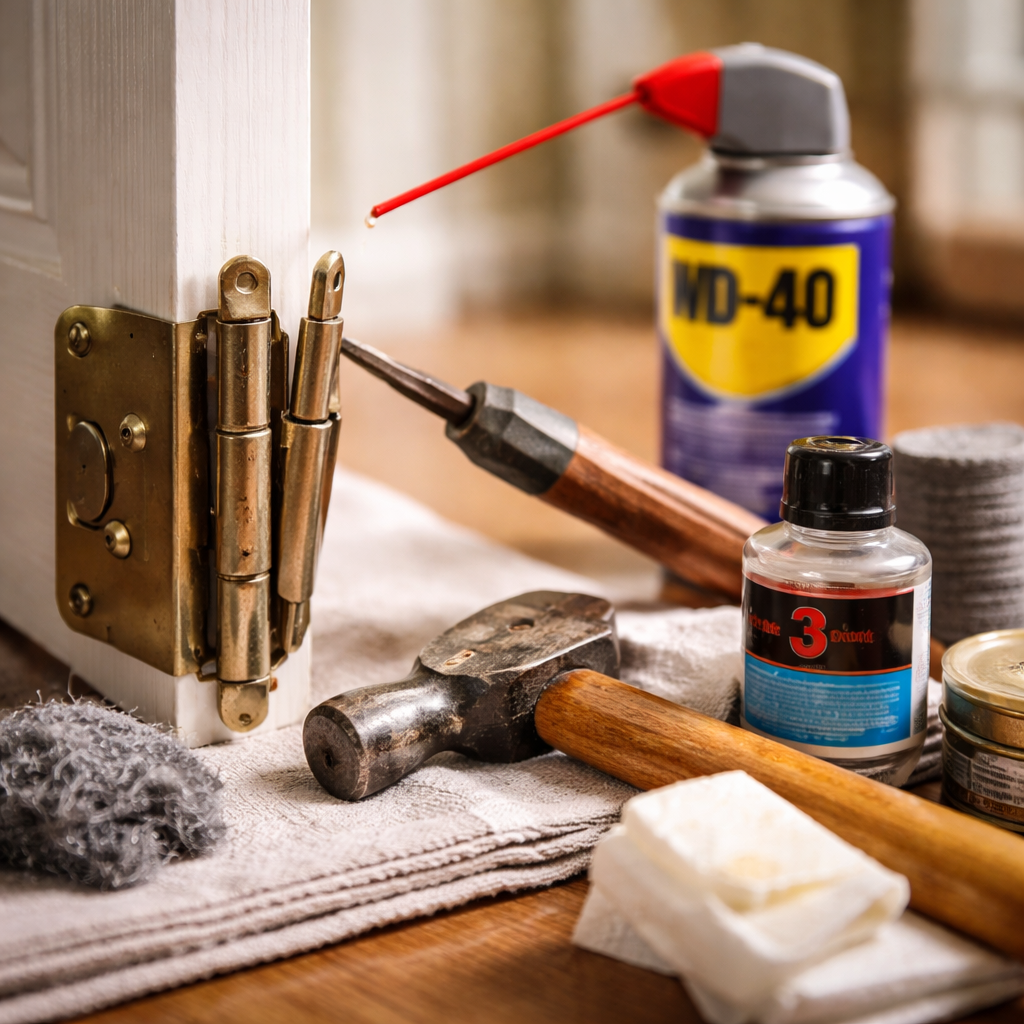
Most squeaky hinge repairs need only a few basic items, many of which you probably already have at home. Here’s what to gather before you begin:
- A hammer and a flathead screwdriver or nail punch (to tap out the hinge pin)
- A rag or paper towels
- Steel wool or fine-grit sandpaper (for rust or corrosion)
- Your chosen lubricant
- A small brush or cotton swab (optional but helpful)
The lubricant choice matters more than most people expect. Different products suit different situations, and picking the wrong one can make the problem worse or create a mess on your floor.
Choosing the right lubricant for squeaky hinges
| Lubricant | Best for | Drawbacks |
|---|---|---|
| White lithium grease | Heavy-use hinges, exterior doors | Can attract dust over time |
| WD-40 (original formula) | Loosening rust and debris | Evaporates quickly, not a long-term fix |
| 3-in-One oil or similar light machine oil | Interior doors with moderate use | May drip if over-applied |
| Petroleum jelly (Vaseline) | Quick household fix | Thicker, can collect dirt |
| Beeswax or candle wax | Eco-friendly, no liquid mess | Less effective on heavy or rusty hinges |
For most interior doors, a light machine oil or white lithium grease gives the best balance of lasting protection and clean application. WD-40 works well as a first step to clean out grime, but it should be followed by a proper lubricant — relying on it alone means the squeak will likely return within a few weeks.
Step-by-step: removing the pin and treating the hinge
The most effective method involves taking the hinge pin out completely rather than just spraying lubricant into the gap. It takes an extra five minutes but produces far better results.
- Open the door to a comfortable working position and place something under it to take the weight off the hinges — a folded towel or a doorstop works well.
- Position the tip of a flathead screwdriver or nail punch under the head of the hinge pin and tap upward with a hammer until the pin slides out. Start with the lower hinge to keep the door stable.
- Wipe the pin clean with a rag. If there’s visible rust or roughness, rub it gently with steel wool until smooth.
- Apply your chosen lubricant directly to the pin, coating it evenly along the full length.
- Wipe the inside of the hinge barrel with a cotton swab to remove old dried lubricant and debris, then apply a small amount of lubricant inside the barrel as well.
- Slide the pin back in, tap it firmly into place, and swing the door several times to work the lubricant through.
Repeat this process for each squeaking hinge. It’s worth doing all hinges on a door at the same time — if one is dry, the others likely are too.
A well-lubricated hinge pin should move completely silently and feel smooth when you pull it out by hand. If there’s any resistance or grinding sensation even after cleaning, the pin may be bent and should be replaced.
When lubrication alone isn’t enough
Sometimes the squeak persists even after thorough lubrication. In that case, the issue is usually structural rather than just surface-level friction. A few things to check:
Loose hinge screws are a surprisingly common culprit. When the screws holding a hinge leaf to the door frame become loose, the hinge shifts slightly under load and creates noise. Tightening them often solves the problem completely. If the screw holes have stripped and won’t hold, fill them with wooden toothpicks and wood glue, let dry, then re-drive the screws — this gives the threads something solid to grip.
A misaligned door can also cause noise at the hinge point. If the door is rubbing against the frame or sitting unevenly, the hinges are working harder than they should. This typically shows as a door that doesn’t close flush or that drags along the floor on one side. In this case, repositioning the hinge mortise or adding a thin shim behind a hinge leaf may be needed to correct the alignment.
A quick no-disassembly method for minor squeaks
If removing the pin feels like too much effort for a very minor squeak, there’s a faster approach that works reasonably well on lightly used interior doors. Open the door fully, then apply a small amount of lubricant directly into the gap between the hinge pin and the barrel — the narrow space visible at the top of each hinge. Work the door back and forth to help the lubricant penetrate, then wipe away any excess that drips onto the hinge leaves or floor.
This method won’t last as long as a full pin removal and clean, but it can buy several months of quiet use and takes under two minutes per hinge.
Keeping hinges quiet for the long run
Door hinge maintenance isn’t something that needs to be on a formal schedule, but it’s worth paying attention to. The first sign of any friction sound is the ideal moment to address it — at that stage, a single application of lubricant is usually all it takes. Waiting until the squeak becomes loud often means dealing with more corrosion, worn metal, or debris buildup.
Exterior door hinges benefit from slightly heavier grease rather than light oil, since they’re exposed to temperature changes and moisture. Interior hinges in dry climates can go longer between treatments. If your home tends toward dry air — particularly in heated interiors during cold months — a quick check of hinge condition once or twice a year takes only a few minutes and keeps doors operating smoothly without interruption.
A silent door is a small thing. But in a home where everything works the way it should, that quiet swing every time someone passes through is one less friction point in daily life — and sometimes, that’s exactly what makes a space feel well cared for.