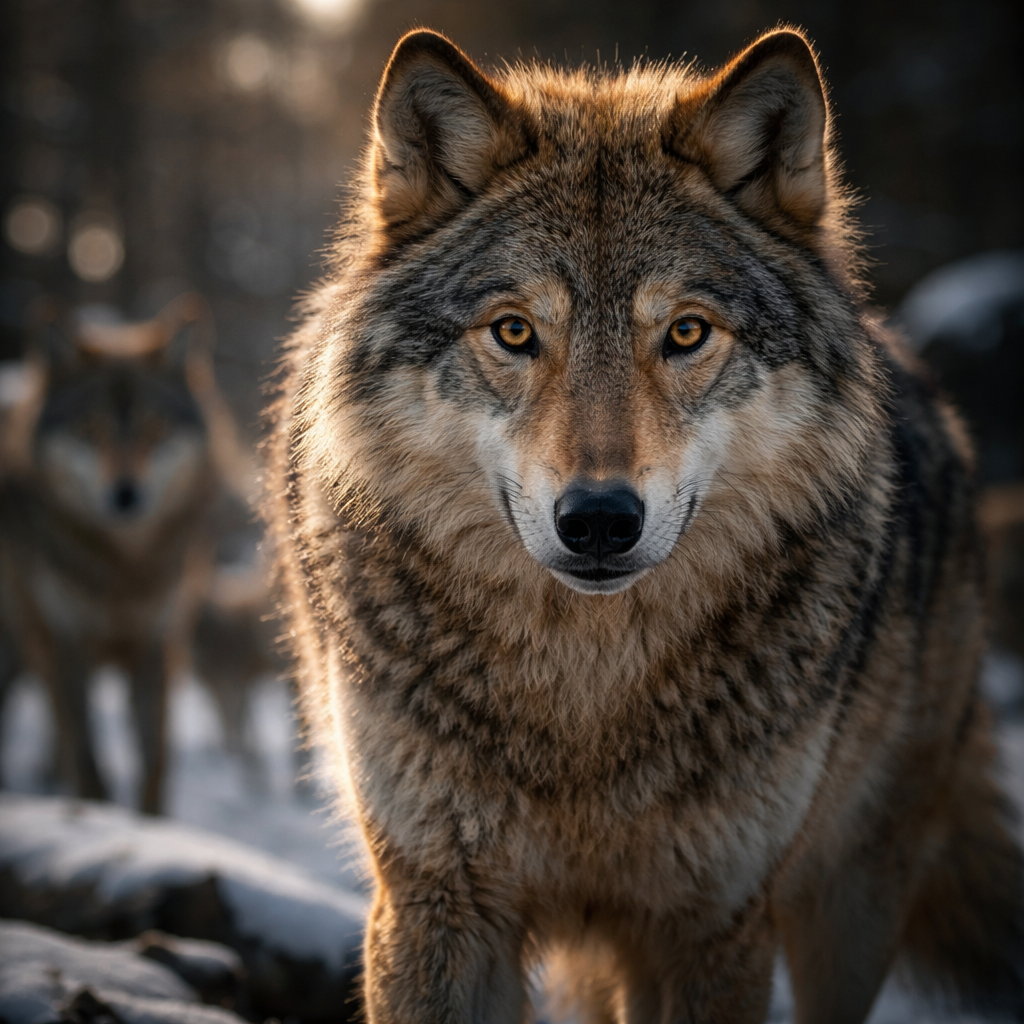
Few animals have sparked as much fascination, fear, and misunderstanding as the wolf. The facts about wolves reveal a creature far more complex and socially nuanced than the myths suggest — a highly intelligent predator that plays a crucial role in maintaining healthy ecosystems. Whether you’ve encountered wolves through wildlife documentaries or simply wonder what makes them tick, what follows will likely shift your perspective.
The social architecture of a wolf pack
A wolf pack is not a chaotic group of competitors — it functions more like a tightly organized family unit. Most packs consist of a breeding pair (often referred to as the alpha male and alpha female), their offspring from the current year, and sometimes young from previous seasons who haven’t yet dispersed to form their own groups.
What’s often misunderstood is that the concept of a rigid dominance hierarchy — with wolves constantly fighting for rank — largely applies to captive wolves forced together artificially. In wild populations, leadership within the pack is more fluid and cooperative. Decisions about where to travel or when to hunt are influenced by subtle communication, not brute force.
Wolves communicate through a sophisticated combination of vocalizations, body posture, facial expressions, and scent marking — making them one of the most communicatively rich mammals on Earth.
Built for endurance, not just speed
Wolves are not the fastest predators — a healthy white-tailed deer can outrun them in a short sprint. What makes wolves such effective hunters is their stamina. They are capable of trotting at around 8 kilometers per hour for hours on end, and during a chase can reach bursts of up to 56–60 km/h. This endurance strategy allows packs to pursue prey over long distances until it weakens.
Their physical adaptations are equally impressive. Wolves have large, slightly webbed feet that help them move across snow-covered terrain. Their double-layered coat — a dense undercoat and a longer outer layer — insulates them against temperatures as low as -40°C. The legs of a wolf are built to cover ground efficiently, with a narrow chest that allows the hind legs to step into the tracks of the front legs, reducing energy expenditure during travel.
| Feature | Detail |
|---|---|
| Top speed (burst) | 56–60 km/h |
| Cruising trot speed | ~8 km/h |
| Daily travel distance | Up to 80 km |
| Cold tolerance | Down to -40°C |
| Lifespan (wild) | 6–8 years on average |
How wolves reshape entire landscapes
One of the most remarkable discoveries in modern ecology is the concept of a trophic cascade — a chain reaction triggered when a top predator is introduced or removed from an ecosystem. The reintroduction of gray wolves to Yellowstone National Park in the mid-1990s became one of the most studied examples of this phenomenon.
After wolves returned, elk herds began avoiding open valleys and riverbanks — areas where they were vulnerable to predation. This behavioral shift allowed vegetation along rivers to recover significantly. Willows, aspens, and cottonwoods grew taller. Beavers returned because they had the materials to build dams. The dams created ponds that supported fish, amphibians, and waterfowl. River banks stabilized, reducing erosion. In essence, wolves changed the physical geography of the park — not just its wildlife population.
Why this matters beyond Yellowstone
The Yellowstone case has influenced wildlife management policies across Europe, North America, and beyond. Countries including Poland, Germany, and Italy have seen natural wolf recolonization in recent decades, reigniting debates about coexistence with livestock and the long-term benefits of apex predators in regional food webs. Scientists studying wolf behavior and ecology continue to document how their presence regulates prey populations and prevents overgrazing of plant communities.
Wolf communication: more than just howling
The howl of a wolf is iconic, but it represents only one layer of their communication system. Wolves howl to locate separated pack members, to reinforce territorial boundaries, and to coordinate before and after hunts. Each individual has a distinct vocal signature, and experienced researchers can identify specific wolves by their howl alone.
Beyond vocalizations, wolves rely heavily on scent. They mark territory using urine, feces, and gland secretions, leaving chemical messages that convey identity, reproductive status, and how recently the animal passed through. Body language — the position of the tail, ears, and posture — communicates rank and emotional state to other pack members with remarkable precision.
Interesting facts at a glance
- Wolves can smell prey from up to 2.4 kilometers away under the right wind conditions.
- A single wolf can consume up to 9 kilograms of meat in one feeding.
- Wolves are monogamous — breeding pairs typically stay together for life.
- Pups are born blind and deaf, fully dependent on the pack for the first several weeks.
- Gray wolves (Canis lupus) are the largest wild members of the dog family (Canidae).
The relationship between wolves and humans — a complicated history
Wolves and humans share a long, tangled history. Genetic evidence suggests that domestic dogs descended from a now-extinct wolf population, likely through a domestication process that began somewhere between 15,000 and 40,000 years ago. In other words, your family dog shares a common ancestor with the animal still roaming the boreal forests of Canada and Russia.
Yet despite this ancient bond, wolves were systematically hunted to near-extinction across much of their historic range throughout the 18th, 19th, and 20th centuries. In many regions, they were perceived purely as a threat to livestock and human safety. Today, conservation status varies widely — gray wolves are protected in parts of Europe and the United States, while in other areas they remain legally hunted or are subject to controversial culling programs.
What science increasingly shows is that the fear-based narrative around wolves rarely reflects reality. Documented attacks on humans by healthy wild wolves are exceptionally rare. Most incidents historically involved rabid animals or extreme cases of habituation caused by human feeding.
What makes wolves worth knowing better
Understanding wolves means looking past centuries of folklore and recognizing them as keystone species — animals whose presence has disproportionately large effects on the environments they inhabit. They regulate prey populations, support biodiversity, and maintain the balance of ecosystems in ways that no human-engineered solution has replicated.
For anyone curious about the natural world, wolf ecology offers a window into how interconnected life really is. The story of wolves is ultimately a story about balance — and about what happens when one thread in the web is pulled. Learning about these animals isn’t just intellectually satisfying; it informs how we think about conservation, land use, and our own relationship with wild nature.