Most people walk past trees every day without realizing just how extraordinary these organisms truly are. The facts about trees reveal a world of biological complexity, ecological importance, and quiet intelligence that goes far beyond what meets the eye on a casual stroll through the park.
Trees communicate — and they do it constantly
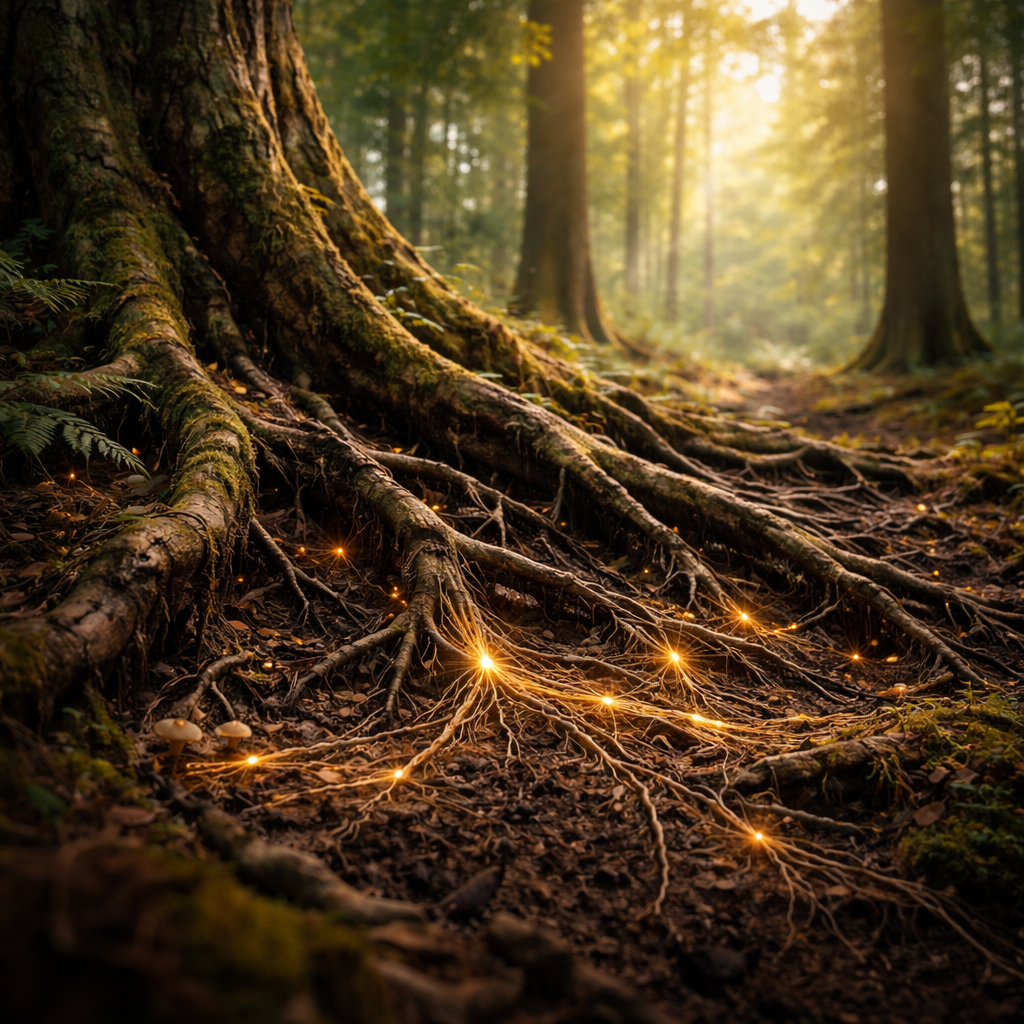
One of the most surprising discoveries in forest ecology is that trees actively share information and resources with one another. Through an underground network of mycorrhizal fungi — sometimes called the “wood wide web” — trees exchange nutrients, water, and even chemical warning signals. When one tree is attacked by insects, it can release compounds that trigger neighboring trees to produce defensive chemicals in their own leaves.
This isn’t metaphor or poetic license. Research conducted in temperate forests has shown measurable flows of carbon and phosphorus between connected root systems, with older “mother trees” often supporting younger seedlings that lack adequate sunlight on the forest floor.
“A forest is not a collection of individual trees — it is a single, interconnected organism operating across centuries.”
Numbers that put tree biology into perspective
Before diving into specific biological facts, it helps to understand just how large the world of trees actually is. The scale of tree life on Earth is genuinely difficult to comprehend without some concrete figures.
| Fact | Detail |
|---|---|
| Estimated number of trees on Earth | Over 3 trillion |
| Tallest living tree species | Coast redwood (Sequoia sempervirens) — over 115 meters |
| Oldest known living tree | Bristlecone pine (Pinus longaeva) — over 5,000 years old |
| CO₂ absorbed per tree annually | Approximately 21 kg on average |
| Oxygen produced per mature tree | Enough for roughly 2 people per year |
These numbers aren’t just impressive trivia — they underline why forests play such a critical role in regulating the global climate and maintaining biodiversity across every continent except Antarctica.
How trees actually grow — it’s not what most people think
A common misconception is that trees grow uniformly from the ground up, pushing everything upward as they get taller. In reality, a nail hammered into a tree trunk at a certain height will remain at that exact height for the life of the tree. Trees grow from their tips — through specialized tissue called the apical meristem — not from the base.
Trunk thickness, on the other hand, is added by a thin layer of cells just beneath the bark called the vascular cambium. Each growing season produces a new ring of wood, which is why dendrochronology — the science of reading tree rings — can reveal not just a tree’s age, but historical climate conditions, drought years, and even volcanic events from centuries ago.
What tree rings actually record
- Wide rings indicate years with plenty of rainfall and warmth
- Narrow rings point to drought, cold seasons, or competition for resources
- Dark, dense rings often mark the end of the growing season
- Unusual rings can correspond to fire events, insect outbreaks, or volcanic ash in the atmosphere
Scientists have used overlapping tree-ring records from ancient preserved wood to build climate chronologies stretching back thousands of years — a genuinely irreplaceable archive of Earth’s environmental history.
The relationship between trees and urban life
Urban trees provide measurable benefits that city planners and public health researchers have been quantifying for decades. A single mature tree on a city street can reduce the surrounding air temperature by several degrees through a process called evapotranspiration, where water vapor released through leaves cools the immediate environment.
Beyond temperature regulation, street trees reduce stormwater runoff by intercepting rainfall with their canopy, filter airborne particulates, and have been linked in multiple studies to lower stress levels and faster recovery times for patients in hospitals with window views of greenery.
Surprising tree behaviors worth knowing
Beyond communication and growth mechanics, trees display several behaviors that challenge the way most of us think about plant life.
- Some trees, like willows and certain oaks, can recognize drought conditions and shed leaves early to conserve water — a controlled response, not passive die-off
- The strangler fig grows by wrapping around a host tree and eventually replacing it entirely, outliving the original tree by decades
- Mangrove trees can filter out up to 90% of the salt in seawater through their root systems, allowing them to thrive in coastal habitats that would kill most other plants
- Certain eucalyptus species actually depend on fire to reproduce — their seed pods only open after exposure to intense heat
- The trembling aspen (Populus tremuloides) often grows as a clonal colony: what appears to be a forest of individual trees can be a single organism sharing one root system, potentially weighing over 6,000 tonnes
Each of these behaviors evolved over millions of years in response to specific environmental pressures — which makes trees not just ecologically important, but genuinely fascinating subjects for anyone curious about how life adapts.
Trees as part of the carbon cycle — a nuanced picture
Trees absorb carbon dioxide during photosynthesis and store carbon in their wood, roots, and surrounding soil. This makes forests one of the most significant carbon sinks on the planet. However, the relationship between forests and carbon is more complex than simple absorption math suggests.
When a tree dies and decomposes, it releases much of that stored carbon back into the atmosphere. Old-growth forests, where decomposition and growth are in long-term balance, store carbon far more effectively per hectare than young, fast-growing plantations. This is one reason ecologists emphasize the irreplaceable value of preserving mature forest ecosystems rather than simply increasing the count of newly planted trees.
Trees hold more stories than most libraries
A five-thousand-year-old bristlecone pine in the White Mountains of California was already a sapling when the pyramids of Giza were under construction. A coastal redwood standing today may outlive every building currently in existence. The lifespan of trees operates on a timescale that makes human history feel brief — and that alone is worth sitting with for a moment.
Understanding tree biology, forest ecology, and the mechanics of tree growth isn’t just useful for scientists or gardeners. It changes how you see the landscape around you — whether you’re walking through a city park, hiking in a national forest, or simply looking out a window at the tree in your yard. That shift in perspective tends to be permanent, and for good reason.