Most people who fear snakes have never stopped to consider just how remarkable these animals truly are. The facts about snakes reveal a group of creatures shaped by millions of years of evolution into some of the most efficient, adaptable, and biologically fascinating reptiles on Earth. Far from being simple “scary things that bite,” snakes are complex animals with unique physiology, extraordinary hunting strategies, and ecological roles that quietly keep entire ecosystems in balance.
How snakes sense the world around them
One of the most surprising things about snakes is that they experience the world in ways completely unlike mammals. They lack external ears and cannot hear airborne sounds the way we do. Instead, they detect vibrations traveling through the ground via their jawbones, which connect to the inner ear. This means a snake “hears” you walking toward it long before it ever sees you.
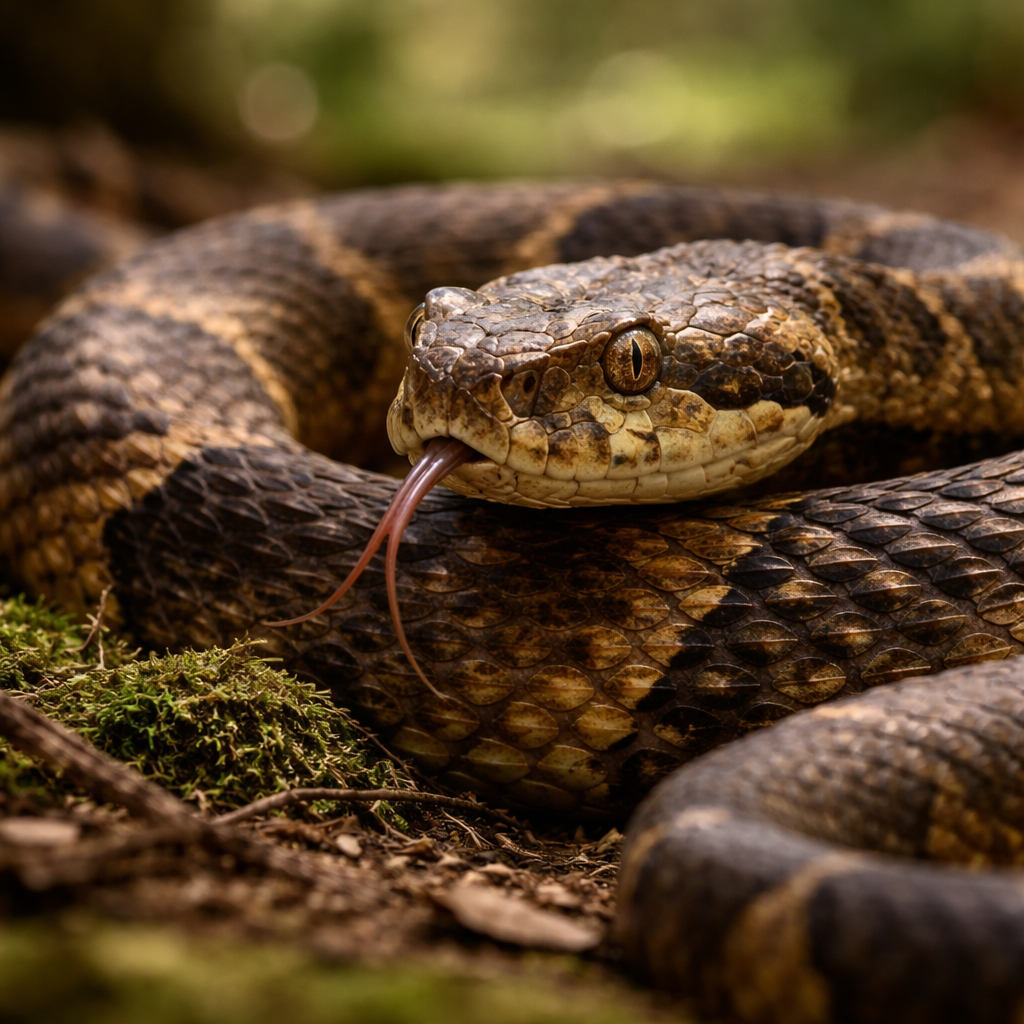
Vision varies widely depending on the species. Arboreal snakes that hunt in trees often have excellent binocular vision, while burrowing species may have little more than basic light sensitivity. But the most remarkable sensory tool many snakes possess is the Jacobson’s organ — a chemoreceptor located in the roof of the mouth. When a snake flicks its forked tongue, it collects chemical particles from the air and delivers them to this organ, effectively “tasting” the environment to track prey, identify mates, or detect predators.
Pit vipers, pythons, and boas have an additional advantage: heat-sensing pit organs that can detect infrared radiation. This allows them to locate warm-blooded prey in complete darkness with remarkable accuracy.
The biology behind the myth
Snakes are ectothermic, meaning they rely on external heat sources to regulate body temperature. This is often misunderstood as a weakness, but it’s actually an extraordinary energy-saving adaptation. A snake can survive on a fraction of the food a similarly sized mammal would need, because it doesn’t burn calories maintaining a constant body temperature.
Some large pythons and anacondas can go without food for over a year after consuming a substantial meal — their metabolism slows to a near standstill between feedings.
Snakes shed their skin — a process called ecdysis — multiple times per year. Unlike popular belief, this isn’t painful. The snake secretes a fluid between the old and new skin layers, loosening the outer layer so it peels off in one piece, starting from the head. The frequency of shedding depends on age, health, and growth rate; younger snakes shed more often than adults.
Snake diversity: more than you’d expect
With over 3,700 known species distributed across every continent except Antarctica, snakes occupy an astonishing range of habitats — from rainforests and deserts to open oceans and mountain slopes. They range in size from the tiny Barbados threadsnake, which measures around 10 centimeters in length, to the reticulated python, which can exceed 6 meters and is considered the world’s longest snake species.
| Species | Notable feature | Habitat |
|---|---|---|
| Reticulated python | Longest snake in the world | Southeast Asian rainforests |
| Green anaconda | Heaviest snake by body mass | South American wetlands |
| Black mamba | Fastest land snake (up to 20 km/h) | African savannas |
| Barbados threadsnake | Smallest known snake species | Caribbean islands |
| King cobra | Longest venomous snake | South and Southeast Asia |
Roughly 600 snake species are venomous, but only around 200 are considered medically significant to humans. The majority of snake species are entirely non-venomous and pose no threat to people whatsoever. Many use constriction to subdue prey, while others simply swallow small animals alive.
Venom: a tool, not a weapon against humans
Snake venom evolved primarily as a predatory tool, not as a defense mechanism against large animals like humans. From a biological standpoint, biting a person is costly for a venomous snake — producing venom requires energy and resources. This is why so many snake bites delivered to humans are “dry bites,” where little or no venom is injected.
Venom composition varies dramatically between species and even between populations of the same species. It typically falls into three broad categories:
- Neurotoxic venom — disrupts nerve signal transmission, causing paralysis (e.g., mambas, cobras, kraits)
- Hemotoxic venom — affects blood clotting and tissue integrity (e.g., many vipers and pit vipers)
- Cytotoxic venom — destroys cells and tissue at the bite site (e.g., some cobras, puff adders)
Interestingly, snake venom has contributed significantly to modern medicine. Compounds derived from venom have been used to develop treatments for hypertension, blood clots, chronic pain, and are being actively researched for potential cancer applications.
Reproduction and lifespan
Snakes reproduce in two primary ways: most species are oviparous (egg-laying), while others are viviparous or ovoviviparous, giving birth to live young. The king cobra is notable for being one of the few snake species that actually builds a nest and guards its eggs — a level of parental investment unusual among reptiles.
Lifespan varies considerably. Small species may live only 5–10 years in the wild, while larger constrictors like ball pythons can live 20–30 years, and some boas have reportedly exceeded 40 years in captivity. The factors influencing longevity include predation pressure, food availability, climate, and disease.
Their role in the ecosystem — and why it matters to you
Snakes are both predators and prey, occupying a vital middle position in many food webs. As predators, they control populations of rodents and other small animals that would otherwise cause significant agricultural damage and spread disease. In many farming regions, the presence of rat snakes alone reduces grain losses that would otherwise require chemical pest control.
As prey, snakes feed hawks, eagles, mongooses, large mammals, and other reptiles. The loss of snake populations from a given area tends to trigger a cascade of ecological disruption — something researchers have observed in regions where snake populations have declined due to habitat loss or overharvesting.
A single snake living near agricultural land can consume hundreds of rodents in a season, providing a natural pest control service that carries measurable economic value.
A few things worth keeping in mind
Understanding snakes is more useful than fearing them. If you spend time outdoors — hiking, gardening, camping — knowing basic snake behavior genuinely reduces your risk of an unpleasant encounter. Most bites happen when people accidentally step on a snake or attempt to handle or kill one. Giving any wild snake space and leaving it alone is the most effective safety strategy that exists.
Snake populations worldwide are under significant pressure from habitat destruction, road mortality, climate shifts, and persecution based on fear. Several species are listed as vulnerable or endangered. Supporting conservation efforts — even simply by not killing snakes you encounter — contributes to maintaining the ecological balance that benefits agriculture, water quality, and biodiversity in your region.
The more you know about these animals, the harder it becomes to see them as simply dangerous or threatening. They are, in nearly every measurable way, far more interesting than they are frightening.